

Black Hole: The Universe's Ultimate Vacuum Cleaner!
Images

Black hole


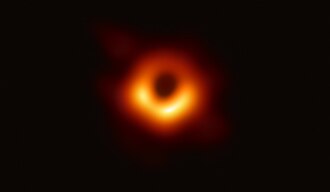


The Fabric of Spacetime Under Extreme Stress
Black holes represent the ultimate triumph of gravity, predicted by Einstein's theory of general relativity. They are regions of spacetime where gravity is so potent that the escape velocity exceeds the speed of light. The boundary of this inescapable region is known as the event horizon.
Crossing the event horizon seals an object's fate, but general relativity suggests no locally detectable change occurs at this boundary. This implies that for an infalling observer, the journey into a black hole might not be immediately catastrophic. However, from an external perspective, the object appears to freeze at the horizon due to extreme time dilation.
Black holes are not merely theoretical constructs; they are a natural consequence of the universe's laws when mass is sufficiently concentrated.
From Stellar Remnants to Galactic Architects
The genesis of black holes is primarily linked to stellar evolution. When stars with masses significantly greater than our Sun exhaust their nuclear fuel, they undergo gravitational collapse. If the remnant core's mass exceeds the Tolman-Oppenheimer-Volkoff limit, it collapses into a black hole, a stellar-mass black hole.
Beyond these, supermassive black holes (SMBHs), with masses ranging from millions to billions of solar masses, reside at the centers of most galaxies. Their formation mechanisms are still debated, with theories including the merger of smaller black holes, the direct collapse of massive gas clouds in the early universe, or the accretion of vast amounts of stellar material over cosmic timescales. The existence and growth of SMBHs are intrinsically linked to the evolution of their host galaxies.
Indirect Observation
The absence of emitted light makes direct observation of black holes impossible. Their presence is inferred through their gravitational interactions with surrounding matter and electromagnetic radiation. Matter falling towards a black hole forms an accretion disk, where intense friction heats the plasma to extreme temperatures, emitting characteristic X-ray radiation.
In the most energetic cases, this process powers quasars, some of the brightest objects in the universe. Furthermore, the orbital paths of stars or gas clouds around an unseen, massive object can reveal the presence and mass of a black hole. This method has been crucial in identifying numerous stellar black hole candidates in binary systems and confirming the SMBH, Sagittarius A*, at the Milky Way's core, with a mass of approximately 4.3 million solar masses.
Cosmic Engines and Fundamental Physics Laboratories
Black holes are not just passive absorbers of matter; they are active participants in cosmic evolution. The energy released from accretion disks and jets emanating from SMBHs can profoundly influence their host galaxies, regulating star formation and shaping galactic structure. They serve as unparalleled natural laboratories for testing the limits of fundamental physics.
Studying phenomena near black holes allows physicists to probe quantum gravity, the nature of spacetime singularities, and the interplay between general relativity and quantum mechanics. The theoretical prediction of Hawking radiation, a quantum effect where black holes are thought to emit thermal radiation, further highlights their importance in bridging these two pillars of modern physics, even if its detection remains technologically challenging due to extremely low temperatures for stellar black holes.
Go deeper
Based on content from Wikipedia · Licensed under CC BY-SA 4.0