

The Battle of Fromelles: A Tough Day
Images
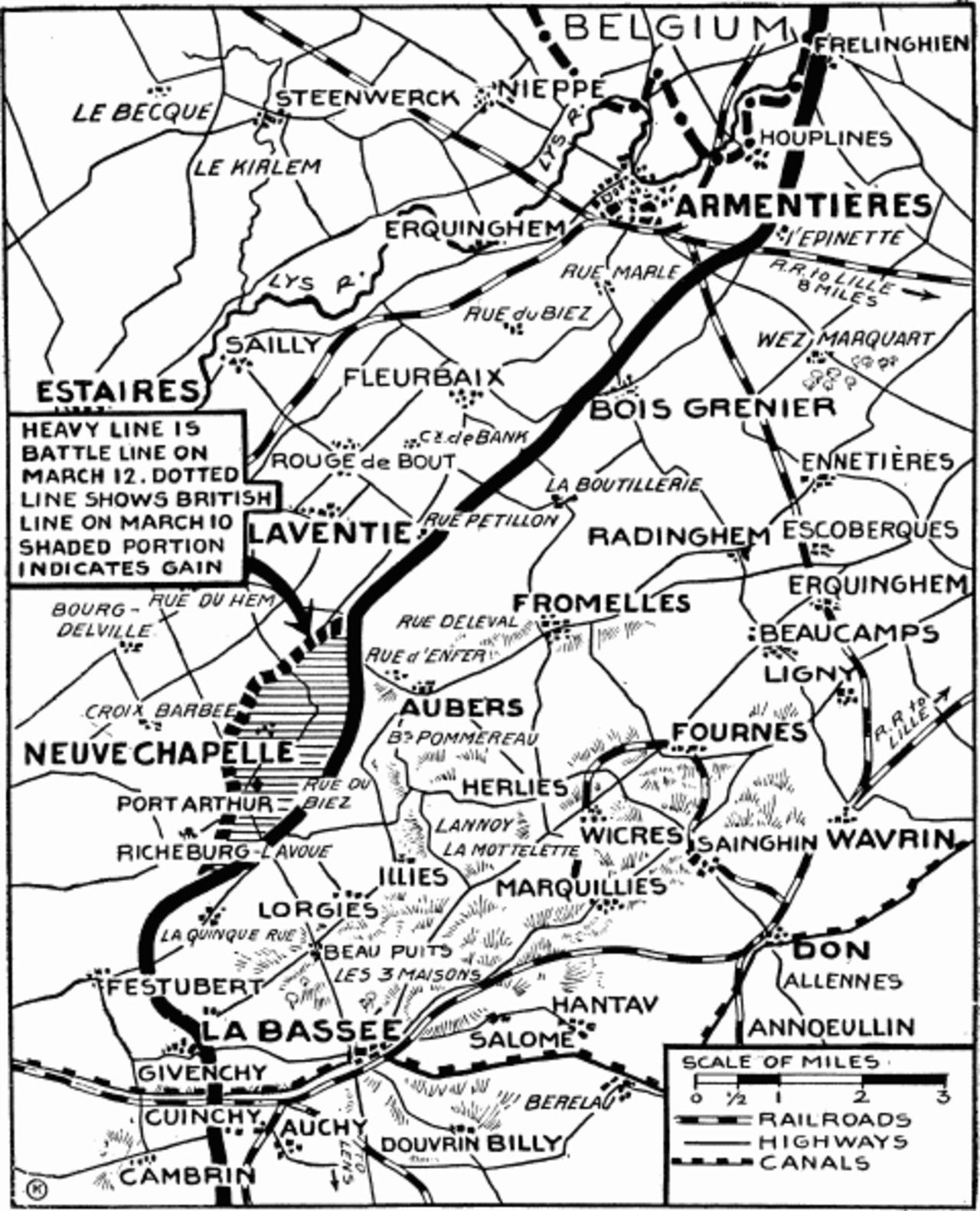
NYTMapNeuveChapelle1915


Geopolitical Context
The Attack at Fromelles, occurring on July 19-20, 1916, was conceived as a subsidiary operation to the larger, ongoing Battle of the Somme. The overarching strategic goal, as dictated by British General Headquarters, was to compel the German army to divert resources away from the Somme front by threatening sectors of their defensive line. The First Army and Second Army were tasked with preparing these diversionary attacks.
However, the execution at Fromelles was plagued by fundamental flaws. Preparations were rushed, intelligence regarding German defensive capabilities was woefully inadequate, and the attacking forces, particularly the 5th Australian Division, lacked sufficient experience in the brutal realities of trench warfare on the Western Front. The decision to attack in daylight on a narrow front, directly overlooked by Aubers Ridge, proved to be a critical tactical error, exposing the attackers to devastating flanking fire from well-entrenched German artillery.
The Battlefield Landscape and Defensive Fortifications
The terrain around Fromelles presented its own set of challenges. Situated in low-lying ground near Lille, France, the area was prone to waterlogging, complicating movement and the construction of traditional deep trenches. Both sides relied heavily on breastworks – lower, more exposed defensive positions – rather than extensive trench systems.
This configuration, combined with the commanding elevation of Aubers Ridge, created a deadly killing ground. The German 6th Army, specifically the 6th Bavarian Reserve Division supported by flanking units, occupied these advantageous positions. Their defenses were formidable, and the attackers were significantly outnumbered, estimated at a 2:1 disadvantage, further compounding the risks of the offensive.
The Devastating Debut of the AIF on the Western Front
For the 5th Australian Division of the Australian Imperial Force (AIF), Fromelles marked their baptism of fire on the Western Front. The outcome was a tragedy of immense proportions, with the Australian War Memorial aptly describing it as 'the worst 24 hours in Australia's entire history.' Of the 7,080 casualties sustained by the British Expeditionary Force (BEF) during the operation, an overwhelming 5,533 were borne by the 5th Australian Division.
This staggering figure underscores the intensity of the fighting and the disproportionate impact on the Australian contingent. In contrast, German casualties were significantly lower, ranging from 1,600 to 2,000, with 150 prisoners taken. The attack achieved none of its territorial objectives, representing a complete strategic and tactical failure.
Post-Battle Analysis and Re-evaluation of Objectives
The immediate aftermath saw the cancellation of further attacks due to the realization that German counter-attacks had already forced a retirement to the original front lines. The failure was stark, and captured operation orders revealed the limited scope of the initial plan. For decades, the strategic rationale of the attack was debated, with many believing it successfully drew German reserves away from the Somme.
However, a significant re-evaluation emerged in 2012 following studies of German records. These records indicated that none of the German divisions directly opposite XI Corps were redeployed to the Somme until weeks later. Instead, reinforcements were drawn from other sectors, suggesting the diversionary objective may have been misinterpreted or was less effective than initially believed.
This revelation further highlighted the tactical blunders and the immense human cost of the operation.
Legacy and Historical Significance
The Battle of Fromelles stands as a stark testament to the brutal nature of World War I warfare and the devastating consequences of flawed military planning. It serves as a critical case study in military history, illustrating the perils of underestimating enemy defenses, the importance of adequate preparation and intelligence, and the tragic outcomes of poorly conceived diversionary attacks. For Australia, it remains a defining moment of national sacrifice and a somber reminder of the immense cost of war.
The battlefield itself, largely undisturbed for decades, later became the site of significant archaeological discovery, unearthing the mass graves of fallen soldiers and bringing a measure of closure and remembrance to this ill-fated engagement.
See also
Frequently Asked Questions
What happened at the Battle of Fromelles?+
Why did the Australians lose so many soldiers?+
Where is Fromelles and why was the land difficult?+
How many Australian soldiers were hurt?+
Did the attack help the larger Battle of the Somme?+
Based on content from Wikipedia · Licensed under CC BY-SA 4.0