

Artesonraju: The Mountain That Sparkles!
Images
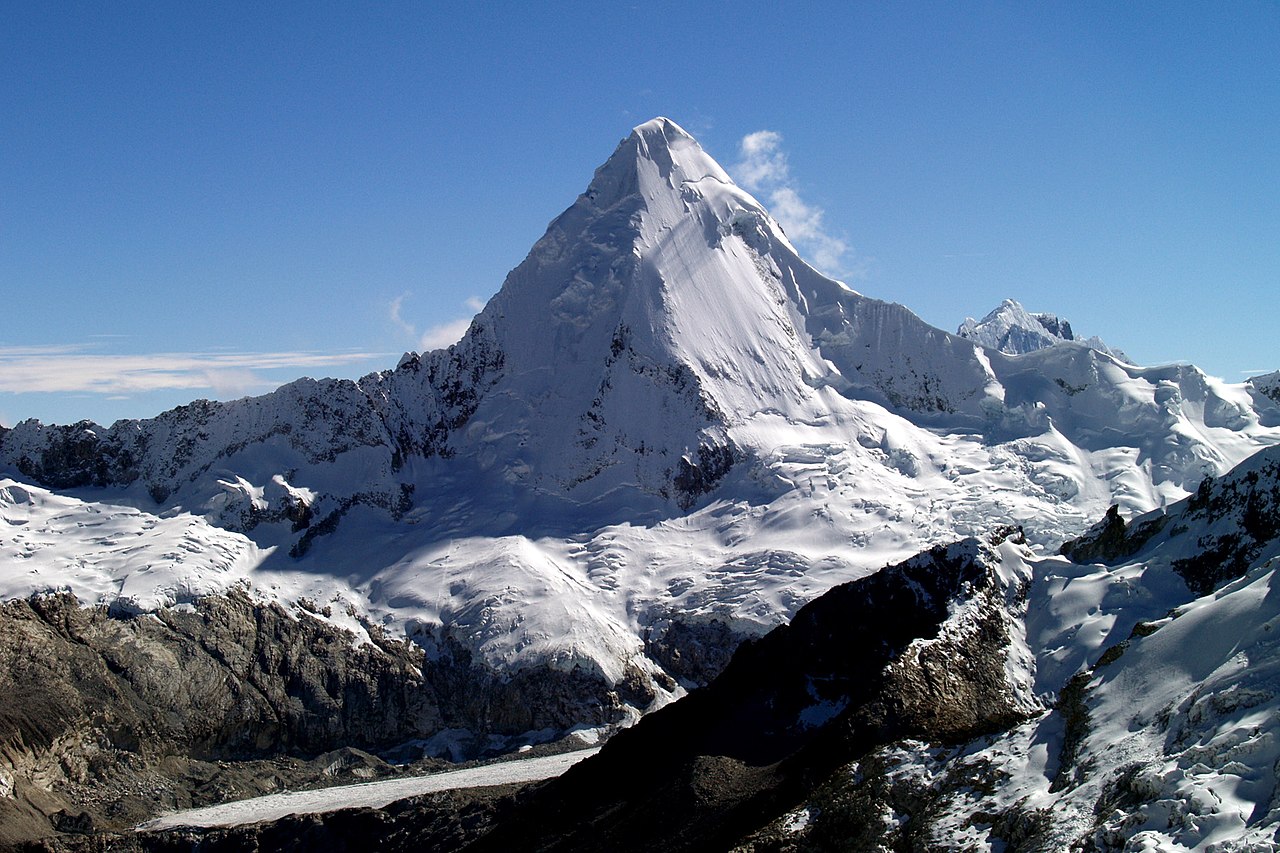
Artesonraju Peru


Geographical Marvel and Andean Iconography
Artesonraju stands as a formidable and aesthetically striking peak within the Cordillera Blanca, a sub-range of the Peruvian Andes. Its distinctive pyramidal form, sculpted by glacial forces over millennia, makes it one of the most visually arresting mountains in South America. Situated within the Huascarán National Park, a UNESCO World Heritage site, the mountain is a testament to the dramatic geological processes that shape high-altitude environments.
Its summit elevation is officially recorded at approximately 6,025 meters (19,767 feet), though minor variations exist in different surveys. The mountain's slopes are shared by the districts of Santa Cruz and Caraz in the Huaylas province, placing it within a region renowned for its breathtaking alpine scenery and rich cultural heritage. The sheer scale and the challenging terrain contribute to its status as a significant landmark in the Peruvian landscape.
The Allure of the Unclimbed
Despite its iconic status, Artesonraju remains a relatively seldom-climbed mountain compared to other prominent peaks in the Cordillera Blanca. This is primarily due to the technical difficulty and objective hazards associated with its ascent. Two main climbing routes are recognized, both demanding a high level of expertise in ice climbing, rock climbing, and high-altitude mountaineering.
The steepness of its faces, combined with the potential for avalanches and unpredictable weather patterns common in the Andes, presents formidable challenges. Successful ascents are therefore rare achievements, requiring meticulous planning, exceptional physical conditioning, and a deep understanding of alpine environments. This exclusivity adds to its mystique, making it a coveted objective for elite mountaineers seeking to test their limits against one of nature's grandest challenges.
From Andean Summit to Hollywood Stardom
Artesonraju's most widespread recognition comes not from mountaineering circles, but from its role as the visual inspiration for the Paramount Pictures logo. This iconic symbol, featuring a mountain surrounded by stars, has graced the opening of countless films since the early days of cinema. The choice of Artesonraju was likely due to its perfect pyramidal shape, which translates exceptionally well into a stylized graphic representation.
This cinematic association has elevated the mountain beyond its geographical context, embedding it into global popular culture. It serves as a powerful example of how natural landmarks can transcend their physical location to become universally recognized symbols, linking the remote beauty of the Peruvian Andes to the entertainment industry worldwide.
Ecological Significance and Conservation Imperatives
As a prominent feature within Huascarán National Park, Artesonraju plays a crucial role in the park's ecological integrity. The park itself is a biodiversity hotspot, protecting a vast array of flora and fauna adapted to extreme Andean conditions. Mountains like Artesonraju act as vital components of this ecosystem, influencing local climate patterns and providing habitats for specialized species.
The park's designation as a protected area underscores the global importance of conserving such high-altitude environments. The challenges of climate change and increased human activity pose ongoing threats to these fragile ecosystems. Therefore, the continued protection of Artesonraju and its surrounding landscape is essential not only for preserving its natural beauty but also for maintaining the ecological balance of the entire region and safeguarding its cultural resonance.
Cultural Resonance and Modern Relevance
The cultural significance of Artesonraju is multifaceted. Geographically, it is a landmark within the ancestral territories of indigenous Andean communities, holding potential local importance. However, its global cultural impact is undeniably dominated by its association with Paramount Pictures.
This connection has transformed the mountain into a symbol of cinematic grandeur and adventure, influencing perceptions of mountains and the wild in popular culture. In a modern context, Artesonraju represents the intersection of nature, art, and commerce. Its story highlights how natural wonders can inspire creative endeavors that reach vast audiences, while also raising questions about the commodification of natural imagery.
The mountain's enduring presence in film logos ensures its continued relevance, serving as a constant reminder of the awe-inspiring power of the natural world and its capacity to capture the human imagination.
See also
Frequently Asked Questions
What is Artesonraju and why does it look like a movie logo?+
How tall is Artesonraju?+
Why is Artesonraju hard to climb?+
Where is Artesonraju located?+
How does Artesonraju help the environment?+
Based on content from Wikipedia · Licensed under CC BY-SA 4.0