

Arnhem Land: Australia's Amazing Outback!
Images

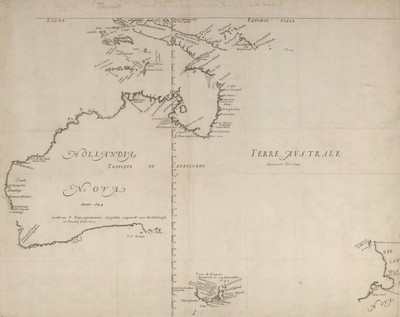
Arnhem Land Map



Geographical and Environmental Context
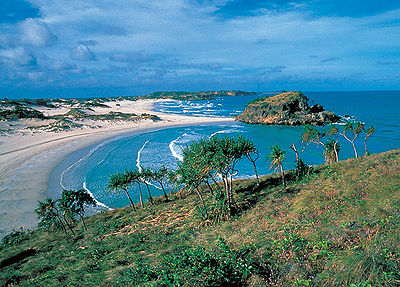
Arnhem Land occupies a significant portion of the northeastern Northern Territory, Australia, approximately 500 kilometers east of the territorial capital, Darwin. This expansive region covers roughly 97,000 square kilometers, making it larger than many European nations. Its geographical position places it at the edge of the Gulf of Carpentaria, with a coastline marked by dramatic cliffs and pristine beaches.
The landscape is characterized by ancient sandstone plateaus, escarpments, and diverse ecosystems, including tropical savannas and monsoon forests. The climate is tropical, with distinct wet and dry seasons that profoundly influence the environment and traditional land management practices. The region's remoteness has historically preserved its unique natural and cultural landscapes, though modern developments are introducing new dynamics.
The name 'Arnhem Land' itself originates from the Dutch ship 'Arnhem,' which sailed into the Gulf of Carpentaria in 1623, a reminder of early European encounters with this ancient land.
Demographics and the Outstation Movement
The population of Arnhem Land is approximately 16,000 people, with a substantial majority, around 12,000, identifying as Aboriginal and Torres Strait Islander peoples. The dominant Indigenous group are the Yolŋu people, who possess a deep and unbroken connection to this land spanning tens of thousands of years. While larger service centers like Nhulunbuy exist, a significant demographic shift occurred from the early 1980s with the 'outstation movement.' This movement saw many Aboriginal families and communities relocate from larger towns to smaller, often remote, settlements on their traditional ancestral lands, or 'country.' This was driven by a desire to escape social issues prevalent in larger centers and to reconnect with and maintain traditional cultural practices, languages, and governance systems.
These outstations represent a powerful assertion of Indigenous identity and self-determination, often existing with minimal Western cultural influence, making Arnhem Land a unique cultural landscape within Australia.
Economic Drivers
Arnhem Land's economy is characterized by a dualistic nature. Historically and presently, a significant economic contributor is the extraction of natural resources, particularly bauxite. The town of Nhulunbuy was established in the early 1970s as a bauxite mining town, and mining continues to be a major industry, contributing substantially to the Northern Territory's gross state product.
However, in a remarkable development, Arnhem Land has also become a frontier for space exploration. In 2019, NASA selected the region for the development of the Arnhem Space Centre. This facility achieved a historic milestone on June 27, 2022, with the first rocket launch from a commercial spaceport outside the United States.
This venture into space technology, alongside traditional resource extraction, positions Arnhem Land at an intriguing intersection of terrestrial industry and extraterrestrial ambition, presenting both opportunities and challenges for the region's future economic development.
Governance, Culture, and Aspirations for Sovereignty
The governance of Arnhem Land is complex, reflecting its status as a region with a strong Indigenous majority and a history of unique land rights. While it is part of the Northern Territory and Australia, many Indigenous leaders advocate for greater self-governance and the recognition of traditional laws. There have been ongoing calls for a treaty that would formally acknowledge the sovereignty of the Yolŋu people and allow them to operate under their own customary legal systems.
This aspiration for a treaty is deeply rooted in the desire to maintain cultural integrity and self-determination. The region's cultural richness is immense, with vibrant traditions, languages, art, and spiritual practices that have been sustained for millennia. This cultural resilience, coupled with the push for political recognition, makes Arnhem Land a focal point for discussions on Indigenous rights and sovereignty in contemporary Australia.
Education and Cultural Transmission
Education in Arnhem Land serves a dual purpose: to provide Western-style academic learning and to ensure the transmission of invaluable Indigenous knowledge and cultural practices. Schools in the region, such as those in Nhulunbuy, Yirrkala, Gunbalanya, Ramingining, and Maningrida, cater to a diverse student population. The curriculum often aims to integrate traditional Yolŋu knowledge, languages, and cultural heritage with standard Australian educational frameworks.
This approach is crucial for fostering a sense of identity and pride among young Indigenous people, ensuring that ancient traditions are not lost. The outstation movement also plays a role in education, as it allows for learning to occur within the context of traditional country, guided by elders. This holistic educational model is vital for the continued cultural vitality and future success of Arnhem Land's communities, bridging the gap between ancestral wisdom and the demands of the modern world.
See also
Based on content from Wikipedia · Licensed under CC BY-SA 4.0