

Aristophanes
Images
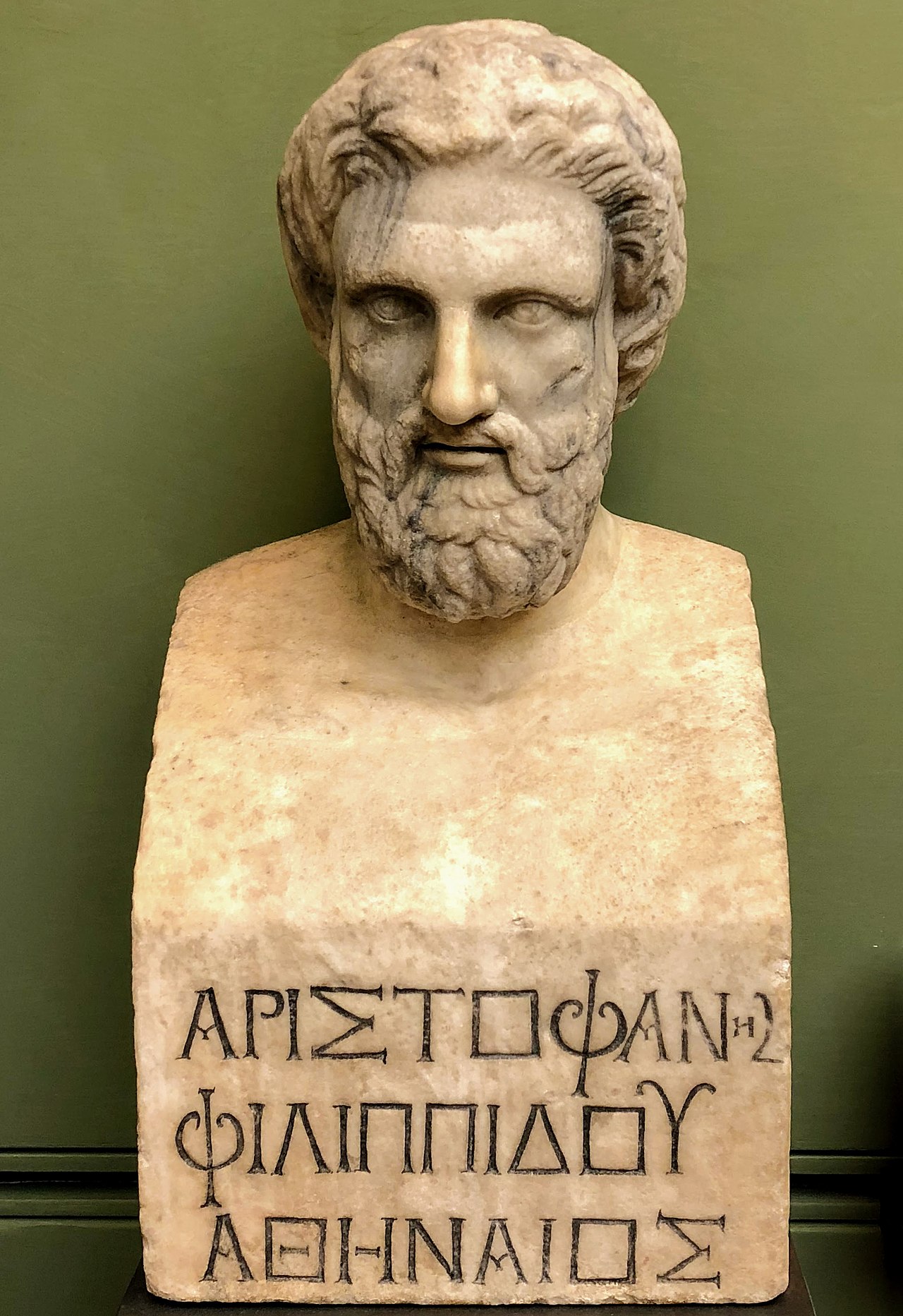
Aristophanes
Architect of Laughter and Laceration
Aristophanes (c. 446 – c. 386 BC) stands as the preeminent figure of Athenian Old Comedy, a theatrical genre characterized by its bold political commentary, fantastical premises, and often explicit language. Writing during a tumultuous period in Athenian history, including the Peloponnesian War, Aristophanes produced forty plays, eleven of which survive today, offering invaluable insights into the social, political, and cultural landscape of ancient Greece.
His works were not mere entertainment; they were integral to Athenian civic life, performed at major religious festivals like the City Dionysia and Lenaia, where they competed for prestigious awards. The sheer volume of his output and the enduring quality of his surviving plays earned him enduring titles such as 'The Father of Comedy' and 'The Prince of Ancient Comedy,' underscoring his unparalleled mastery and influence.
The Art of Political and Social Scrutiny
The genius of Aristophanes lay in his fearless application of satire to contemporary figures and events. Unlike modern political satire, which often operates within stricter boundaries, Aristophanes directly lampooned prominent Athenians, including playwrights like Euripides and political leaders like Alcibiades and Cleon. His play 'The Babylonians' famously drew the ire of Cleon, a powerful Athenian general, who accused Aristophanes of slandering the Athenian polis.
This incident, though details are scarce, exemplifies the real-world repercussions of Aristophanes's sharp critiques. His plays frequently featured preposterous plots, wordplay, and a direct address to the audience through the chorus, creating a dynamic and often confrontational theatrical experience that held a mirror to Athenian society's follies and hypocrisies.
A Vivid Tapestry of Athenian Life
Aristophanes's plays are unparalleled in their ability to recreate the vibrant, complex milieu of ancient Athens. Through his characters and scenarios, he provides a more convincing and nuanced portrait of Athenian life than many historical accounts. He engaged directly with pressing issues of his day, such as the protracted Peloponnesian War, exploring its impact on citizens and the political decisions driving it.
His comedies served as a crucial forum for public discourse, allowing citizens to engage with controversial topics in a cathartic, albeit often uncomfortable, manner. The enduring relevance of his work stems from his profound understanding of human nature and the perennial struggles of governance and societal cohesion.
The Double-Edged Sword of Ridicule
The potency of Aristophanes's satirical voice was widely acknowledged, even feared, by his contemporaries. Plato, in his 'Apology,' suggests that Aristophanes's play 'The Clouds,' which satirized Socrates's philosophical methods, contributed to the climate that led to Socrates's trial and execution. While other satirists also caricatured Socrates, Plato's specific mention of Aristophanes underscores the significant cultural weight and potential impact of his comedic portrayals.
Aristophanes's own assertion, voiced through the chorus in 'The Knights,' that the author-director holds the most challenging role, reveals his deep engagement with the craft and the immense responsibility he felt in shaping public perception through his art. His willingness to direct his own plays further attests to his commitment to realizing his vision with maximum impact.
Go deeper
Frequently Asked Questions
Who was Aristophanes and what did he do?+
Why were Aristophanes' plays important in ancient Athens?+
How did Aristophanes use humor to talk about real people?+
What happened when Aristophanes made a play about Cleon?+
Did Aristophanes' jokes affect famous thinkers like Socrates?+
Based on content from Wikipedia · Licensed under CC BY-SA 4.0