

Aosta
Images

Aosta And Mountains




Geographical Significance
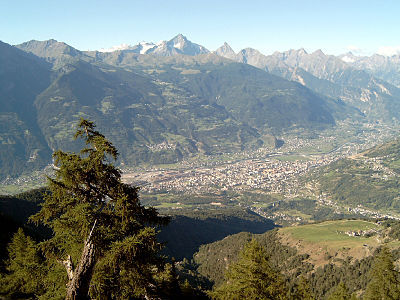
Aosta's identity is inextricably linked to its dramatic Alpine setting. Situated in the heart of the Aosta Valley, it commands a strategic position at the confluence of the Buthier and Dora Baltea rivers. This location has historically made it a crucial point for traversing the Alps.
Its proximity to the Italian portals of the Mont Blanc Tunnel and the Great St Bernard Tunnel elevates its importance as a modern logistical and commercial hub. These tunnels, feats of 20th-century engineering, bypass the challenging mountain passes, dramatically reducing travel times between Italy, France, and Switzerland. The valley itself is characterized by steep slopes and high peaks, influencing the climate, which features cold, snowy winters and mild summers, ideal for both winter sports and summer tourism.
The surrounding mountains are not just a backdrop but an active element shaping the region's economy and way of life, offering resources and challenges.
A Legacy Carved in Stone
The historical narrative of Aosta is deeply rooted in its Roman past. Founded as Augusta Praetoria Salassorum in 25 BCE, it served as a vital military colony and administrative center for the Roman Empire, strategically positioned to control the Great and Little St Bernard Passes. The Romans left an indelible mark on the city, constructing enduring monuments that continue to define its urban fabric.
The Arch of Augustus, the Praetorian Gate, the Roman Theatre, and sections of the ancient walls are remarkably well-preserved testaments to Roman architectural prowess and urban planning. Beyond the Roman era, Aosta has seen periods of Lombard, Frankish, and Savoyard rule, each contributing layers to its historical complexity. This rich tapestry of historical influences makes Aosta a compelling destination for understanding the evolution of Alpine settlements and their integration into larger empires and kingdoms.
Bilingualism and Cultural Synthesis in the Aosta Valley
Aosta's cultural landscape is uniquely shaped by its official bilingualism, with Italian and French coexisting as recognized languages. This linguistic duality is a direct result of the region's historical development and its geographical position bordering French-speaking territories. The presence of French is not merely a linguistic footnote; it is deeply embedded in the region's administration, education, and daily life, fostering a distinct cultural identity that blends Italian and French influences.
This synthesis is evident in local customs, cuisine, and artistic expressions. The Arpitan language, a Romance language historically spoken in the region, also adds another layer to the linguistic heritage, though its use has declined. This rich linguistic environment offers a fascinating case study in language preservation, cultural identity, and the dynamics of bilingual societies within a larger nation-state.
Economic Drivers
The economy of Aosta is a dynamic interplay of tourism, transportation, and the utilization of regional resources. Its stunning Alpine environment makes it a premier destination for winter sports, with numerous ski resorts in the surrounding mountains, and a popular spot for summer hiking and mountaineering. The city's role as a gateway to major Alpine tunnels significantly boosts its economy through transit trade and logistics.
Businesses involved in transportation, warehousing, and related services thrive due to this connectivity. Furthermore, the region's agricultural sector, known for its high-quality cheeses (like Fontina) and wines, contributes to the local economy and culinary reputation. Many residents are employed in the service sector, catering to both the influx of tourists and the demands of the transportation industry, creating a resilient and multifaceted economic base.
Governance and Education
Aosta serves as the capital of the Aosta Valley, an autonomous region within Italy. This special status grants the region significant self-governance powers, particularly concerning its linguistic and cultural preservation. The regional government plays a crucial role in managing local affairs, promoting economic development, and safeguarding the unique bilingual heritage.
Education in Aosta reflects this autonomy, with a curriculum that incorporates both Italian and French languages and cultures. Schools and educational institutions are structured to support bilingual learning, ensuring that younger generations are proficient in both official languages. This commitment to bilingual education is fundamental to maintaining the region's distinct identity and fostering a well-integrated society that values its diverse linguistic and cultural roots.
See also
Frequently Asked Questions
What is Aosta and where is it located?+
Why is Aosta famous for its tunnels?+
What old Roman buildings can you see in Aosta?+
How do people speak in Aosta?+
What can you do in Aosta during winter and summer?+
Based on content from Wikipedia · Licensed under CC BY-SA 4.0