

Alligator Adventures!
Images

Alligator




Anatomy and Physiology
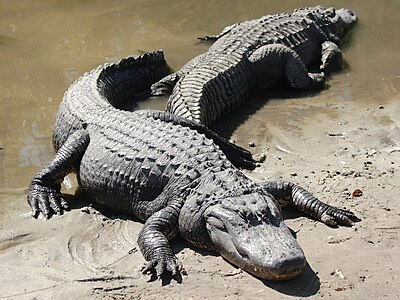
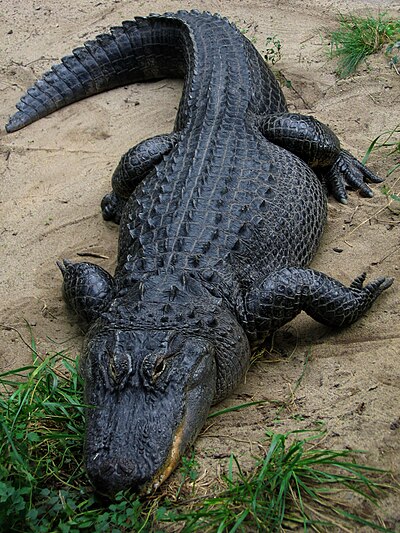
Alligators, members of the family Alligatoridae, exhibit remarkable adaptations for their semi-aquatic lifestyle. Their powerful jaws, housing up to 80 teeth at a time that are continuously replaced, generate one of the highest bite forces recorded in the animal kingdom, crucial for subduing prey. The placement of their eyes, ears, and nostrils atop their heads allows for keen sensory perception while submerged, facilitating stealthy hunting.
Their muscular tails serve as powerful propellers for swimming and rudders for steering. As ectotherms, alligators thermoregulate behaviorally, basking in the sun to increase body temperature and seeking cooler environments to avoid overheating. Their ability to slow their metabolism and heart rate allows them to remain submerged for extended periods, conserving energy and oxygen.
Ecological Niches
The American alligator (Alligator mississippiensis) occupies a vital ecological role in the freshwater ecosystems of the southeastern United States, particularly in states like Florida and Louisiana. They are keystone species, meaning their presence significantly impacts their environment. Their burrowing activities create 'alligator holes,' which are crucial habitats for other aquatic species during dry periods.
The Chinese alligator (Alligator sinensis) is critically endangered, with its habitat severely reduced to a small area in eastern China, primarily along the Yangtze River, due to agricultural development and pollution. Both species prefer freshwater environments like swamps, marshes, rivers, and lakes, though American alligators can tolerate brackish water.
Dietary Strategies and Predatory Behavior
Alligators are opportunistic carnivores whose diet shifts dramatically with age. Hatchlings and juveniles subsist on invertebrates, amphibians, small fish, and insects. As they mature, their prey base expands to include larger fish, turtles, snakes, birds, and mammals, ranging from raccoons to deer and even domestic animals in some areas.
Their hunting strategy is primarily ambush-based; they lie in wait, camouflaged by the water's surface, before exploding with surprising speed to capture prey. They often drown larger prey and may store carcasses for later consumption. Their digestive system is highly efficient, capable of breaking down bone and hide.
Evolutionary Lineage and Conservation Challenges
Alligators represent a lineage of reptiles that has persisted for over 200 million years, surviving major extinction events. Their evolutionary success is attributed to their robust physiology and adaptability. However, modern conservation faces significant challenges.
The American alligator, once severely depleted due to hunting for its hide and meat, has made a remarkable recovery and is now listed as Least Concern, thanks to strong conservation efforts and protective legislation. In contrast, the Chinese alligator faces an extremely precarious future, with its population numbering only in the hundreds in the wild, making captive breeding programs and habitat restoration critical for its survival.
Reproduction and Social Dynamics
Alligator reproduction involves elaborate courtship rituals. Females construct nests, typically mounds of vegetation and mud, where they lay clutches of 20-50 eggs. The incubation temperature of the eggs determines the sex of the hatchlings, a phenomenon known as temperature-dependent sex determination.
Females exhibit parental care, guarding the nest and protecting the hatchlings for a period after they emerge. While often perceived as solitary, alligators do engage in social behaviors, including vocalizations for communication and territorial displays. Understanding these complex behaviors is vital for effective conservation and managing human-alligator interactions.
See also
Frequently Asked Questions
What makes alligators strong swimmers?+
How do alligators keep their body temperature right?+
Why are alligator holes important?+
What do baby alligators eat?+
How do scientists help protect Chinese alligators?+
Based on content from Wikipedia · Licensed under CC BY-SA 4.0