

Aljafería: A Royal Palace of Wonders!
Images

AljaferíA Palace


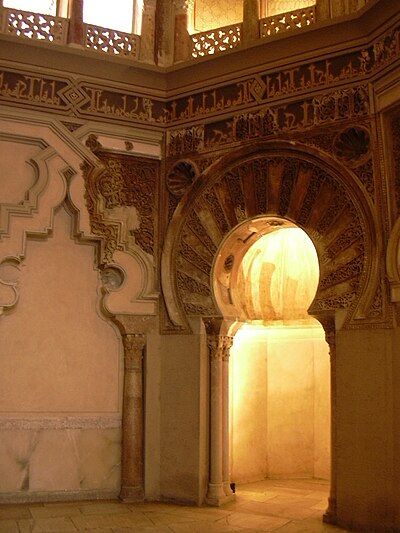

The Aljafería
The Aljafería Palace, situated in Zaragoza, Aragon, Spain, is a remarkable surviving edifice from the Taifa period of Al-Andalus. Constructed in the latter half of the 11th century, it served as the royal seat for the Banu Hud dynasty, most notably under Abu Jaffar Al-Muqtadir. This palace is exceptionally significant as it represents the sole surviving large-scale example of Spanish Islamic architecture from this era of fragmented kingdoms.
Its architectural grandeur and sophisticated ornamentation reflect the zenith of the Taifa of Zaragoza's power and cultural achievements. The Aljafería's enduring presence, alongside the Mosque-Cathedral of Cordoba and the Alhambra, solidifies its status as a paramount example of Hispano-Muslim art, earning it special legal protection. The palace's strategic location, initially outside Roman walls but now integrated into the urban fabric due to centuries of expansion, mirrors its journey through various historical epochs and political shifts.
A Tapestry of Rule
The Aljafería's history is a complex narrative of conquest, adaptation, and continuous use. Following the Christian conquest of Zaragoza in 1118 by Alfonso I of Aragon, the palace transitioned from an Islamic royal residence to the seat of power for the Aragonese monarchs. This marked a significant cultural and political shift, yet the palace retained its importance as a royal dwelling.
It was further utilized and modified by subsequent rulers, including Peter IV of Aragon, and later served as a palace for the Catholic Monarchs in 1492. A pivotal transformation occurred in 1593 when it was restructured into a military fortress, incorporating Renaissance design elements visible in its surrounding moat and gardens, and later served as barracks. The palace endured significant damage, particularly during the Peninsular War's Sieges of Zaragoza, underscoring its strategic military relevance.
Its eventual restoration in the 20th century was crucial for preserving this multifaceted historical monument.
Architectural Innovation and Artistic Legacy
The Aljafería is celebrated not only for its historical significance but also for its groundbreaking artistic contributions. Its ornamentation features distinctive elements such as mixtilinear arches, intricate springers, and extensive arabesque decorations. A key aspect of its artistic legacy lies in the schematization and progressive abstraction of vegetal motifs in its yeserias (plasterwork).
These stylistic innovations were highly influential, profoundly impacting the development of Almoravid and Almohad art across the Iberian Peninsula. Furthermore, the shift towards more geometric decorative schemes within the Aljafería is considered a foundational element for the later Nasrid art, most famously exemplified in the Alhambra. The palace thus stands as a crucial link in the evolution of Islamic art in Iberia, demonstrating a continuous dialogue and innovation in decorative arts.
The Aljafería as a UNESCO World Heritage Site and Modern Governance Hub
In recognition of its exceptional universal value, the Aljafería, along with other Mudéjar monuments in Aragon, was inscribed as a UNESCO World Heritage Site in 2001. This designation highlights its importance not just as a Spanish Islamic architectural masterpiece but also as a symbol of the unique cultural synthesis that defines Mudéjar art-a style that artfully blends Islamic and Christian artistic traditions. The inclusion in this World Heritage Site underscores the Aljafería's role in preserving a crucial chapter of human history and artistic expression.
Beyond its historical and cultural significance, the Aljafería continues to serve a vital function in contemporary society. It currently houses the Cortes of Aragon, the regional parliament, making it a dynamic center for modern governance. This dual role as an ancient monument and a functioning seat of government makes the Aljafería a unique and enduring symbol of Aragon's rich past and its vibrant present.
See also
Frequently Asked Questions
What is the Aljafería Palace?+
Why is the Aljafería Palace special?+
How did the Aljafería Palace change over time?+
Where is the Aljafería Palace located?+
What kind of decorations can you see in the Aljafería Palace?+
Based on content from Wikipedia · Licensed under CC BY-SA 4.0