

Alexander III of Russia
Images

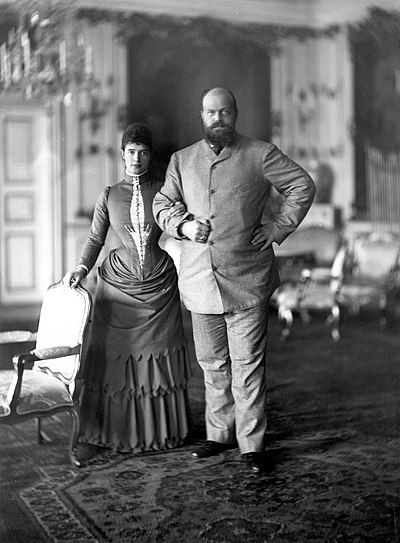
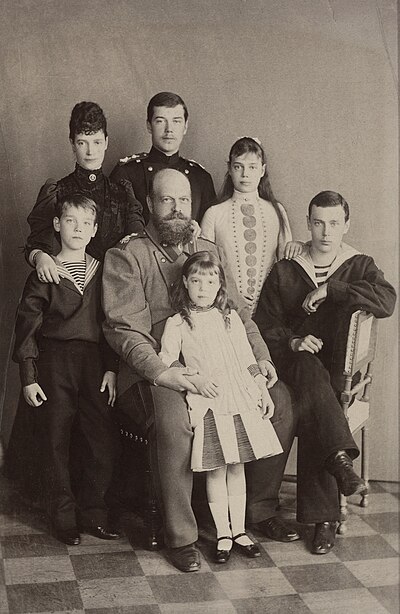
Tsar Alexander III C. 1885




Consolidating Power
Ascending to the throne in 1881, Alexander III inherited an empire grappling with the aftermath of his father's assassination and the burgeoning forces of liberalism and revolution. His response was a deliberate and systematic reversal of many of Alexander II's reforms, a policy termed 'counter-reforms.' This wasn't merely a nostalgic return to the past but a strategic effort to consolidate autocratic power and suppress dissent. Measures included strengthening the secret police, increasing censorship, and limiting the autonomy of local governments and universities.
The Zemstvos, elected local councils, saw their powers curtailed, and the judiciary was subjected to greater state control. This conservative agenda aimed to create a stable, predictable empire, but it also stifled political development and alienated segments of the intelligentsia, sowing seeds of future discontent that would ultimately challenge the Romanov dynasty.
The Peacemaker's Paradox
Alexander III's most celebrated achievement is his success in keeping Russia out of major wars throughout his reign, earning him the enduring title 'The Peacemaker.' This was a significant departure from the expansionist policies of some of his predecessors and a stark contrast to the turbulent geopolitical landscape of late 19th-century Europe. His foreign policy was characterized by caution and a focus on internal consolidation. However, this peace was not achieved through isolation.
Recognizing the shifting balance of power, particularly the growing strength of Germany, Alexander III pursued a strategic alliance with France. This Franco-Russian Alliance, finalized in the 1890s, was a monumental diplomatic achievement that fundamentally altered European power dynamics. It provided Russia with a crucial counterweight to the Triple Alliance (Germany, Austria-Hungary, and Italy) and aimed to deter aggression.
Ironically, this very alliance, designed for security, would later entangle Russia in the complex web of commitments that led to World War I.
Economic and Social Landscape Under Alexander III
The economic policies of Alexander III's reign were geared towards industrial development and strengthening the state's financial position. Under the guidance of ministers like Sergei Witte, Russia embarked on a program of rapid industrialization, heavily financed by foreign loans, particularly from France. This led to the construction of railways, including the Trans-Siberian Railway, and the growth of heavy industries like mining and metallurgy.
While this modernization brought economic progress, it also created new social challenges. The burgeoning working class in cities faced harsh conditions and low wages, leading to increased labor unrest. Meanwhile, the vast majority of the population remained agrarian, with peasant life often characterized by poverty and land hunger, issues that would continue to plague Russia.
The government's focus on industrial might was intended to bolster Russia's international standing but did little to address the fundamental social inequalities.
Cultural Currents and National Identity
Alexander III's reign also saw a resurgence of Russian nationalism and a promotion of Russian culture over Western European influences. This was partly a reaction against the perceived Westernization that had characterized earlier periods. There was a conscious effort to emphasize Russian traditions, language, and Orthodox faith.
This cultural policy aimed to foster a sense of unity and national pride among the diverse peoples of the empire. However, it also contributed to policies of Russification in non-Russian territories, seeking to impose Russian language and culture, which often led to resentment and resistance. The era produced significant cultural figures in literature, music, and art, reflecting both the nation's growing self-awareness and the underlying social tensions.
The Enduring Legacy
Alexander III's legacy is complex. He is remembered as a strong ruler who brought a period of peace and stability to Russia after a tumultuous time. His conservative policies aimed to preserve the autocratic system and traditional values, and his foreign policy successfully navigated the treacherous international arena without major conflict.
However, his suppression of liberal movements and resistance to further political reform arguably led to stagnation, preventing Russia from adapting to the changing political and social demands of the modern world. The very stability he sought to impose ultimately proved brittle, unable to withstand the pressures that would erupt in the revolutions of the early 20th century. His reign represents a critical juncture where Russia prioritized order over reform, a choice with profound and lasting consequences.
See also
Frequently Asked Questions
Who was Alexander III of Russia?+
Why did Alexander III keep Russia out of wars?+
How did Alexander III change the government compared to his father?+
What was the Franco-Russian Alliance and why was it important?+
What were some of the new factories and trains built during Alexander III's time?+
Based on content from Wikipedia · Licensed under CC BY-SA 4.0