

Admiralty House, Sydney
Images
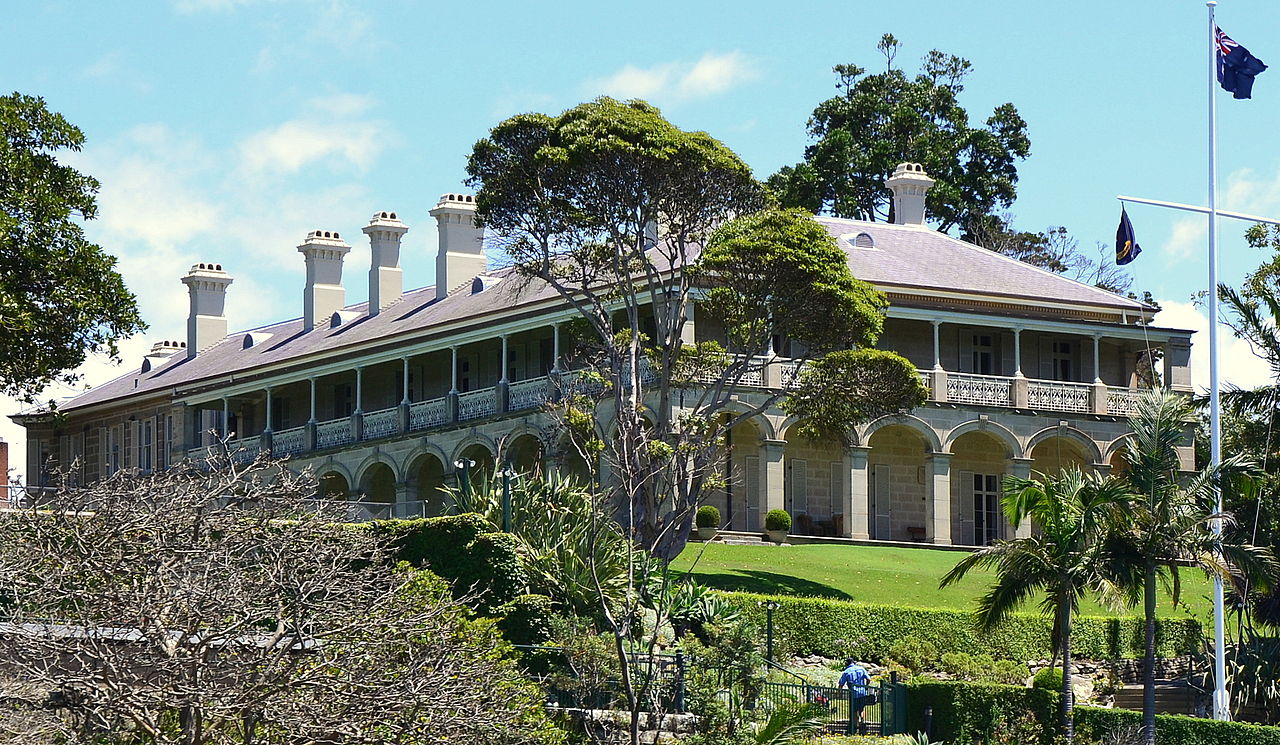
(1) Admiralty House2


Geopolitical Significance and Architectural Grandeur
Situated at the tip of Kirribilli Point, Admiralty House commands a strategic and picturesque location on the northern foreshore of Sydney Harbour. Its geographical placement is paramount, offering unobstructed, iconic vistas across the water towards the Sydney Harbour Bridge and the Sydney Opera House – arguably Australia's most recognizable urban landscape. The manor itself is a substantial sandstone structure, a testament to late 19th and early 20th-century architectural design, incorporating elements of Victorian Regency and Italianate styles.
Developed in phases under the guidance of notable architects James Barnet and Walter Liberty Vernon, the house reflects a period of significant colonial development and architectural ambition in New South Wales. Its adjacency to Kirribilli House, the Prime Minister's Sydney residence, further underscores its geopolitical importance as a hub for national leadership and representation within Australia's premier city.
Evolution of a Vice-Regal Residence
The site's history as a dwelling dates back to 1843 with the construction of a private residence for John George Nathaniel Gibbes, then Collector of Customs for New South Wales. However, the house's enduring identity and name, 'Admiralty House', stem from its subsequent role as the official residence of the Commander-in-Chief of the Royal Navy's Australian Squadron from 1885 to 1913. This period cemented its association with naval command and imperial influence in the region.
Following the establishment of the Commonwealth of Australia in 1901, the property transitioned to a vice-regal function, serving as a residence for the Governor-General. While Government House in Canberra (Yarralumla) is the primary official residence, Admiralty House retains its status as a crucial secondary residence, facilitating the Governor-General's duties and presence in Sydney, the nation's most populous city.
The Contemporary Role of Admiralty House
In its modern capacity, Admiralty House functions as a vital component of Australia's governmental infrastructure. It serves as a principal venue for the Governor-General to conduct official business, host state dinners, receive visiting dignitaries, and engage with the public during ceremonial occasions. The Governor-General, as the representative of the monarch, plays a crucial constitutional role, and Admiralty House provides a fitting and historically resonant backdrop for these responsibilities.
Its location in Sydney, a global city and a major economic and cultural centre, ensures that the Governor-General maintains a visible and accessible presence beyond the national capital. The house is not merely a historical relic but an active site of contemporary governance and diplomacy.
Preservation and Cultural Significance
The enduring importance of Admiralty House is recognized through its inclusion on the Commonwealth Heritage List, a designation awarded on June 22, 2004. This listing signifies its outstanding heritage value to the nation, mandating its protection and preservation for future generations. The sandstone manor, with its architectural merit and historical associations, represents a tangible link to Australia's colonial past, its naval heritage, and the evolution of its vice-regal office.
The presence of historical artifacts, such as a portrait of John George Nathaniel Gibbes painted in 1808, further enriches its historical narrative. Admiralty House stands as a symbol of continuity and tradition within the Australian political landscape, set against one of the world's most spectacular natural harbours.
Education and Public Access
While primarily a working residence for the Governor-General, Admiralty House plays a role in public education and engagement with Australia's history and governance. Although direct public access to the interior may be limited due to its official functions, the exterior and its stunning harbour setting are visible and appreciated by many. Educational programs and historical tours, where available, offer insights into the building's architecture, its past occupants, and its significance in the Australian story.
Understanding places like Admiralty House helps foster a deeper appreciation for the nation's heritage, the evolution of its political institutions, and the symbolic importance of its vice-regal office. It serves as a physical reminder of the layers of history that have shaped modern Australia.
See also
Based on content from Wikipedia · Licensed under CC BY-SA 4.0