

Adi Shankara: The Great Thinker
Images
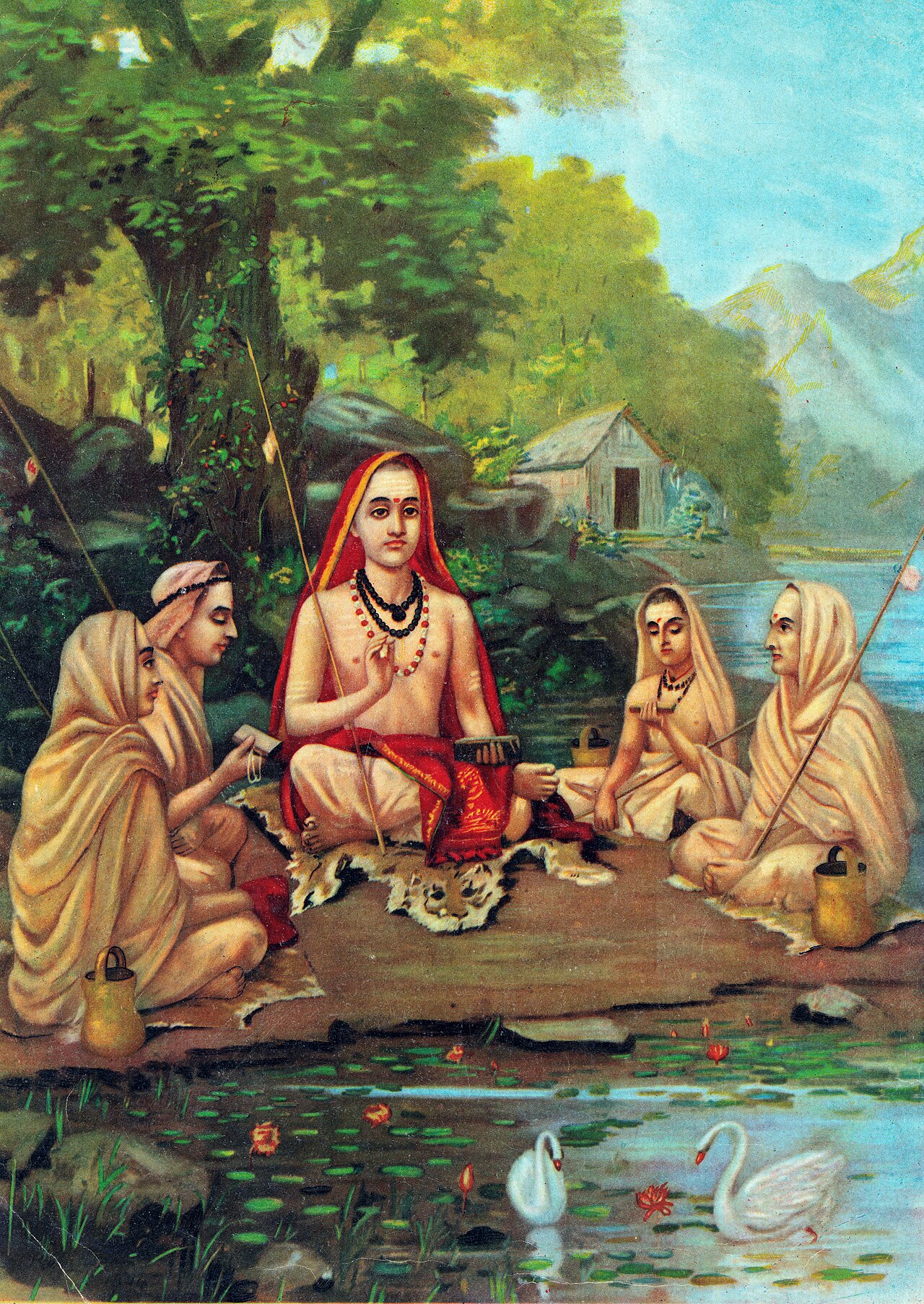
Adi Shankara
The Genesis of Advaita Vedanta and Historical Ambiguity
Adi Shankara, believed to have lived in the 8th century CE, stands as a towering figure in Indian philosophy, primarily for his role in systematizing and popularizing Advaita Vedanta. Born in Kalady, India, reliable historical data about his life is notably scarce, leading to a complex interplay between historical fact and legendary hagiography. While revered as the 'First Shankaracharya,' his immediate historical impact is debated, with some scholars suggesting he was relatively obscure during his lifetime and that his widespread fame emerged centuries later, particularly from the 14th century onwards.
This later period saw the rise of patronage from empires like Vijayanagara, which helped solidify the Sringeri Matha's allegiance to Brahmanical Advaita orthodoxy and elevate Shankara's status. His philosophical project was to synthesize the Upanishadic teachings, emphasizing the non-dualistic nature of reality (Brahman) and the identity of the individual self (Atman) with this ultimate reality, positioning these scriptures as an independent source of knowledge beyond ritualistic interpretations.
The 'Digvijaya' and the Founding of Monastic Orders
The legendary Adi Shankara is depicted as a peripatetic scholar who undertook a 'digvijaya'-a conquest of the four quarters-across the Indian subcontinent. This narrative portrays him engaging in theological debates with proponents of various philosophical and religious schools, including Buddhism, Jainism, and different Hindu traditions. His purported victories in these intellectual contests served to establish the supremacy of Advaita Vedanta.
Crucially, he is credited with establishing four major monastic institutions, or 'mathas,' strategically located in Sringeri, Puri, Dwarka, and Joshimath. These mathas were envisioned as centers for the propagation and preservation of Advaita philosophy and practice. Furthermore, he is traditionally regarded as the organizer of the Dashanami monastic order, a significant development in the institutionalization of renunciate life within Hinduism, and the unifier of the Shanmata tradition of worship.
Reconciling Diverse Traditions
One of Adi Shankara's most significant contributions to the religious landscape of India was his innovative approach to inter-sectarian harmony, particularly through the introduction of the Panchayatana puja. This form of worship involves the simultaneous veneration of five principal deities: Ganesha, Surya (the Sun), Vishnu, Shiva, and Devi (the Goddess). Shankara's genius lay in presenting these deities not as separate gods but as different manifestations or aspects of the singular, formless ultimate reality, Brahman.
By arguing that all deities were ultimately expressions of the one Supreme Being, he provided a philosophical framework that could bridge the divides between the major Hindu traditions-Vaishnavism, Shaivism, and Shaktism. This inclusive methodology fostered a sense of unity and mutual respect among followers of different deities, contributing to the broader consolidation of Hindu identity.
Authorship Debates and the Core of His Philosophy
A vast corpus of over 300 texts is attributed to Adi Shankara, encompassing commentaries (Bhasya), topical expositions (Prakarana grantha), and devotional poetry (Stotra). However, critical scholarship suggests that the majority of these works were likely composed by his disciples, admirers, or scholars sharing his name, rather than by Shankara himself. His authentic works, considered to be his commentaries on ten principal Upanishads, the Bhagavad Gita, the Brahmasutras, and the Upadesasahasri, are foundational to Advaita Vedanta.
These texts articulate a sophisticated philosophical system centered on the liberating knowledge of the self's true identity as Brahman, drawing heavily from the Upanishads and critiquing other philosophical systems, including Mahayana Buddhism, despite perceived influences. The debate over the authenticity of works like the Vivekacudamani highlights the challenges in separating the historical figure from the legendary one.
Enduring Influence and Modern Relevance
Adi Shankara's philosophical framework, particularly his concept of Advaita (non-duality), has had a profound and lasting impact on Indian thought, spirituality, and culture. His emphasis on the ultimate unity of existence and the potential for self-realization continues to resonate. The monastic institutions he founded remain vibrant centers of learning and spiritual practice, perpetuating his teachings.
The title 'Shankaracharya,' adopted by the heads of these and other monastic orders, serves as a constant reminder of his legacy. While the historical details of his life remain subjects of academic inquiry, his intellectual and spiritual contributions have undeniably shaped the course of Indian philosophy and continue to offer profound insights into the nature of reality and the human condition for seekers worldwide.
Go deeper
Based on content from Wikipedia · Licensed under CC BY-SA 4.0