

Adenosine triphosphate
Images
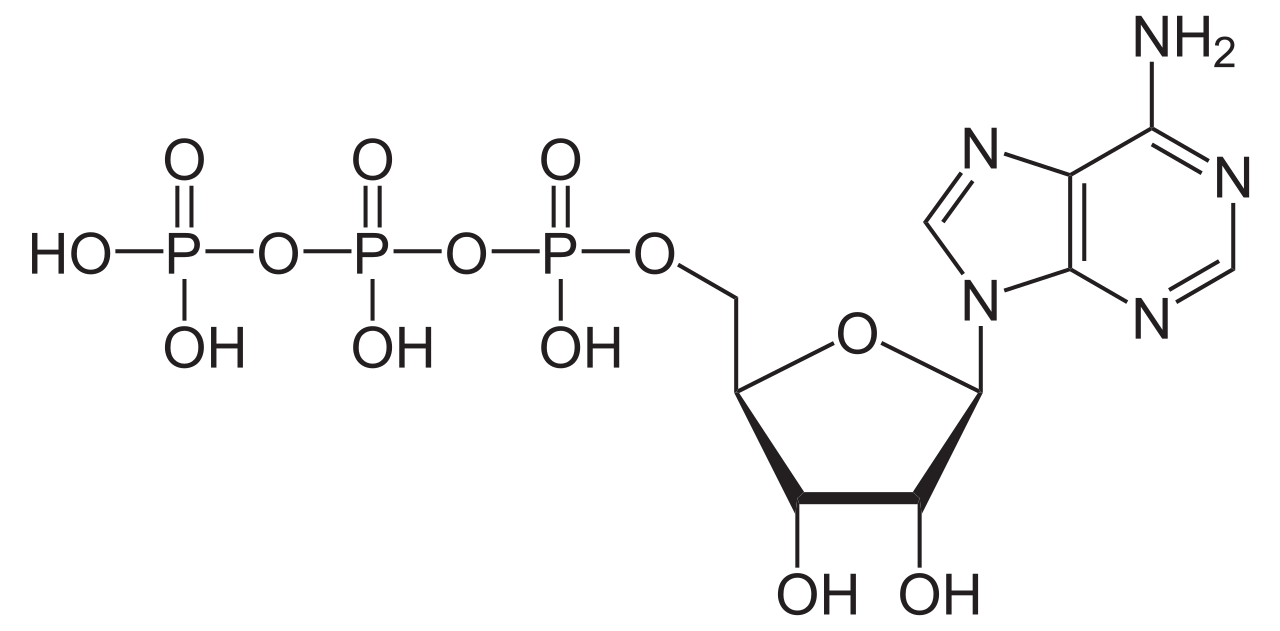
Adenosine triphosphate


ATP
Adenosine triphosphate (ATP) stands as the principal molecule for energy transfer within all known forms of life. Its structure, comprising an adenine base, a ribose sugar, and a chain of three phosphate groups, is uniquely suited for its role. The energy released upon the hydrolysis of the terminal phosphate bond is substantial, approximately 30.5 kJ/mol under standard conditions, making it readily available to power a vast array of cellular activities.
This energy coupling is fundamental to life; ATP acts as an intermediary, capturing energy from exergonic reactions (like cellular respiration) and channeling it into endergonic reactions (like muscle contraction or active transport) that require energy input. Without this efficient energy currency, the complex biochemical machinery of cells would grind to a halt, rendering life impossible. Its ubiquity across all domains of life underscores its evolutionary significance as a conserved energy management system.
The Historical Unraveling of ATP's Energetic Significance
The journey to understanding ATP's central role in cellular energy metabolism was a gradual, collaborative effort spanning decades. Early biochemical studies in the late 19th and early 20th centuries began to identify high-energy phosphate compounds in living tissues. Key breakthroughs came in the 1920s and 1930s with the work of scientists like Edgar Adrian and Yngve Zotterman, who demonstrated the link between muscle activity and the breakdown of phosphocreatine, a related energy-storage molecule.
However, it was Fritz Lipmann's seminal work in the late 1940s that definitively established ATP as the universal energy carrier. His hypothesis, supported by extensive research, proposed that ATP served as the direct source of energy for most cellular processes, a concept that revolutionized biochemistry and earned him the Nobel Prize in Physiology or Medicine in 1953. Subsequent research further elucidated the intricate pathways of ATP synthesis and utilization, solidifying its status as a cornerstone of bioenergetics.
ATP's Indispensable Contribution to Cellular Work and Homeostasis
The importance of ATP extends far beyond simple energy provision; it is integral to maintaining cellular integrity and organismal function. ATP hydrolysis powers three fundamental types of cellular work: mechanical work, such as muscle contraction and cellular movement (e.g., flagella, cilia); transport work, including the active transport of ions and molecules across cell membranes against their concentration gradients (e.g., the sodium-potassium pump); and chemical work, driving endergonic reactions necessary for biosynthesis, such as the synthesis of proteins, nucleic acids, and polysaccharides.
Furthermore, ATP plays a critical role in cell signaling, acting as a precursor for cyclic AMP (cAMP), a vital second messenger. Its constant regeneration and utilization are essential for maintaining cellular homeostasis, regulating gene expression, and enabling complex physiological processes like nerve impulse transmission and immune responses. Disruptions in ATP production or utilization can lead to severe cellular dysfunction and disease.
The Molecular Mechanics of ATP Synthesis and Hydrolysis
ATP is primarily synthesized through two main processes: substrate-level phosphorylation and oxidative phosphorylation. Substrate-level phosphorylation occurs directly in the cytoplasm during glycolysis and in the mitochondria during the Krebs cycle, where a phosphate group is transferred from a high-energy substrate molecule to ADP, forming ATP. Oxidative phosphorylation, the most prolific ATP-generating pathway, occurs in the inner mitochondrial membrane.
Here, electrons harvested from glucose and other fuel molecules are passed along an electron transport chain, creating a proton gradient across the membrane. This gradient drives protons back into the mitochondrial matrix through an enzyme called ATP synthase, which uses the flow of protons to catalyze the synthesis of ATP from ADP and inorganic phosphate. ATP hydrolysis, the reverse process, involves the cleavage of the terminal phosphate bond, releasing energy that is then coupled to various cellular processes.
This continuous cycle of synthesis and hydrolysis ensures a constant supply of readily usable energy for the cell.
ATP's Pervasive Influence
The fundamental role of ATP makes it a focal point in numerous biological processes and a significant target in medical research and drug development. For instance, understanding ATP's role in muscle physiology has led to insights into treatments for muscular dystrophies and fatigue. In neuroscience, ATP is involved in neurotransmission and synaptic plasticity, making it relevant to conditions like Alzheimer's disease and epilepsy.
The efficiency of ATP production is also critical in metabolic disorders such as diabetes and obesity. Furthermore, many drugs and toxins exert their effects by interfering with ATP synthesis or utilization pathways. For example, cyanide inhibits cytochrome c oxidase, a key enzyme in the electron transport chain, thereby blocking oxidative phosphorylation and ATP production.
Conversely, research into enhancing mitochondrial function and ATP generation is a promising avenue for treating age-related diseases and improving overall cellular health. The study of ATP continues to be a vibrant area, bridging fundamental biology with clinical applications.
Go deeper
Frequently Asked Questions
What is ATP?+
Why does ATP give energy to cells?+
How does ATP help muscles move?+
How is ATP made in our bodies?+
What else does ATP do besides giving energy?+
Based on content from Wikipedia · Licensed under CC BY-SA 4.0