

A. P. J. Abdul Kalam
Images

Dr A P J ABDUL KALAM


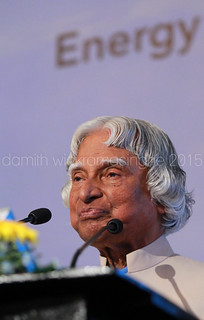


From Humble Origins to Scientific Prowess
Avul Pakir Jainulabdeen Abdul Kalam's life story is a powerful testament to the transformative power of education and perseverance. Born on October 15, 1931, in Rameswaram, Tamil Nadu, he hailed from a devout Muslim family with limited means. His early life was characterized by a deep curiosity about the natural world and a relentless pursuit of knowledge.
After excelling in physics at St. Joseph's College, Tiruchirappalli, he went on to study aerospace engineering at the Madras Institute of Technology. This academic foundation was crucial for his subsequent career, where he would become a pivotal figure in India's scientific and technological advancement.
Kalam's early career saw him contribute to the development of a hovercraft for the Indian Army and later join the Defence Research and Development Organisation (DRDO), where he played a key role in India's nascent missile program. His dedication and innovative thinking quickly set him apart, paving the way for his significant roles in national defense projects.
The 'Missile Man' and India's Strategic Autonomy
Kalam's most celebrated contributions lie in his instrumental role in developing India's indigenous missile and launch vehicle technology. For over four decades, he was deeply involved with both the Defence Research and Development Organisation (DRDO) and the Indian Space Research Organisation (ISRO). His leadership and technical acumen were central to the success of programs like the Agni and Prithvi missiles, earning him the moniker 'Missile Man of India.' Beyond missile development, Kalam was a driving force behind India's civilian space program and played a pivotal organizational, technical, and political role in the Pokhran-II nuclear tests in 1998.
These tests were a landmark achievement, significantly enhancing India's strategic capabilities and asserting its position as a nuclear power, a crucial step towards achieving greater national autonomy and security in a complex geopolitical landscape.
The 'People's President'
In a remarkable transition from scientist to statesman, A. P. J.
Abdul Kalam was elected the 11th President of India in 2002. His election was a unique consensus, supported by both the ruling Bharatiya Janata Party and the opposition Indian National Congress, reflecting his broad appeal and respected stature. During his tenure from 2002 to 2007, he was widely revered as the 'People's President.' He actively engaged with citizens from all walks of life, particularly the youth, inspiring them with his vision of a developed India and encouraging them to pursue scientific temper and innovation.
His presidency was characterized by a focus on education, healthcare, and national integration, aiming to bridge the gap between scientific progress and societal well-being. He used his platform to advocate for a knowledge-based economy and a more equitable society.
A Lifelong Advocate for Knowledge and Service
Following his presidency, Kalam continued his lifelong commitment to teaching, writing, and public service. He became a visiting professor at several prestigious institutions, sharing his vast experience and insights with aspiring minds. His autobiography, 'Wings of Fire,' became an international bestseller, offering a deeply personal account of his journey and his philosophy of life.
He authored numerous other books, focusing on themes of inspiration, leadership, and the future of India. Kalam was a recipient of numerous awards and honors, including the Bharat Ratna, India's highest civilian award, in 1997, recognizing his unparalleled contributions to science, defense, and the nation. His unwavering dedication to learning and his commitment to serving humanity left an indelible mark.
Enduring Legacy
A. P. J.
Abdul Kalam's life came to an end on July 27, 2015, at the age of 83, while delivering a lecture at the Indian Institute of Management Shillong. His passing was mourned across India and beyond, with thousands attending his funeral in Rameswaram, where he was laid to rest with full state honors. A memorial was inaugurated near his hometown in 2017, serving as a lasting tribute to his extraordinary life and contributions.
Kalam's legacy extends far beyond his scientific achievements and presidential tenure. He remains an enduring symbol of national pride, a role model for millions, and a constant reminder of the potential that lies within every individual to achieve greatness through dedication, hard work, and a profound commitment to the betterment of society.
See also
Frequently Asked Questions
Who was A. P. J. Abdul Kalam?+
What did he build?+
When did he become president?+
Why is he called the "People's President"?+
What did he do after being president?+
Based on content from Wikipedia · Licensed under CC BY-SA 4.0