

55 Hudson Yards
Images

55 Hudson Yards New York NY 2017 11 12 11


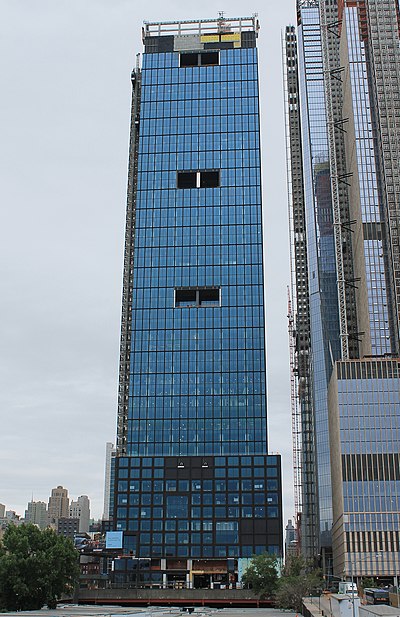


Contextualizing 55 Hudson Yards within Urban Planning
55 Hudson Yards represents a critical component of the broader expansion and revitalization efforts in Manhattan's West Side. While technically situated just outside the official Hudson Yards Redevelopment Project boundaries, its presence and scale are intrinsically linked to the project's success. The building, along with its counterpart 50 Hudson Yards, adds a substantial 4 million square feet of prime commercial real estate to the area.
This strategic development aims to transform a historically industrial zone into a dynamic mixed-use neighborhood, attracting businesses, residents, and visitors. The decision to build here, rather than within the core project, might reflect complex land acquisition, zoning, or development strategies, demonstrating the multifaceted nature of large-scale urban planning. The building's completion in early 2019 signifies a tangible realization of these ambitious urban visions.
A Layered History
The site of 55 Hudson Yards possesses a history far removed from its current corporate identity. It was once earmarked for the World Product Center, a project that ultimately failed to materialize, illustrating the speculative and often uncertain nature of major development proposals. Prior to that, the land was famously occupied by the Copacabana, an iconic nightclub that was a fixture of New York's nightlife scene from 2001 until its closure in January 2007.
This juxtaposition of past entertainment venues with a modern commercial tower highlights the constant evolution of urban spaces, where entertainment districts can transform into business hubs. The site also previously housed a FedEx World Service Center, indicating a history of logistical and commercial activity predating the skyscraper.
Economic Significance and Urban Density
The addition of 55 Hudson Yards and its neighboring towers is not merely about increasing the city's vertical footprint; it's a calculated move to bolster New York City's economic vitality. By providing millions of square feet of office space, these buildings cater to the demand for modern, well-equipped workspaces, essential for attracting and retaining businesses in a competitive global market. This influx of commercial activity stimulates job creation, supports ancillary services, and contributes significantly to the city's tax base.
Furthermore, the concentration of businesses in a well-connected area like Hudson Yards enhances the city's status as a global center for finance, technology, and innovation. The building's proximity to major transit infrastructure, such as the 34th Street subway entrance, is a key factor in its economic viability, ensuring accessibility for a large workforce.
Architectural Considerations and Future Implications
While specific architectural details are not provided in the source, skyscrapers like 55 Hudson Yards are typically designed with cutting-edge engineering and contemporary aesthetics. They often feature large, flexible floor plates to accommodate diverse tenant needs, advanced sustainability features, and high-performance building systems. The design would aim to integrate seamlessly with the surrounding urban environment while making a distinct architectural statement.
The presence of such a large, modern office building influences the surrounding micro-economy, potentially driving demand for local services and amenities. Its success is a bellwether for the continued development and economic resilience of the Hudson Yards district and New York City as a whole, shaping the future of work and urban living.
The Role of Infrastructure and Connectivity
The strategic placement of 55 Hudson Yards, directly above the 34th Street subway entrance on the Hudson Park and Boulevard, underscores the critical importance of infrastructure in modern urban development. This prime location ensures excellent connectivity for employees, clients, and visitors, reducing commute times and enhancing the building's appeal to businesses. The integration of new commercial developments with existing and improved public transportation networks is a hallmark of successful urban planning.
It allows for increased density without overwhelming local infrastructure and promotes a more sustainable urban environment by encouraging public transit use. This connectivity is not just a convenience; it is a fundamental driver of economic activity and urban dynamism.
See also
Based on content from Wikipedia · Licensed under CC BY-SA 4.0