

1988 United States presidential election
Images

ElectoralCollege1988




The Open Seat and the Republican Ascendancy
The 1988 United States presidential election was unique as it was the first 'open seat' election since 1968, with President Ronald Reagan constitutionally barred from seeking a third term. This created an opportunity for both parties to claim the presidency. George H.
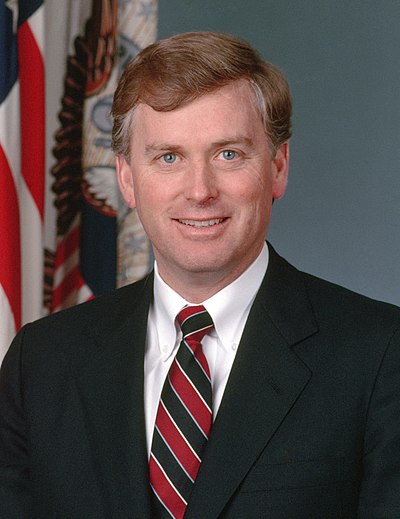
W. Bush, as the sitting Vice President, entered the Republican primaries as the presumptive nominee, successfully navigating challenges from figures like Senator Bob Dole and televangelist Pat Robertson. His selection of Indiana Senator Dan Quayle as his running mate, while initially controversial, aimed to appeal to a broader base.
On the Democratic side, Massachusetts Governor Michael Dukakis secured the nomination, campaigning on his state's economic record. His path was eased by the withdrawal of Gary Hart and Ted Kennedy's decision not to run, leaving Dukakis to choose Texas Senator Lloyd Bentsen as his running mate, a move intended to add gravitas and appeal to centrist voters.
Campaign Narratives and Strategic Messaging
The campaign was characterized by distinct strategic approaches. Bush's campaign masterfully leveraged the perceived success of the Reagan administration, focusing on themes of economic prosperity, reduced crime rates, and a continuation of Reagan's conservative policies. A central tenet of their strategy was to define Dukakis as an out-of-touch 'Massachusetts liberal' and to paint him as 'soft on crime.' This narrative proved highly effective, particularly through the use of potent attack ads.
Dukakis's campaign, while highlighting his record of economic growth in Massachusetts, struggled to counter these attacks effectively. His responses were often perceived as too intellectual or defensive, failing to resonate with a broad electorate. Bush's campaign gained significant momentum following the Republican National Convention and two well-received debate performances, solidifying his lead in the polls.
Electoral Outcome and Historical Footnotes
The election culminated in a decisive victory for George H. W. Bush and Dan Quayle on November 8, 1988.
Bush secured a substantial win in both the Electoral College and the popular vote, marking the third consecutive presidential victory for the Republican Party. This cemented a period of Republican dominance that began in 1980. Bush's election as the fourth sitting Vice President to win the presidency since John Adams in 1796 underscored the strength of incumbency within the executive branch.
Despite the landslide, the election was not without its nuances; Dukakis managed to flip nine states that had voted Republican in 1984, indicating pockets of Democratic resilience. The election's outcome also holds several statistical distinctions: it remains the most recent instance of a candidate winning over 400 electoral votes and carrying 40 or more states, and it was the last open-seat election where the outgoing president's party retained the White House.
Demographic Shifts and Enduring Legacies
The electorate in 1988 reflected evolving demographic trends. Exit poll data indicated that voters aged 44 and younger (born 1944 or later) constituted a majority of the voting population, suggesting that the Baby Boomer and Generation X cohorts were increasingly influential. This demographic shift has continued to shape American politics.
The 1988 election also stands as a significant marker in the history of presidential elections. It represents the most recent time a party achieved a third consecutive presidential term, a feat of sustained political power. Furthermore, it is the earliest election in which at least one of the major party nominees or vice-presidential nominees (Michael Dukakis and Dan Quayle, respectively) is still alive as of 2024, offering a tangible link to a more recent past for historical analysis and reflection.
See also
Frequently Asked Questions
Who won the 1988 U.S. presidential election?+
Why was the 1988 election called an "open seat" election?+
Who was the Democratic candidate in 1988?+
What was a main strategy of Bush's campaign?+
Which age group made up most of the voters in 1988?+
Based on content from Wikipedia · Licensed under CC BY-SA 4.0