

1904 Summer Olympics
Images

1904 Summer Olympics Medal Map


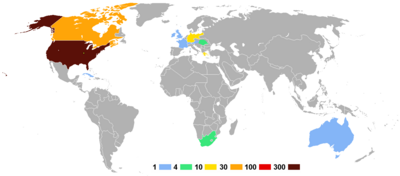


The Western Hemisphere's Inaugural Games
The 1904 Summer Olympics, officially designated as the Games of the III Olympiad, represented a significant geographical expansion for the Olympic movement, marking the first time the Games were held outside of Europe and in the Western Hemisphere. Hosted in St. Louis, Missouri, from July 1st to November 23rd, 1904, these Games were characterized by their extended duration and the central role of Francis Field at Washington University.
The decision to award the Games to St. Louis was part of a broader effort to showcase American progress and organizational capabilities on a global stage. However, the event's historical significance is often viewed through the lens of its unique circumstances, which profoundly shaped the nature and scale of international participation.
Navigating Geopolitical and Logistical Barriers
The participation in the 1904 St. Louis Olympics was significantly impacted by formidable logistical and geopolitical challenges. The vast distance from Europe and other parts of the world, coupled with the nascent state of international travel infrastructure, presented a major deterrent for many potential athletes.
Compounding these difficulties was the outbreak of the Russo-Japanese War in 1904, which further disrupted travel routes and heightened global tensions, making international journeys perilous and impractical for many. Consequently, the Games saw an overwhelming majority of athletes hailing from the United States and Canada. Out of approximately 651 competitors, only a small fraction, estimated between 69 and 74 individuals, represented nations outside of North America.
This limited international turnout meant that several events effectively served as combined U.S. national championships and Olympic competitions, altering the competitive landscape.
The Genesis of the Modern Medal System
Perhaps the most enduring and universally recognized innovation of the 1904 Summer Olympics was the formal establishment of the gold, silver, and bronze medal system for first, second, and third place. Prior to these Games, the recognition of Olympic champions was less standardized, with various awards and honors being bestowed. The decision to implement a clear, tiered medal structure at St.
Louis 1904 laid the foundation for the iconic podium ceremonies that have become synonymous with the Olympic Games. This system provided a clear and globally understood method of celebrating athletic achievement, fostering a sense of aspiration and competition that continues to motivate athletes and captivate audiences worldwide to this day.
A Marathon of Sport and Spectacle
The 1904 St. Louis Olympics were notable not only for their historical context but also for their unusually protracted schedule, spanning nearly five months. This extended timeframe allowed for a comprehensive display of athletic prowess across a diverse range of disciplines.
While the limited international participation presented unique challenges, the Games still offered a platform for remarkable athletic performances and the exploration of various sports. The sheer duration of the event underscored the ambition of the organizers to create a grand spectacle, even amidst the considerable obstacles. The legacy of these Games is complex, highlighting both the growing global reach of the Olympics and the persistent difficulties in achieving truly universal participation in the early 20th century.
See also
Frequently Asked Questions
What were the 1904 Summer Olympics and where were they held?+
Why were there not many athletes from other countries at the 1904 Olympics?+
What new tradition started at the 1904 Olympics?+
How long did the 1904 Olympics last?+
Where was the main venue for the 1904 Olympics?+
Based on content from Wikipedia · Licensed under CC BY-SA 4.0