

175 Greenwich Street
Images

Looking Up At 3 And 4 World Trade Center (Cropped)

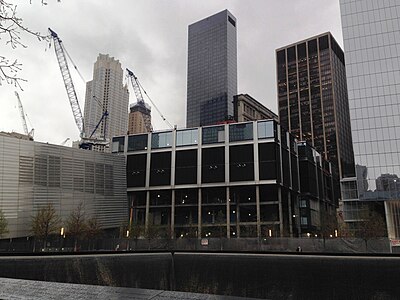


Geographic and Urban Context
Situated at 175 Greenwich Street, this skyscraper is an integral component of the rebuilt World Trade Center complex in Lower Manhattan, New York City. This specific location places it within a dense urban fabric characterized by high-rise architecture and significant historical resonance. The climate of New York City is temperate, featuring distinct seasons that influence urban life and building design, from managing summer heat and humidity to withstanding winter snow and ice.
The proximity to the Hudson River offers a visual and environmental counterpoint to the built environment, influencing local microclimates and providing scenic vistas. The area is a global nexus for finance, culture, and tourism, with 175 Greenwich Street contributing to its modern identity and economic vitality.
Architectural Evolution and Reconstruction
Completed in 2018, 175 Greenwich Street, also known as 3 World Trade Center, represents a significant phase in the redevelopment of the World Trade Center site. Its design, by the architectural firm Rogers Stirk Harbour + Partners, emphasizes a modern aesthetic with a distinctive structural expression. Standing at 1,150 feet (350 meters), it is one of the tallest buildings in the complex and the city.
The construction utilized advanced engineering techniques and materials, including a steel exoskeleton that provides structural support and visual interest. The building's design also incorporates sustainable features, reflecting contemporary architectural priorities. Its presence signifies a forward-looking approach to urban development, rebuilding and reimagining a site of profound historical importance.
Economic Engine
As a premier office building, 175 Greenwich Street functions as a critical economic engine within New York City. It houses a diverse array of tenants, attracting major corporations and innovative startups across sectors such as technology, media, finance, and law. The building's strategic location in a global financial capital, coupled with its state-of-the-art facilities, makes it a highly desirable address for businesses seeking prestige and connectivity.
Its occupancy contributes significantly to local employment and the broader economic output of Manhattan. The tower is more than just office space; it is a platform for commerce, collaboration, and the generation of wealth, reinforcing New York City's status as a world-leading business center.
A Microcosm of Professional Development and Urban Learning
Within the professional environment of 175 Greenwich Street, continuous learning and skill development are inherent. Employees engage in ongoing education through their work, adapting to industry advancements and honing specialized expertise. The building itself serves as a case study in modern construction, urban planning, and sustainable design, offering practical insights for students and professionals in architecture, engineering, and real estate.
It embodies the concept of a 'learning organization,' where the collective knowledge and experience of its diverse tenants contribute to innovation and problem-solving. Furthermore, its role within the World Trade Center complex provides a tangible connection to lessons learned from past events, fostering a culture of resilience and forward-thinking.
Governance and Urban Planning
The development and operation of 175 Greenwich Street are intrinsically linked to the complex governance and urban planning initiatives that have shaped the World Trade Center site. Following the tragic events of September 11, 2001, the rebuilding process involved extensive collaboration between public agencies, private developers, and community stakeholders. The Port Authority of New York and New Jersey played a crucial role in overseeing the site's redevelopment.
The planning process prioritized not only the construction of new buildings but also the creation of public spaces, transportation infrastructure, and memorial sites, aiming to restore and enhance the vitality of Lower Manhattan. 175 Greenwich Street is a product of this comprehensive urban strategy, reflecting a commitment to resilience, economic recovery, and the creation of a vibrant, functional urban district.
See also
Frequently Asked Questions
What is 175 Greenwich Street?+
How tall is 175 Greenwich Street?+
Who designed the building?+
What kinds of companies work inside 175 Greenwich Street?+
Does the building have any special features?+
Based on content from Wikipedia · Licensed under CC BY-SA 4.0