

1299: A Year in Time!
Images
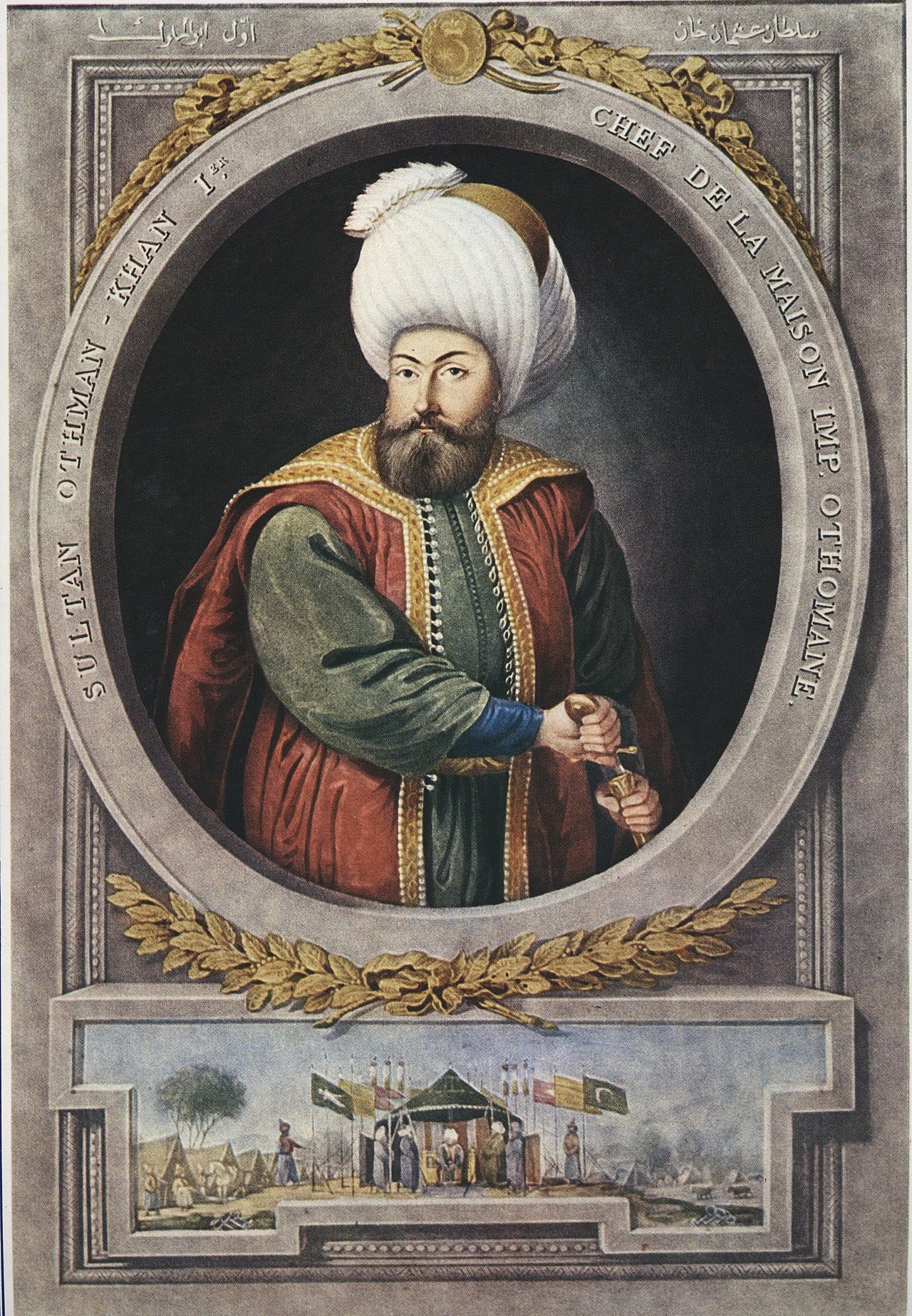
Osman Gazi2


The Temporal Framework of 1299
The year 1299 was a common year, meaning it comprised 365 days, and it commenced on a Thursday according to the Julian calendar. This calendar, instituted by Julius Caesar in 45 BCE, was the predominant civil calendar in the Roman world and subsequently throughout Europe for over sixteen centuries. Its fundamental structure involved a 365-day year, with an intercalary day (February 29th) added every four years to approximate the solar year.
While a revolutionary improvement over previous Roman calendars, the Julian system's approximation was not perfectly accurate; it assumed a solar year of exactly 365.25 days, whereas the actual solar year is approximately 365.2422 days. This discrepancy, though small, accumulated over centuries. By 1299, the Julian calendar had already drifted by several days relative to the astronomical seasons.
This drift was a known issue, though the impetus for reform and the eventual adoption of the Gregorian calendar would not gain significant traction for several more centuries. Therefore, 1299 was a year lived within a temporal framework that, while functional and widely accepted, contained an inherent, albeit slow-acting, inaccuracy that would eventually necessitate a major calendrical revision.
Significance of 1299
The year 1299 itself is not marked by a singular, epoch-defining event in major historical narratives. Its significance, therefore, is not derived from isolated incidents but from its position as a data point within the broader historical continuum. It represents the late stages of the High Middle Ages, a period characterized by evolving feudal structures, burgeoning trade, and intellectual developments that would pave the way for the Renaissance.
Understanding years like 1299 allows historians to analyze trends in population, economic activity, and cultural shifts with greater granularity. The fact that it was a 'common year' and began on a Thursday provides specific anchors for historical research, enabling the precise dating of events and the correlation of different historical records. Furthermore, the continued reliance on the Julian calendar in 1299 highlights the inertia of established systems and the gradual nature of societal and scientific progress.
It underscores that historical change is often incremental, built upon the foundations and practices of preceding eras.
The 'Common Year' and Calendrical Precision
The designation of 1299 as a 'common year' is a direct consequence of the Julian calendar's rules and the astronomical reality of the Earth's orbit. A common year, with its 365 days, stands in contrast to a leap year, which includes an extra day (February 29th) to compensate for the fact that the solar year is approximately 365.2422 days long, not precisely 365.25 days as the Julian calendar assumed. The Julian system's rule of adding a leap day every four years meant that it overcorrected by about 11 minutes per year.
Over the centuries leading up to 1299, this small annual error had accumulated. The difference between the Julian calendar and the true solar year by the late 13th century was approximately 10 days. This growing discrepancy meant that religious holidays tied to celestial events, such as Easter, were slowly drifting out of sync with their traditional astronomical timings.
The eventual reform, the Gregorian calendar in 1582, addressed this by skipping 10 days and adjusting the leap year rule to be more accurate, demonstrating the long-term impact of seemingly minor calendrical inaccuracies.
Contextualizing 1299
To truly appreciate the context of 1299, one must look beyond the year's numerical designation and its calendrical type. It was a year within a world shaped by the aftermath of the Crusades, the Mongol conquests, and the early stirrings of new political and economic powers. In Europe, the 13th century was a period of significant architectural achievements, the flourishing of universities, and the development of early parliamentary systems.
In the Islamic world, it was a time of intellectual and scientific preservation and innovation, despite the ravages of the Mongol invasions. The fact that 1299 began on a Thursday under the Julian calendar is a detail that allows for precise historical cross-referencing, but the broader significance lies in the societal, political, and cultural currents of the era. It was a year where the foundations for future developments were being laid, often in ways that were not immediately apparent to the people living through them.
Understanding 1299, therefore, involves situating it within these larger, dynamic historical forces.
See also
Frequently Asked Questions
What was special about the year 1299 in the Julian calendar?+
Why did the Julian calendar drift from the real seasons by 1299?+
How many days were in a common year like 1299?+
Why was a new calendar eventually created?+
What kind of life and changes happened around 1299?+
Based on content from Wikipedia · Licensed under CC BY-SA 4.0