

Yenisey
Images
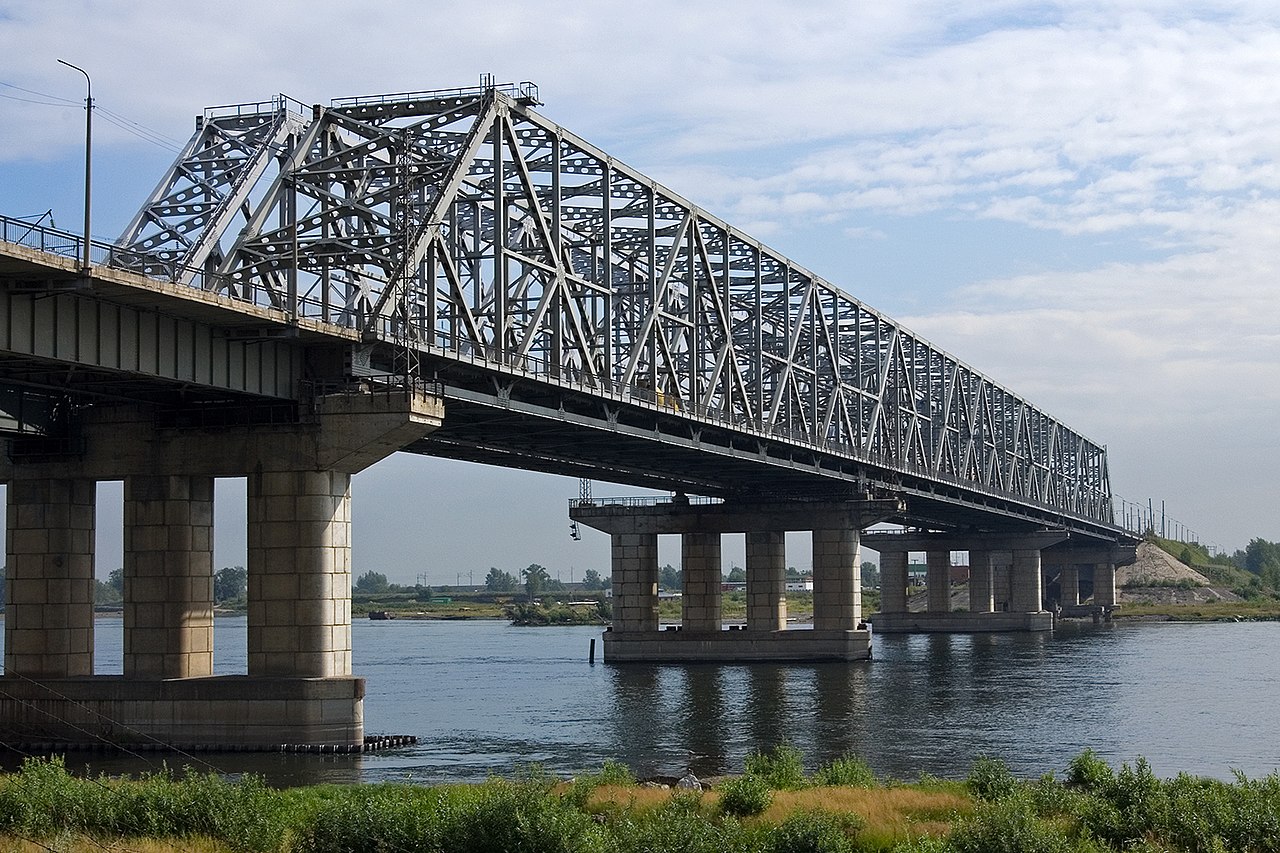
Most 777, the bridge over the Yenisei in Krasnoyarsk, Russia, view from the left bank


The Yenisey
The Yenisey River stands as one of the planet's most formidable river systems, a true hydrographic titan dominating the geography of Siberia. Its immense drainage basin, spanning over 2.5 million square kilometers, collects water from a vast swathe of northern Asia, making it the largest river system flowing into the Arctic Ocean. The Yenisey itself, formed by the confluence of the Greater Yenisey and Lesser Yenisey rivers, stretches for approximately 3,487 miles, placing it among the world's longest rivers.
Its journey is characterized by a dramatic north-flowing trajectory, traversing diverse biomes from the Mongolian Plateau's foothills through the dense Siberian taiga and finally into the treeless Arctic tundra. The river's immense discharge rate, averaging around 19,600 cubic meters per second, significantly influences Arctic Ocean salinity and circulation patterns. This colossal scale underscores its profound impact on regional hydrology, climate, and the very landscape it sculpts.
Navigating Extremes
The Yenisey basin experiences some of the most extreme continental climates on Earth, with frigid, prolonged winters and short, intense summers. For a significant portion of the year, typically from November to May, the river is covered by thick ice, effectively halting navigation and transforming the landscape. This annual freeze-thaw cycle profoundly shapes the river's ecosystem.
During the brief summer melt, the river swells dramatically, carrying vast amounts of sediment and nutrients northward. The Yenisey's delta, a sprawling labyrinth of channels and islands, is a critical habitat for migratory birds and unique Arctic flora and fauna. The river's freshwater outflow plays a vital role in moderating the salinity of the Kara Sea, an important part of the Arctic Ocean, influencing marine life and ice formation in the region.
A Tapestry of Cultures and Historical Currents
Human history along the Yenisey is as deep and complex as the river itself. Indigenous peoples, including the Samoyedic groups like the Nenets and Enets, and Tungusic groups like the Evenks, have inhabited its banks for millennia, developing sophisticated survival strategies and cultural traditions intimately tied to the river's cycles. Their traditional livelihoods revolved around fishing, reindeer herding, and hunting.
The arrival of Russian explorers and Cossacks in the 17th century marked a new era, driven by the lucrative fur trade and the desire to expand the empire. The Yenisey became a crucial artery for exploration and settlement, with cities like Krasnoyarsk and Yeniseysk founded as strategic outposts. The Soviet era saw massive industrialization, including the construction of large hydroelectric dams, which dramatically altered the river's flow and ecology but also powered industrial growth.
The Yenisey's Economic Engine and Geopolitical Nexus
The Yenisey is a cornerstone of Siberia's economy and holds significant geopolitical importance for Russia. Its vast hydroelectric potential is realized through major dams like the Krasnoyarsk Dam and Sayano-Shushenskaya Dam, which provide substantial amounts of electricity, powering industries and cities across the region. The river serves as a vital transportation corridor, particularly the Northern Sea Route, allowing for the shipment of resources like timber, coal, nickel, and palladium from inland mines and forests to international markets.
The fisheries along the Yenisey and its tributaries are also economically significant. Furthermore, the river basin contains substantial untapped mineral resources, making it a focus of ongoing exploration and development. Control and utilization of the Yenisey system are integral to Russia's strategic interests in the Arctic and its role as a major global energy and resource supplier.
Education and Research Along the Great River
The importance of the Yenisey necessitates robust educational and research efforts. Major universities in cities like Krasnoyarsk, such as Siberian Federal University, offer programs in environmental science, hydrology, geography, and engineering, with a strong focus on the unique challenges and opportunities presented by the Yenisey basin. Research institutions conduct vital studies on the river's ecology, climate change impacts, ice dynamics, and sustainable resource management.
Understanding the complex interactions between the river, its environment, and the human populations is crucial for effective conservation and development strategies. Educational initiatives also aim to preserve the cultural heritage of the indigenous peoples who have lived along the Yenisey for centuries, ensuring their knowledge is passed down.
See also
Frequently Asked Questions
What is the Yenisey River?+
Why does the Yenisey freeze for so many months?+
How does the Yenisey help the Arctic Ocean?+
Who lives along the Yenisey River?+
How do people use the Yenisey River today?+
Based on content from Wikipedia · Licensed under CC BY-SA 4.0