

World Population: Our Amazing Human Family!
Images

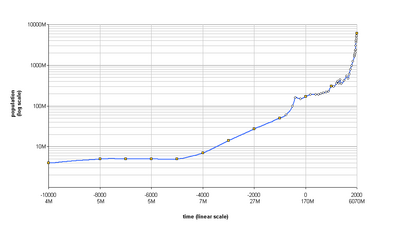
World Population Since 1300 A.D. Chart




The Unprecedented Surge
The narrative of human population is one of dramatic acceleration. For the vast majority of human history, our numbers remained relatively small, constrained by environmental factors, disease, and limited technological capacity. It took an estimated 300,000 years of human prehistory and history for the global population to reach its first billion.
This slow, almost imperceptible growth underscores the precarious existence of early human societies. However, the advent of agriculture, followed by the Industrial Revolution and advancements in medicine and public health, fundamentally altered this trajectory. The period following the Great Famine and the Black Death, which saw a population of approximately 370 million in 1350, marked a turning point.
Subsequent centuries witnessed a gradual but steady increase, culminating in an exponential surge in the 20th century. The transition from reaching one billion over millennia to adding subsequent billions in mere centuries highlights a profound shift in humanity's ability to sustain itself and expand.
The Mid-20th Century Growth Spurt and Its Aftermath
The period between 1955 and 1975 stands out as a critical juncture, characterized by the highest global population growth rates, exceeding 1.8% annually and peaking at an extraordinary 2.1% between 1965 and 1970. This demographic explosion was largely driven by dramatic reductions in mortality rates, particularly infant and child mortality, due to widespread improvements in sanitation, vaccination programs, and the availability of antibiotics. While fertility rates remained high in many regions, the decline in deaths led to a significant net increase in population.
However, this rapid growth also brought about new challenges, including increased pressure on resources, environmental degradation, and debates about carrying capacity. Recognizing these implications, global efforts and changing socio-economic conditions have since led to a deceleration in growth rates, which declined to 1.1% between 2015 and 2020.
Navigating the Uncertainties of Future Population Trajectories
Forecasting the future of world population is a complex endeavor, fraught with variables. The United Nations Department of Economic and Social Affairs projects a continued increase, estimating between 9 and 10 billion people by 2050. Beyond that, projections become more varied.
The UN's 80% confidence interval suggests a range of 10 to 12 billion by the end of the 21st century, with an anticipated zero growth rate by then. This stabilization is predicated on declining fertility and mortality rates globally. However, alternative demographic models propose that the global population may begin to decline in the latter half of the 21st century.
This divergence in projections underscores the sensitivity of population trends to factors such as access to education, family planning, economic development, and cultural norms, making long-term predictions inherently uncertain.
The Mechanics of Growth
The dynamics of population change are fundamentally governed by the interplay of births and deaths. Currently, approximately 140 million babies are born each year. This number is projected to peak around 2040-2045 at 141 million annually before beginning a slow decline towards 126 million by 2100.
Concurrently, the number of deaths, currently around 57 million per year, is expected to rise steadily to 121 million by the end of the century. This shift, where the number of deaths approaches the number of births, is a key indicator of population stabilization or decline. Furthermore, the median age of the global population, which was 31 years in 2020, provides insight into the age structure.
An aging population, with a higher proportion of older individuals, has different societal implications regarding healthcare, pensions, and workforce participation compared to a younger demographic.
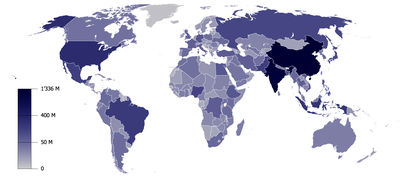
Global Population
The sheer scale of the human population, and its ongoing growth, has profound implications across virtually every facet of global society and the environment. Resource management is a paramount concern; feeding, housing, and providing energy for billions necessitates intensive agricultural practices, urban development, and energy consumption, all of which carry significant environmental footprints. Climate change, biodiversity loss, water scarcity, and pollution are inextricably linked to population size and consumption patterns.
From a socio-economic perspective, population dynamics influence labor markets, urbanization trends, migration patterns, and the demand for public services like education and healthcare. Understanding these complex interdependencies is crucial for developing sustainable development strategies, addressing global inequalities, and fostering a future where both humanity and the planet can thrive.
See also
Frequently Asked Questions
How many people live on Earth right now?+
Why did the world population grow so fast in the 20th century?+
When did humans first reach 1 billion people?+
What happened between 1955 and 1975 that made the population grow the fastest?+
What could the world population look like by 2050 or 2100?+
Based on content from Wikipedia · Licensed under CC BY-SA 4.0