

Resources: Earth's Amazing Gifts!
Images

20210331 Global tree cover loss - World Resources Institute




Defining Resources
The concept of a resource extends beyond mere material availability; it encompasses a complex interplay of technological, economic, and socio-cultural factors. A substance or phenomenon only becomes a resource when it is technologically accessible, meaning we have the means to extract or utilize it. It must also be economically feasible, justifying the cost of extraction and processing against its market value or utility.
Crucially, for long-term viability, resources must be culturally sustainable, implying their use does not deplete them for future generations or cause irreparable environmental damage. From this perspective, resources are dynamic entities, their value and accessibility often redefined by innovation and societal needs, serving as the fundamental drivers of human progress and well-being.
From Hunter-Gatherers to the Information Age
Human history is intrinsically linked to the evolution of resource utilization. Early hominids leveraged basic geological resources like stone for tools and biological resources like plants and animals for sustenance. The Neolithic Revolution marked a paradigm shift with the mastery of agricultural resources, transforming nomadic lifestyles into settled societies.
The Bronze and Iron Ages demonstrate humanity's growing ability to exploit mineral resources, enabling advancements in metallurgy and warfare. The Industrial Revolution, fueled by coal and later petroleum, unleashed unprecedented productive capacity but also introduced significant environmental externalities. Today, we are navigating the complexities of a globalized economy, increasingly reliant on information and digital resources, while grappling with the finite nature of many traditional resources and the urgent need for sustainable alternatives.
The Indispensable Role of Resources in Society and Economy
Resources are the bedrock upon which economies are built and societies function. They are the inputs for all production processes, from basic necessities like food and shelter to advanced technologies and services. The availability, accessibility, and management of resources profoundly influence national wealth, geopolitical power, and individual quality of life.
Economic theories often revolve around resource allocation, scarcity, and distribution. Furthermore, the concept of 'human resources' highlights the value of people's skills, knowledge, and labor as critical assets. The efficient and equitable utilization of resources is therefore paramount for fostering economic growth, ensuring social stability, and enhancing overall human well-being.
Technological Innovation
Technology acts as a critical catalyst in the resource lifecycle, transforming raw materials into valuable assets and enabling access to previously unusable substances. Innovations in extraction techniques, such as deep-sea drilling or advanced mining, expand the frontier of accessible resources. Processing technologies refine raw materials into usable forms, like refining crude oil into gasoline or purifying water.
Furthermore, technology is pivotal in developing resource substitutes and enhancing efficiency. For example, advancements in renewable energy technologies are making solar and wind power increasingly competitive with fossil fuels. Similarly, innovations in material science are leading to lighter, stronger, and more sustainable materials, reducing reliance on traditional, resource-intensive options.
Navigating the Future
The 21st century presents profound challenges related to resource management. Growing global populations and rising consumption patterns are placing unprecedented strain on finite resources, leading to concerns about scarcity and environmental degradation. This necessitates a fundamental shift towards sustainable resource management and a concept of global stewardship.
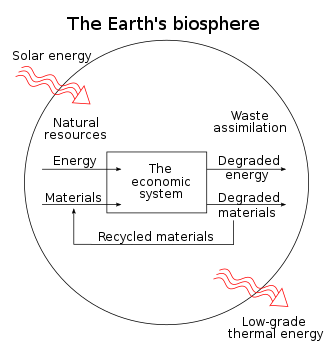
Key strategies include transitioning to a circular economy, where waste is minimized and materials are reused and recycled; investing heavily in renewable energy sources; developing innovative solutions for water conservation and food production; and fostering international cooperation to manage shared resources equitably. The ethical dimension of resource use, encompassing intergenerational equity and environmental justice, is becoming increasingly central to policy and practice.
Go deeper
Frequently Asked Questions
What is a resource?+
Why did early people use stone and plants?+
How did the Industrial Revolution change the way we use resources?+
What role does technology play in using resources?+
Why is it important to use resources in a sustainable way?+
Based on content from Wikipedia · Licensed under CC BY-SA 4.0