

The Weak Interaction: A Tiny Cosmic Helper!
Images
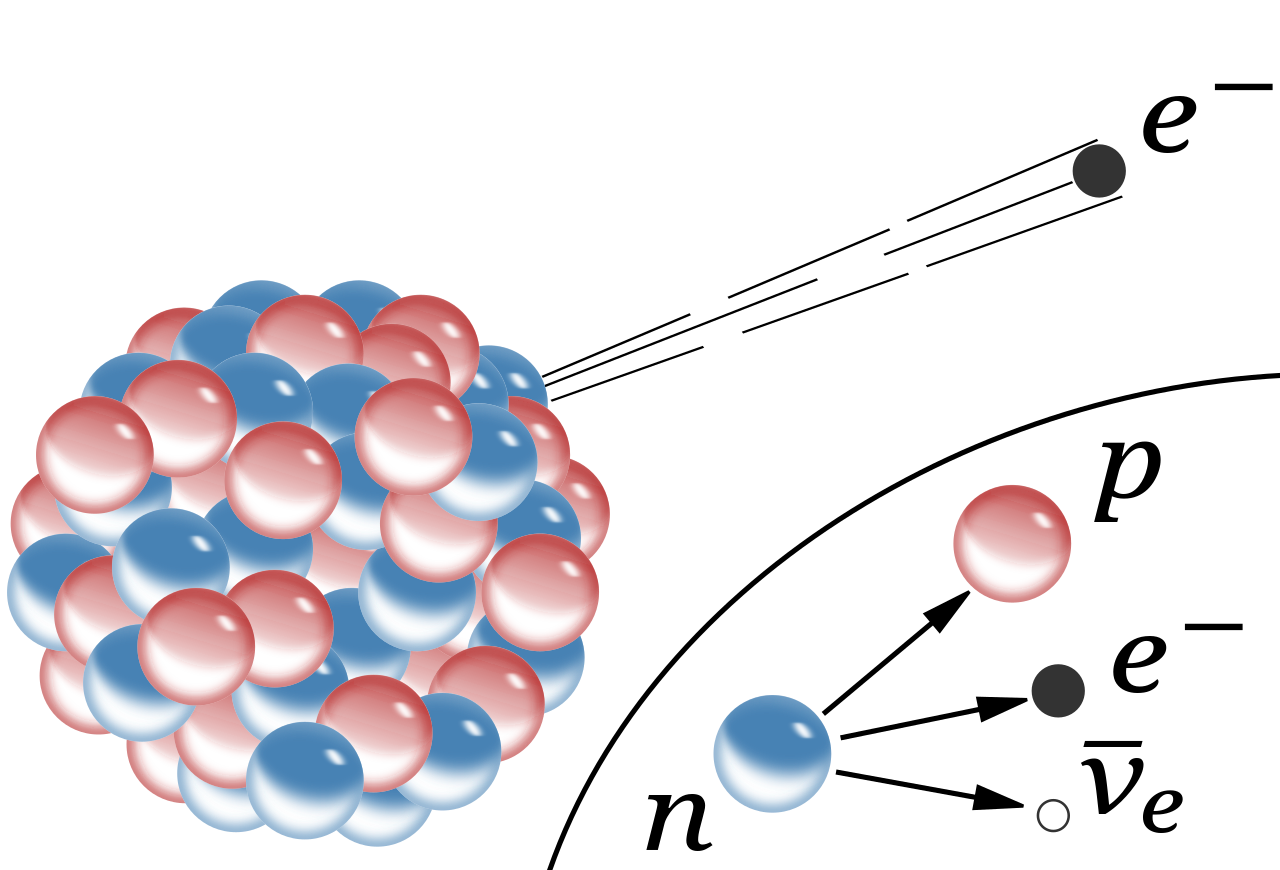
Weak interaction
The Subtle Architect of Particle Transformation
The weak interaction, one of the four fundamental forces of nature, operates at the quantum level with profound implications for the structure and evolution of the universe. Unlike gravity or electromagnetism, its influence is confined to extremely short distances, typically within the nucleus of an atom. This force is unique in its ability to change the fundamental identity of particles, specifically altering the 'flavor' of quarks and leptons.
For instance, it is responsible for the decay of a neutron into a proton, an electron, and an antineutrino, a process known as beta decay. This capability to transmute particles is not merely a curiosity; it is a cornerstone of nuclear physics and cosmology, dictating the stability of matter and the processes that power stars.
A Journey Through Discovery
The recognition of the weak interaction's existence emerged from puzzling experimental observations in the early 20th century, particularly concerning radioactivity. Enrico Fermi's 1933 theory of beta decay provided the first theoretical framework, postulating a point-like interaction. However, it was the development of quantum field theory and subsequent experimental advancements that revealed a more complex picture. A monumental achievement was the unification of the weak and electromagnetic forces into the electroweak theory by Sheldon Glashow, Abdus Salam, and Steven Weinberg in the 1960s and 1970s.
This groundbreaking work predicted the existence of the W and Z bosons, the force carriers of the weak interaction, which were experimentally confirmed at CERN in the early 1980s, solidifying the Standard Model of particle physics.
The Indispensable Engine of Stellar Evolution and Nucleosynthesis
The 'weak' moniker belies its critical role in cosmic phenomena. The weak interaction is the linchpin of nuclear fusion in stars, including our Sun. In the proton-proton chain reaction, the weak force facilitates the conversion of protons to neutrons, a necessary step for the formation of deuterium and subsequently helium, releasing vast amounts of energy.
Without this process, stars would not ignite, and the universe would be a vastly different, colder place. Furthermore, the weak interaction is crucial for nucleosynthesis, the creation of heavier elements. It governs certain radioactive decay chains that allow for the formation of elements heavier than iron in supernova explosions, seeding the cosmos with the building blocks for planets and life.
The Quantum Mechanics of Force Carriers and Decay
The weak interaction is mediated by three massive elementary particles: the W+, W-, and Z bosons. These bosons are significantly heavier than photons (which mediate electromagnetism) or gluons (which mediate the strong force), explaining the extremely short range of the weak interaction. The W bosons carry electric charge and are involved in processes that change particle charge, like beta decay.
The neutral Z boson mediates interactions that do not change charge. The precise mathematical description of these interactions is complex, involving concepts like chirality and parity violation, which were key discoveries highlighting the unique nature of the weak force. The discovery and study of these bosons provided crucial experimental validation for the Standard Model.
Technological Manifestations and Future Frontiers
The impact of the weak interaction extends beyond fundamental physics into practical applications. Medical imaging techniques, such as Positron Emission Tomography (PET) scans, directly utilize the weak interaction. PET scans employ radioisotopes that undergo beta-plus decay, a weak interaction process, emitting positrons that annihilate with electrons to produce detectable gamma rays.
This allows for non-invasive visualization of metabolic activity and disease. In research, particle accelerators continue to probe the intricacies of the weak force, searching for phenomena beyond the Standard Model, such as neutrino oscillations and potential new particles. Understanding the weak interaction is also vital for developing advanced nuclear technologies and for comprehending the early universe.
Go deeper
Based on content from Wikipedia · Licensed under CC BY-SA 4.0