

Voltmeter
Images

Voltmeter hg


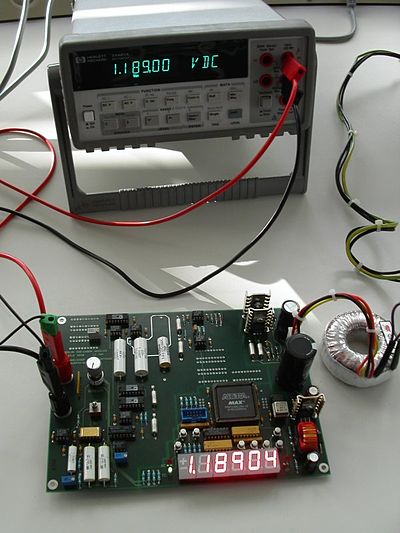


The Fundamental Role of the Voltmeter in Electrical Engineering
The voltmeter stands as a cornerstone instrument in the field of electrical engineering and electronics, indispensable for quantifying electric potential difference, commonly known as voltage. This measurement is paramount because voltage dictates the driving force behind electric current flow within a circuit. Without accurate voltage readings, it would be impossible to design, troubleshoot, or optimize electrical systems, ranging from the micro-level circuitry in smartphones to the macro-level power distribution grids that energize entire cities.
Voltmeters ensure that circuits operate within their designed parameters, preventing catastrophic failures due to overvoltage or ensuring functionality when undervoltage conditions might otherwise render a device inoperable. Their role extends beyond simple measurement; they are integral to diagnostics, performance verification, and the fundamental understanding of electrical behavior.
Principles of Operation
The efficacy of a voltmeter hinges on its ability to measure voltage with minimal impact on the circuit under test. This is achieved through a high internal resistance. By presenting a significant opposition to current flow, the voltmeter draws negligible current from the circuit.
If a voltmeter had low resistance, it would effectively become a parallel path for current, altering the voltage distribution it is intended to measure – a phenomenon known as circuit loading. Early analog voltmeters typically employed a sensitive galvanometer movement in series with a high-value resistor. The galvanometer deflects proportionally to the current passing through it, and by selecting an appropriate series resistance, this deflection can be calibrated to indicate voltage.
Modern digital voltmeters utilize sophisticated analog-to-digital converters (ADCs) to translate the measured analog voltage into a digital format, offering superior accuracy, resolution, and ease of reading. Some advanced designs incorporate amplifiers to measure extremely low voltages, down to microvolts or even nanovolts, crucial for sensitive scientific instruments and low-power electronics.
Historical Evolution and Technological Advancements
The development of the voltmeter is intrinsically linked to the broader history of electrical science. Early pioneers like Alessandro Volta, whose work on electrochemical cells laid the groundwork for understanding electric potential, paved the way for instruments to quantify this phenomenon. The invention of the galvanometer in the early 19th century provided the first practical means to detect and measure electrical currents, which could then be adapted to measure voltage.
By the late 19th and early 20th centuries, standardized analog voltmeters became common tools. The advent of solid-state electronics in the mid-20th century revolutionized measurement technology, leading to the development of digital voltmeters. These offered significant advantages in terms of accuracy, speed, and the ability to interface with other digital systems.
Precision voltmeters today rely on highly stable voltage references, such as Weston cells (historically) or advanced solid-state voltage reference ICs, for calibration, enabling measurements with accuracies measured in parts per million, essential for metrology and cutting-edge research.
Diverse Applications and Future Relevance
The versatility of the voltmeter is remarkable, extending its utility far beyond simple electrical measurements. Any physical phenomenon that can be transduced into an electrical voltage can be monitored using a voltmeter. This includes temperature (via thermocouples or thermistors), pressure (via pressure sensors), light intensity (via photodiodes), and flow rates (via various flow meters).
In industrial process control, voltmeters are integrated into systems to monitor and regulate parameters critical to manufacturing. In automotive diagnostics, they are indispensable for troubleshooting complex electrical systems. In research laboratories, precision voltmeters are vital for validating experimental setups and characterizing new materials.
As technology continues to advance towards smaller, more efficient, and more interconnected systems, the need for accurate and reliable voltage measurement will only intensify, ensuring the voltmeter's continued relevance in shaping our technological future.
See also
Frequently Asked Questions
What is a voltmeter?+
Why do voltmeters need high resistance?+
How does a digital voltmeter read voltage?+
Who helped invent the voltmeter?+
What happens if a voltmeter has low resistance?+
Based on content from Wikipedia · Licensed under CC BY-SA 4.0