

Video projector
Images

london underground video projector


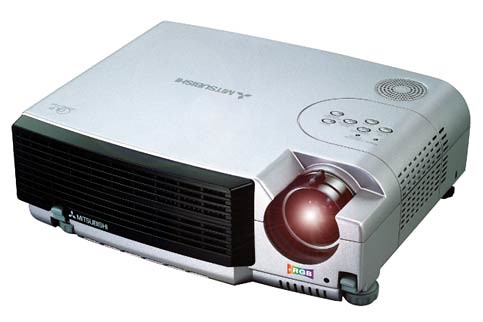


The Science of Amplified Imagery
A video projector is an electro-optical device designed to receive a video signal and project a corresponding image onto a projection surface. At its heart, it's a sophisticated light-manipulation system. The illumination source is critical, ranging from traditional high-intensity discharge (HID) lamps like mercury or xenon arc lamps, which offer high brightness but have limited lifespans and generate heat, to more modern solid-state lighting (SSL) technologies such as LEDs and lasers.
SSL options provide superior energy efficiency, longer operational life, and often better color reproduction. The image itself is formed by an imaging device, commonly Liquid Crystal Display (LCD) panels or Digital Light Processing (DLP) chips. In LCD projectors, light passes through three color-filtered LCD panels (red, green, blue) where liquid crystals control light transmission.
In DLP projectors, light reflects off a microscopic array of mirrors on a DMD (Digital Micromirror Device) chip, with each mirror representing a pixel that can be tilted to direct light towards or away from the lens. This intricate process is then magnified and focused by a complex lens system, allowing for screen sizes far exceeding those of direct-view displays. Modern projectors also incorporate advanced digital processing for keystone correction and lens shifting, enabling flexible placement and image alignment.
Chronicles of Projection
The lineage of video projectors can be traced back to early optical devices like the magic lantern, which used illuminated slides to project images. The mid-20th century saw the development of overhead projectors and slide projectors, primarily for educational and business use. However, the true precursor to modern video projection emerged with technologies like Eidophor and Talaria in the mid-20th century, which used complex systems to project television images.
The late 20th century witnessed the advent of liquid crystal light valves and, crucially, the development of LCD and DLP technologies, which revolutionized image creation. These digital imaging chips, combined with brighter and more efficient light sources, allowed for the creation of compact, high-resolution video projectors. This technological leap facilitated their widespread adoption, gradually replacing older projection methods in professional settings and making home cinema a viable and popular entertainment option, fundamentally altering the landscape of visual media consumption.
The Enduring Significance of Large-Format Display
Despite the proliferation of large, high-definition televisions and digital displays, video projectors retain significant relevance and offer distinct advantages. Their primary allure lies in the unparalleled scalability of image size; projectors can create screen dimensions that are impractical or prohibitively expensive for direct-view displays, offering a truly immersive, theater-like experience. This makes them indispensable for applications demanding large-scale visuals, such as professional presentations, large lecture halls, and dedicated home theaters.
In educational contexts, projectors, especially when paired with interactive whiteboards, foster dynamic and engaging learning environments. Furthermore, for home theater aficionados, the sheer size and cinematic quality achievable with a projector often outweigh the convenience of a TV. While some applications have seen projectors replaced by massive LED walls or large monitors, their unique ability to transform any suitable space into a cinema or presentation venue ensures their continued importance in visual communication and entertainment.
Deconstructing the Projection Mechanism
The operational principle of a video projector hinges on the precise control and amplification of light. The process begins with a video signal, which is decoded and translated into instructions for the projector's imaging device. A powerful illuminator, be it a lamp or a laser array, generates the light.
This light is then modulated by the imaging chip (LCD or DLP). In an LCD projector, the light is split into red, green, and blue components, each passing through its respective LCD panel. The liquid crystals within these panels twist or untwist in response to electrical signals, thereby controlling the amount of light that passes through for each color.
These colored light streams are then recombined and passed through the projection lens. In a DLP projector, the light beam strikes the DMD chip. Each micro-mirror on the chip is rapidly tilted to either reflect light through the lens (for a bright pixel) or into a light absorber (for a dark pixel).
Color is typically achieved by a rapidly spinning color wheel or by using multiple DLP chips for each color. The final image is then magnified and focused by the lens assembly onto the screen, with advanced optics ensuring sharpness and minimal distortion.
Ubiquitous Applications and Future Trajectories
Video projectors are integral to a wide array of modern applications. In corporate environments, they are standard fixtures in conference rooms and auditoriums, facilitating impactful presentations and collaborative work. Educational institutions rely heavily on projectors to enhance teaching methodologies, making lessons more visual and interactive, often integrating them with smart boards.
The home cinema market continues to thrive, with projectors offering a premium, large-format viewing experience for movies, sports, and gaming. Beyond these common uses, projectors are employed in large-scale public displays, such as concerts, sporting events, and architectural projections, transforming buildings into dynamic canvases. Emerging trends include laser projectors offering enhanced brightness and color gamut, 4K resolution becoming more accessible, and advancements in portability and connectivity.
While challenges exist from the rise of ultra-large displays, the unique immersive quality and scalability of projectors suggest their continued evolution and relevance in the visual technology landscape.
See also
Based on content from Wikipedia · Licensed under CC BY-SA 4.0