

Vena Comitans: Your Body's Tiny Escorts!
Images
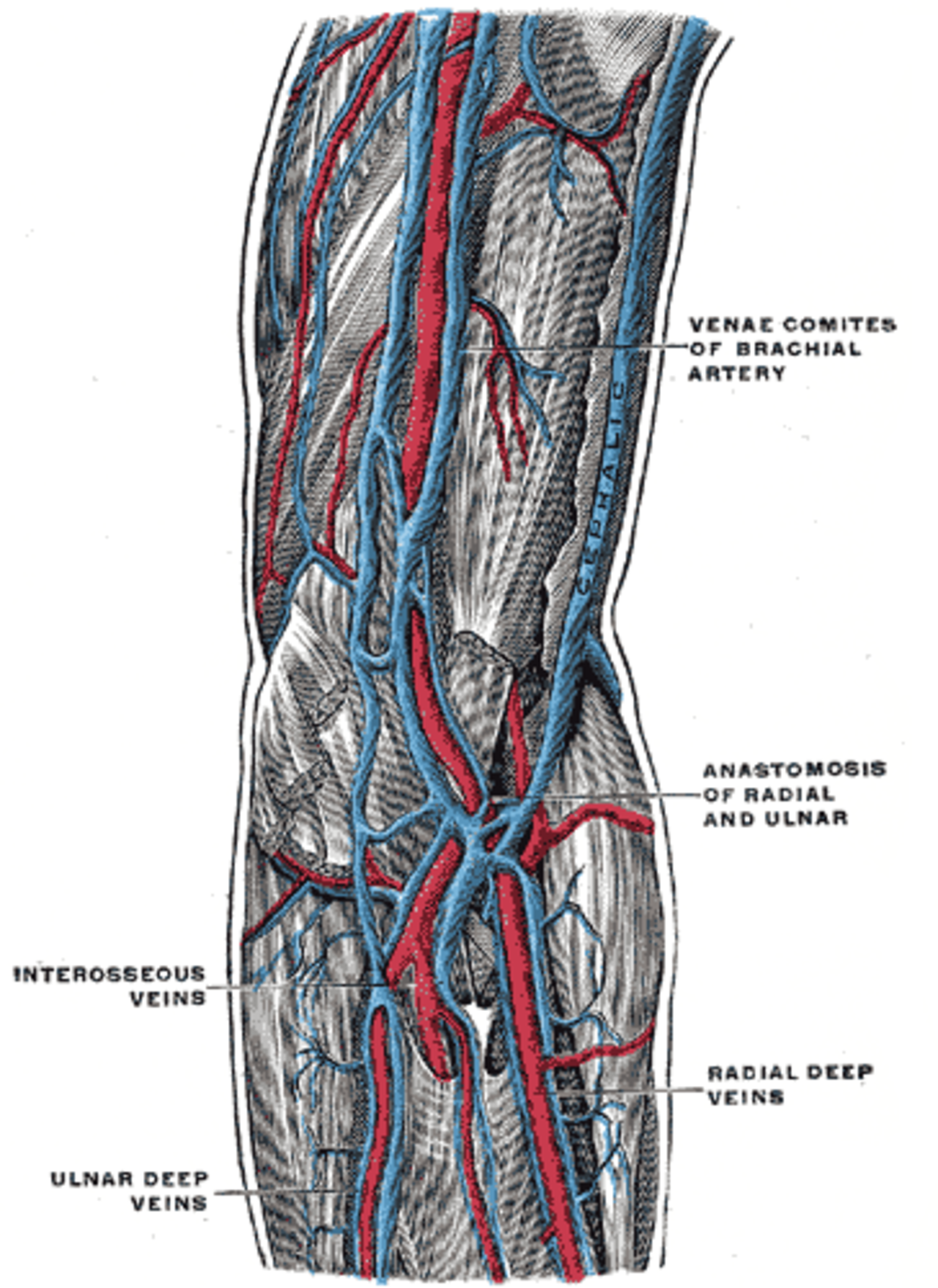
Vena comitans
Anatomical Arrangement and Nomenclature
The term 'vena comitans,' derived from Latin for 'accompanying vein,' precisely describes a vein that travels in close proximity to an artery, typically lying on either side of it. These veins are often found in pairs, hence the plural form, 'venae comitantes.' This intimate anatomical relationship is a defining characteristic, distinguishing them from larger, single veins that may run alongside major arteries but lack this close, often embedded, association.
The vena comitans are predominantly observed accompanying smaller arteries, particularly those supplying the limbs. This arrangement is not universal; larger arteries, especially those closer to the heart, generally possess a single, similarly sized accompanying vein that is less intimately bound to the arterial wall. Understanding this anatomical variation is key to appreciating the diverse strategies the circulatory system employs for blood transport and return.
Physiological Rationale for Paired Veins
The physiological advantage of vena comitans lies in their contribution to efficient venous return, especially in the peripheral circulation. Their close proximity to pulsating arteries allows them to harness the kinetic energy of arterial pulsations. This 'arterial pumping' action helps to propel the deoxygenated blood within the vena comitans towards the heart, augmenting venous blood flow.
In essence, the rhythmic expansion and contraction of the artery act as a mechanical pump for the accompanying veins. This is particularly important in the limbs, where blood must be returned against gravity and through a dense capillary network. The presence of paired venae comitantes suggests an evolutionary adaptation to maximize the efficiency of this return flow, ensuring that tissues receive adequate oxygenation and waste removal, even under conditions of high metabolic demand or during physical exertion.
Clinical Significance and Surgical Implications
The intimate relationship between vena comitans and arteries holds significant clinical relevance, particularly in surgical procedures. When operating on or near arteries that have venae comitantes, surgeons must be acutely aware of the accompanying veins to avoid inadvertent injury. Damage to these veins can lead to complications such as excessive bleeding or compromised venous return.
Furthermore, in reconstructive surgery, such as arterial bypass grafting, the vena comitans can sometimes be utilized as conduits or as sources for autologous vein grafts, though this is less common than using saphenous veins. Understanding the precise anatomical course and variations of venae comitantes is therefore crucial for surgical planning and execution, ensuring patient safety and optimal outcomes. Their consistent presence with smaller arteries also makes them important landmarks during diagnostic imaging.
Comparative Anatomy and Evolutionary Perspective
The presence and arrangement of venae comitantes can vary across different mammalian species, offering insights into evolutionary adaptations of the circulatory system. While the general principle of accompanying veins is conserved, the specific arteries they accompany and their degree of intimacy can differ. This variation might reflect differing metabolic rates, limb usage patterns, or thermoregulatory needs.
For instance, species with highly active limbs might benefit more from the enhanced venous return facilitated by vena comitans. Studying these comparative anatomical differences helps us understand the selective pressures that have shaped the circulatory system over millions of years, highlighting how form follows function in biological design. The prevalence of vena comitans in the extremities underscores their role in supporting the demands of locomotion and interaction with the environment.
Beyond the Extremities
While the textbook description often places vena comitans primarily with smaller arteries in the limbs, anatomical variations and exceptions exist. In some individuals, similar paired venous arrangements might be observed alongside arteries in other regions, albeit less consistently. Conversely, even within the limbs, not every small artery will necessarily have a perfectly paired vena comitans.
The degree of association can vary, and sometimes a single, larger vein might serve the function of venous return for multiple small arteries. This variability underscores the dynamic nature of human anatomy and the importance of individualized assessment. Furthermore, the concept of 'venae comitantes' is sometimes extended metaphorically to describe any closely associated vascular structures, though its strict anatomical definition pertains to veins accompanying arteries, primarily in the periphery.
See also
Frequently Asked Questions
What is a vena comitans?+
Why do vena comitans help blood flow in our arms and legs?+
Where are vena comitans usually found in the body?+
How do doctors need to think about vena comitans during surgery?+
Are vena comitans the same in all animals?+
Based on content from Wikipedia · Licensed under CC BY-SA 4.0