

Vanadium: The Amazing Metal That Makes Things Stronger!
Images
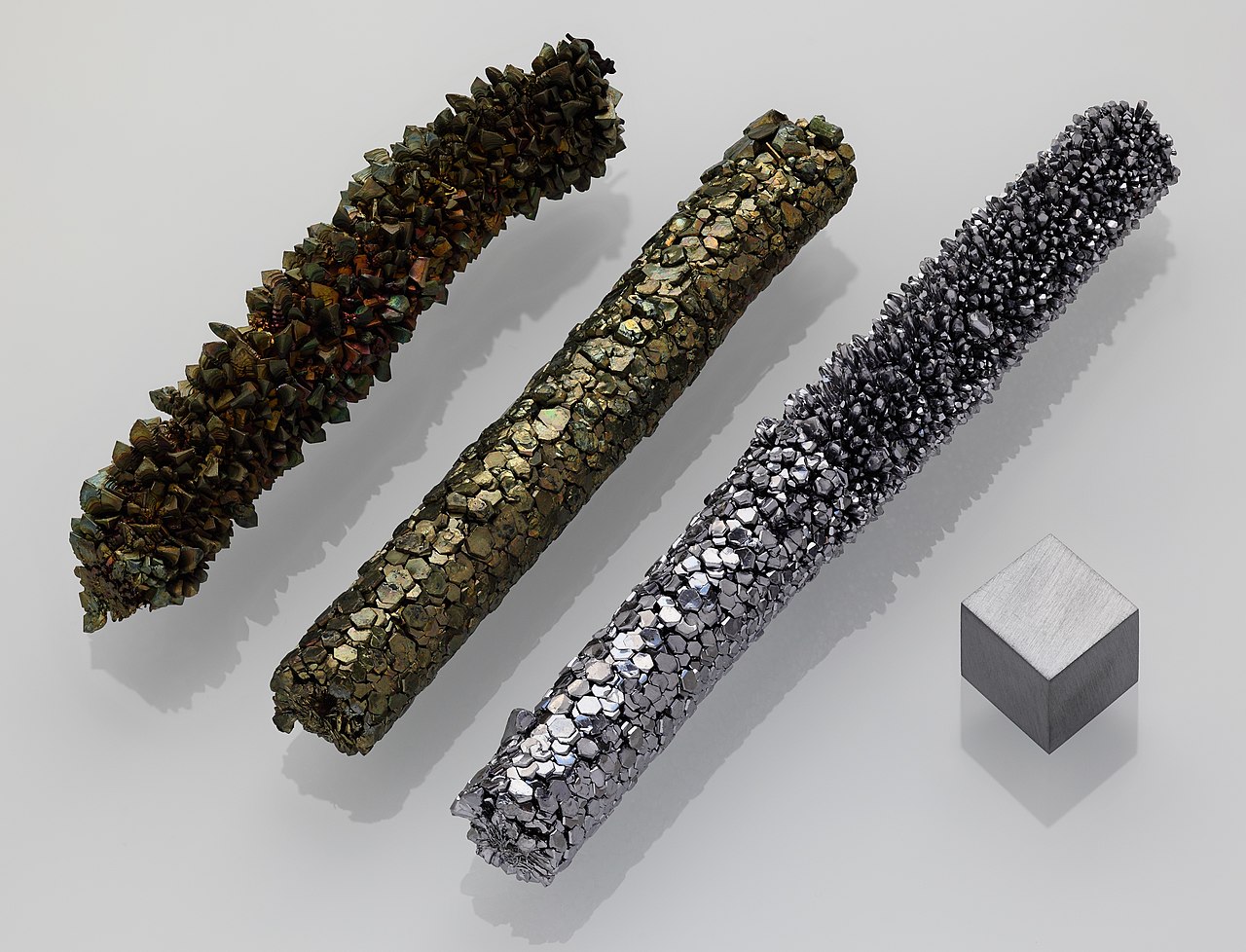
Vanadium
The Chemical Identity and Natural Occurrence of Vanadium
Vanadium (atomic number 23, symbol V) is a transition metal characterized by its silvery-gray appearance and its remarkable ability to exist in multiple oxidation states, ranging from -1 to +5. This chemical flexibility is the root of its diverse applications. In nature, Vanadium is never found in its elemental form due to its high reactivity.
Instead, it is dispersed in the Earth's crust, primarily found in igneous rocks and sedimentary deposits. Significant concentrations occur in minerals such as vanadinite (Pb5(VO4)3Cl), carnotite (K2(UO2)2(VO4)2·3H2O), and patronite (VS4). It is also a trace element in many iron ores and is recovered as a byproduct during steel production from these ores.
Furthermore, Vanadium is present in crude oil and is extracted from fly ash generated during the combustion of heavy oils, representing a crucial secondary source.
Metallurgical Marvel
The most commercially significant application of Vanadium lies in its use as an alloying element in steel. Vanadium additions, typically in the range of 0.05% to 0.25% for rebar and structural steels, and up to 2% or more for high-speed tool steels, impart exceptional properties. Vanadium forms stable carbides (like VC) that are extremely hard and resistant to wear.
These carbides precipitate within the steel matrix, acting as grain refiners and impeding dislocation movement. This results in a dramatic increase in tensile strength, toughness, and fatigue resistance without significantly compromising ductility. Vanadium microalloyed steels are indispensable in the construction industry for rebar and structural components, in the automotive sector for engine parts and chassis, and in aerospace for high-strength, lightweight applications.
Its ability to enhance performance under extreme conditions makes it a cornerstone of modern materials science.
Beyond Steel
Vanadium's utility extends far beyond its metallurgical prowess. Vanadium pentoxide (V2O5) is a highly effective catalyst, most notably in the contact process for the industrial production of sulfuric acid, a fundamental chemical. It also plays a role in the oxidation of organic compounds and in the selective catalytic reduction (SCR) of nitrogen oxides (NOx) in exhaust gases, helping to reduce air pollution from vehicles and industrial facilities.
In the realm of pigments, Vanadium compounds are prized for their vibrant and stable colors, used in glass coloring, ceramic glazes, and specialized paints. Looking towards the future, Vanadium is at the forefront of energy storage innovation, particularly through Vanadium Redox Flow Batteries (VRFBs). These batteries offer scalable, long-duration energy storage, making them ideal for grid-level applications and integrating intermittent renewable energy sources like solar and wind power.
Their long lifespan and ability to be deeply discharged without degradation position them as a critical technology for a sustainable energy future.
Biological Significance and Environmental Considerations
While industrial applications dominate Vanadium's profile, it also possesses biological relevance. Vanadium compounds are found in trace amounts in various marine organisms and have been shown to play roles in certain biological processes, such as enzyme activity and oxygen transport in some species. In humans, Vanadium is considered an essential trace element, though its precise physiological functions and dietary requirements are still subjects of ongoing research.
However, exposure to higher concentrations of Vanadium, particularly through inhalation of dust or fumes in industrial settings, can pose health risks, including respiratory irritation and other adverse effects. Therefore, strict occupational safety measures and environmental regulations are in place to manage its handling and emissions, ensuring that its industrial benefits are realized responsibly.
Go deeper
Frequently Asked Questions
What is vanadium and why is it called a superhero metal?+
How does vanadium make steel stronger?+
Where can we find vanadium in nature?+
What are vanadium redox flow batteries and why are they special?+
Can vanadium help clean the air from cars?+
Based on content from Wikipedia · Licensed under CC BY-SA 4.0