

Vacuum
Images
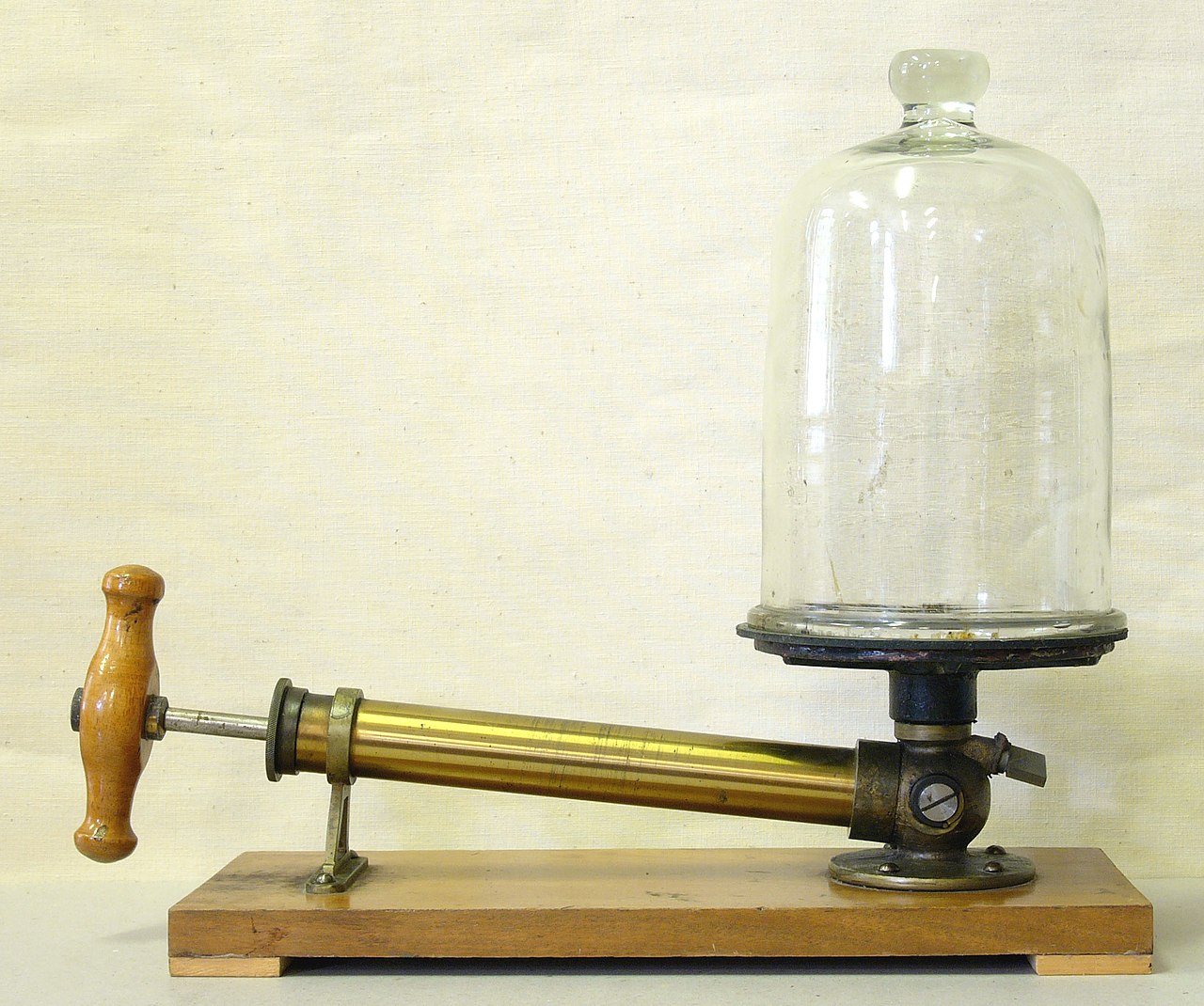
Vacuum
Defining the Void
In physics, a vacuum is a region of space where the pressure is significantly lower than that of the surrounding atmosphere. It is not truly empty, as even in the most extreme vacuums, there exist residual gas molecules, photons, and other subatomic particles. The concept of a perfect vacuum, devoid of all matter and energy, is an idealized theoretical construct.
Scientifically, vacuums are categorized by their pressure levels: low vacuum (atmospheric to 10^-3 Torr), high vacuum (10^-3 to 10^-7 Torr), and ultra-high vacuum (UHV) (below 10^-7 Torr). Achieving UHV requires sophisticated pumping systems and meticulous attention to material outgassing and sealing. The properties of matter and energy behave differently in vacuum conditions, making it a crucial area of study.
A Historical Quest for Emptiness
The concept of a vacuum has intrigued philosophers and scientists for centuries. Early thinkers like Aristotle argued against the existence of a vacuum, believing nature abhorred a void. However, experiments in the 17th century, notably by Evangelista Torricelli with his barometer, demonstrated that vacuums could be created and that atmospheric pressure played a significant role.
Otto von Guericke's famous Magdeburg hemispheres experiment further illustrated the power of atmospheric pressure acting on a vacuum. The development of vacuum pumps, such as the Sprengel pump and later diffusion and turbomolecular pumps, progressively allowed for the creation of higher vacuums, paving the way for advancements in fields like electronics and particle physics.
The Indispensable Role of Vacuums in Science and Technology
Vacuums are not merely an absence of matter; they are enabling environments for a vast array of scientific and technological applications. In semiconductor manufacturing, ultra-high vacuums are essential for processes like thin-film deposition and etching, ensuring the purity and precision required for microchips. Particle accelerators, such as the Large Hadron Collider, rely on high vacuums to prevent collisions between accelerated particles and air molecules, allowing them to reach immense energies.
Scientific research utilizes vacuum chambers to study material properties, simulate space environments for spacecraft testing, and conduct experiments in fields like plasma physics and surface science. The ability to control and manipulate conditions within a vacuum is fundamental to modern scientific inquiry and technological innovation.
Mechanisms of Vacuum Creation and Maintenance
Creating a vacuum involves removing gas molecules from a sealed volume. This is achieved through various types of vacuum pumps. Mechanical pumps, like rotary vane pumps, physically trap and expel gas.
Diffusion pumps use a high-speed jet of oil or mercury to entrain gas molecules and direct them towards colder surfaces. Turbomolecular pumps use high-speed rotors to impart momentum to gas molecules, pushing them towards the exhaust. Ion pumps use electric and magnetic fields to ionize gas molecules and trap them on reactive surfaces. Maintaining a vacuum requires careful design to minimize leaks, prevent outgassing from materials within the chamber, and ensure the integrity of seals.
The choice of pump and materials depends on the desired vacuum level and the specific application.
Ubiquitous Applications
The most familiar application of vacuum technology is the household vacuum cleaner, which utilizes a fan-driven pressure differential to create suction for cleaning. However, its utility extends far beyond domestic use. In industry, vacuum furnaces are used for heat treatment and brazing of sensitive materials.
Vacuum distillation is employed in chemical and petroleum refining. In medicine, vacuum-assisted closure devices aid wound healing, and vacuum extraction is used in childbirth. Even everyday items like incandescent light bulbs and CRT televisions operate under a partial vacuum to function correctly.
The principles of vacuum are also critical in understanding astrophysical phenomena, from the interstellar medium to the formation of galaxies.
Go deeper
Frequently Asked Questions
What is a vacuum?+
How do scientists make a vacuum?+
Why do we need ultra‑high vacuum for making computer chips?+
What did the Magdeburg hemispheres experiment show about vacuums?+
Where do particle accelerators use vacuums?+
Based on content from Wikipedia · Licensed under CC BY-SA 4.0