

Diffusion: The Great Mix-Up!
Images
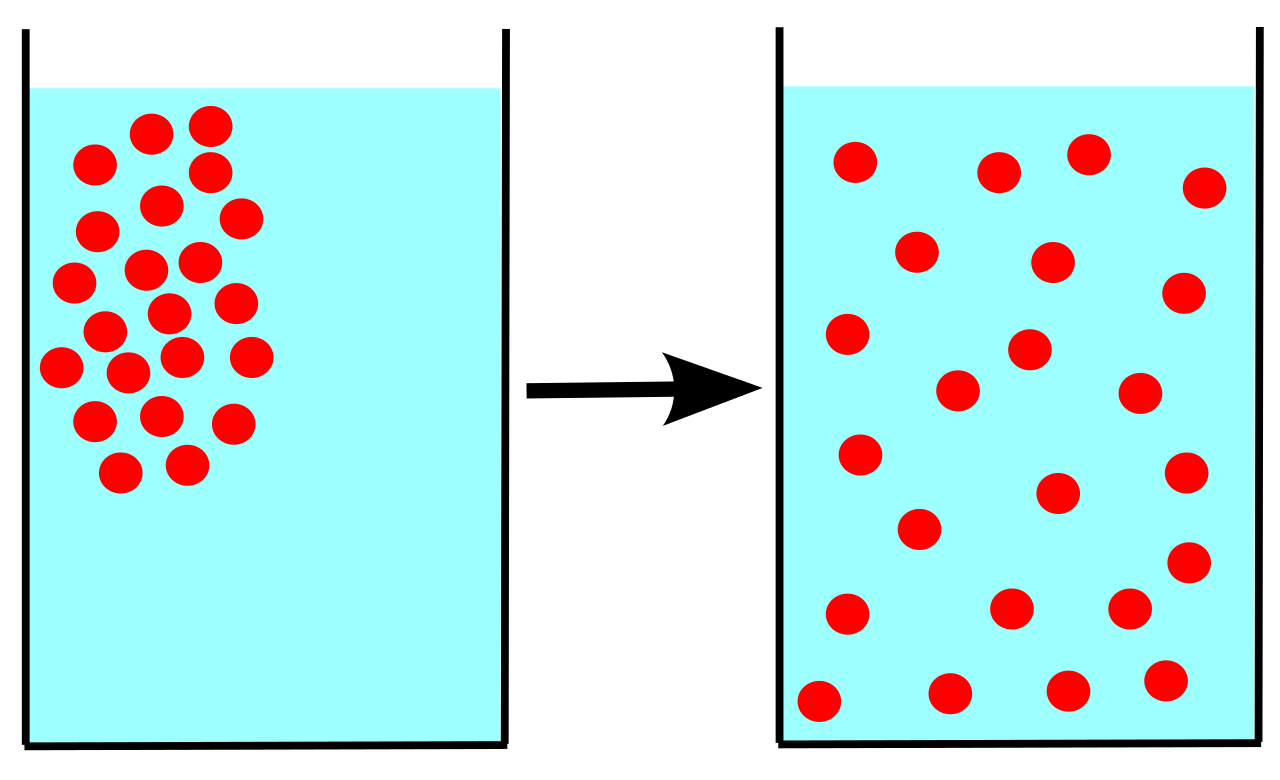
Diffusion
![Mercedes-Benz CL [W216] PD-Black Edition Black Series Widebody PRIOR-DESIGN Aerodynamic-Kit, Front bumper, vented hood, rear bumper and rear diffuser, front lip, trunk spoiler and exhaust tips. CL63 CL65 AMG. Like SL65 Black Series](https://live.staticflickr.com/7053/6939709693_174788f29e_n.jpg)

![Mercedes-Benz CL [W216] PD-Black Edition Black Series Widebody PRIOR-DESIGN Aerodynamic-Kit, Front bumper, vented hood, rear bumper and rear diffuser, front lip, trunk spoiler and exhaust tips. CL63 CL65 AMG. Like SL65 Black Series](https://live.staticflickr.com/7040/6939709361_916687ce34_n.jpg)

![Mercedes-Benz CL [W216] PD-Black Edition Black Series Widebody PRIOR-DESIGN Aerodynamic-Kit, Front bumper, vented hood, rear bumper and rear diffuser, front lip, trunk spoiler and exhaust tips. CL63 CL65 AMG. Like SL65 Black Series](https://live.staticflickr.com/7041/6939709887_618ba14d18_n.jpg)

![Mercedes-Benz CL [W216] PD-Black Edition Black Series Widebody PRIOR-DESIGN Aerodynamic-Kit, Front bumper, vented hood, rear bumper and rear diffuser, front lip, trunk spoiler and exhaust tips. CL63 CL65 AMG. Like SL65 Black Series](https://live.staticflickr.com/7189/6939709737_280f87b564_n.jpg)
![Mercedes-Benz CL [W216] PD-Black Edition Black Series Widebody PRIOR-DESIGN Aerodynamic-Kit, Front bumper, vented hood, rear bumper and rear diffuser, front lip, trunk spoiler and exhaust tips. CL63 CL65 AMG. Like SL65 Black Series](https://live.staticflickr.com/7056/6939709463_b32a5cc2a4_n.jpg)

![Mercedes-Benz CL [W216] PD-Black Edition Black Series Widebody PRIOR-DESIGN Aerodynamic-Kit, Front bumper, vented hood, rear bumper and rear diffuser, front lip, trunk spoiler and exhaust tips. CL63 CL65 AMG. Like SL65 Black Series](https://live.staticflickr.com/7188/6939709603_7fdefe4d06_n.jpg)
![Mercedes-Benz CL [W216] PD-Black Edition Black Series Widebody PRIOR-DESIGN Aerodynamic-Kit, Front bumper, vented hood, rear bumper and rear diffuser, front lip, trunk spoiler and exhaust tips. CL63 CL65 AMG. Like SL65 Black Series](https://live.staticflickr.com/7200/6939710087_57587cba87_n.jpg)
The Molecular Basis of Macroscopic Mixing
Diffusion is the net movement of particles from a region of higher concentration to a region of lower concentration, driven by the random thermal motion of molecules. This macroscopic phenomenon arises from microscopic kinetic energy. In any given volume, molecules are in constant, chaotic motion, colliding with each other and their surroundings.
Where particle density is high, collisions are more frequent, leading to a greater probability of particles moving into adjacent, less populated regions. This process continues until equilibrium is reached, where the concentration is uniform throughout the system, though molecular motion persists. The rate of diffusion is governed by Fick's laws, which relate the flux of particles to the concentration gradient and a diffusion coefficient.
This coefficient is material-dependent and influenced by temperature, viscosity of the medium, and the size and shape of the diffusing particles.
Historical Trajectory
The empirical observation of diffusion predates its scientific explanation. Ancient civilizations likely observed the mixing of substances, but it was the advent of microscopy and atomic theory that illuminated the underlying mechanisms. Robert Brown's 1827 observation of Brownian motion provided compelling evidence for the existence and continuous movement of molecules. This random, erratic motion of suspended particles, caused by collisions with solvent molecules, became a cornerstone for understanding diffusion.
Later, in the mid-19th century, scientists like Adolf Fick rigorously studied diffusion, formulating mathematical laws that quantified the rate of mass transfer. His work established diffusion as a predictable physical process, paving the way for its application in various scientific disciplines, from chemistry and physics to biology and engineering.
Diffusion's Indispensable Role in Biological Systems
Diffusion is a cornerstone of physiological processes, enabling life's fundamental exchanges. In respiration, oxygen diffuses across the alveolar-capillary membrane from the lungs into the blood, driven by a partial pressure gradient. Conversely, carbon dioxide diffuses from the blood into the alveoli.
In the circulatory system, nutrients absorbed from the digestive tract diffuse from the intestinal lining into the bloodstream, and subsequently from capillaries into tissues. Waste products like urea follow a similar diffusion pathway from tissues to blood for excretion. Cellular respiration relies on the diffusion of glucose and oxygen into cells and the diffusion of ATP and waste products out. Even nerve impulse transmission involves diffusion of ions across cell membranes.
Without these passive transport mechanisms, cellular function and organismal survival would be impossible.
Mechanisms and Factors Influencing Diffusion Rates
The rate at which diffusion occurs is influenced by several key factors. Temperature plays a significant role; higher temperatures increase the kinetic energy of molecules, leading to faster random motion and thus a higher diffusion rate. The size and mass of the diffusing particles are also critical; smaller, lighter particles generally diffuse faster than larger, heavier ones.
The nature of the medium is another important factor; diffusion is typically fastest in gases, slower in liquids, and extremely slow in solids due to differences in particle spacing and intermolecular forces. The concentration gradient itself is the driving force; a steeper gradient results in a faster net movement. In biological contexts, membrane permeability, surface area, and the presence of transport proteins (in facilitated diffusion) further modulate the rate of diffusion across cellular barriers.
Applications and Broader Implications of Diffusion
The principles of diffusion have far-reaching applications across science and technology. In chemistry, it's fundamental to reaction kinetics and separation processes like chromatography. In materials science, diffusion is exploited for processes such as doping semiconductors, case hardening of metals, and creating alloys.
In medicine, understanding diffusion is crucial for designing effective drug delivery systems, where drugs must diffuse from their administration site to target tissues. It also plays a role in medical imaging techniques and understanding disease progression. Environmental science utilizes diffusion models to predict the spread of pollutants in air and water.
Furthermore, diffusion is a key concept in statistical mechanics and thermodynamics, providing insights into entropy and the tendency of systems to move towards states of greater disorder.
Go deeper
Frequently Asked Questions
What is diffusion?+
Why do particles move faster when it’s warmer?+
How does diffusion help us breathe?+
What makes diffusion slower in solids than in liquids?+
Who first saw the random motion of tiny particles?+
Based on content from Wikipedia · Licensed under CC BY-SA 4.0