

USS Gettysburg (CG-64)
Images

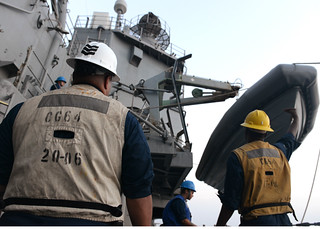
USS GETTYSBURG (CG 64)_140102-N-PL185-047




The Genesis of a Naval Asset
The USS Gettysburg (CG-64) represents the pinnacle of naval surface combatant design, belonging to the distinguished Ticonderoga class. These ships were conceived during the Cold War to provide a robust defense against Soviet air and missile threats, evolving from earlier destroyer designs to incorporate advanced radar and missile technology. Commissioned on June 12, 1993, the USS Gettysburg entered service during a period of shifting global dynamics but maintained its relevance as a versatile multi-mission platform.
Its construction and deployment reflect a significant investment in maintaining U.S. naval superiority, integrating cutting-edge systems to meet evolving security challenges. The ship’s design emphasizes survivability, firepower, and the capacity for sustained operations far from home shores.
A Legacy of Valor
The christening of a U.S. Navy vessel is a tradition steeped in meaning, and the USS Gettysburg is no exception. Its name is a direct homage to the Battle of Gettysburg, a pivotal three-day engagement in July 1863 that is widely considered the turning point of the American Civil War. This battle, fought in Pennsylvania, resulted in immense casualties but ultimately halted the Confederacy's invasion of the North.
By bestowing this name, the Navy imbues the ship with a powerful historical narrative, linking its modern mission of defense and deterrence to the sacrifices and ideals that defined that critical period in American history. The name serves as a constant reminder of the nation's resilience and the importance of strategic victory.
The Aegis System
At the core of the USS Gettysburg's formidable capabilities lies the Aegis Combat System. This integrated system is a revolutionary leap in naval warfare technology, combining powerful SPY-1 radar arrays with sophisticated command and control software and vertical launching systems (VLS) for missiles. The SPY-1 radar, with its distinctive phased-array antennas, can simultaneously detect, track, and engage hundreds of targets across vast distances, providing an unparalleled 360-degree defensive umbrella.
This allows the USS Gettysburg to act as a primary air defense commander for a naval task force, intercepting threats ranging from aircraft and cruise missiles to ballistic missiles. The integration of Aegis transforms the cruiser from a mere vessel into a highly responsive and potent warfighting platform.
Multi-Mission Prowess
The operational utility of the USS Gettysburg extends far beyond its air defense role. As a guided-missile cruiser, it is designed for multi-mission capability, capable of conducting offensive and defensive operations across the spectrum of naval warfare. This includes engaging enemy surface ships with its own missile armament, performing anti-submarine warfare using advanced sonar and torpedo systems, and providing naval surface fire support for amphibious operations.
Furthermore, its robust communication and command facilities enable it to serve as a flagship, coordinating the actions of an entire battle group. This versatility makes the USS Gettysburg an indispensable asset in a wide array of scenarios, from humanitarian assistance and disaster relief to high-intensity combat operations.
Strategic Deployment and Enduring Relevance
The USS Gettysburg, like its Ticonderoga-class sisters, has been deployed globally, participating in numerous exercises and real-world operations. Its presence in key strategic regions underscores the United States' commitment to maintaining maritime security and projecting power. While newer classes of warships are being developed, the Ticonderoga class, including the USS Gettysburg, continues to be a cornerstone of the U.S.
Navy's fleet due to its proven capabilities and adaptability. The ongoing modernization efforts ensure that these cruisers remain relevant and effective in addressing contemporary threats, from peer competitor naval forces to asymmetric warfare challenges. The ship’s enduring service highlights the strategic importance of heavily armed, technologically advanced surface combatants in the modern geopolitical landscape.
See also
Frequently Asked Questions
What is the USS Gettysburg?+
When was the USS Gettysburg launched?+
Why is the ship named Gettysburg?+
What special radar does the USS Gettysburg have?+
What can the USS Gettysburg do besides fighting?+
Based on content from Wikipedia · Licensed under CC BY-SA 4.0