

United States Holocaust Memorial Museum
Images
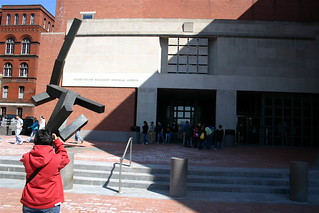
A. outside United States Holocaust Memorial Museum


Architectural and Symbolic Resonance in Washington D.C.
Situated prominently in Washington D.C., the United States Holocaust Memorial Museum (USHMM) is more than a repository of artifacts; it is a deliberate and powerful memorial designed to confront the legacy of the Holocaust. Opened in 1993, its creation was a national commitment to remember the victims and to educate future generations about the dangers of unchecked hatred and systematic persecution. The museum's design itself is intended to guide visitors through a somber and reflective experience, mirroring the journey of the victims.
Its location in the nation's capital underscores its role as a central institution for national remembrance and a platform for addressing critical issues of human rights and genocide prevention on a global scale.
Curatorial Strategies
The USHMM's core mandate revolves around the comprehensive documentation, study, and interpretation of the Holocaust. This is realized through its extensive permanent exhibitions, which meticulously trace the historical events from the rise of Nazism to the liberation of concentration camps. Complementing these are dynamic traveling exhibitions that extend the museum's reach and educational impact.
A cornerstone of its interpretive work is the preservation and presentation of survivor testimonies, offering invaluable first-hand accounts that humanize the immense tragedy. Furthermore, its vast archival collections serve as a critical resource for scholars, educators, and the public, ensuring the meticulous study and accurate understanding of this complex historical period.
The Imperative of Prevention
The establishment of the USHMM was driven by a profound conviction that remembering the Holocaust is intrinsically linked to preventing future atrocities. The museum actively works to equip leaders and citizens with the knowledge and ethical framework to confront hatred, recognize the precursors to genocide, and actively promote human dignity. It underscores the fragility of democratic institutions and the vital importance of civic engagement in safeguarding human rights.
By examining the choices made by individuals, communities, and nations during the Holocaust, the museum prompts critical reflection on contemporary issues of prejudice, discrimination, and the responsibility to intervene when human rights are threatened.
Educational Leadership and Global Engagement
As a leading educational institution, the USHMM is dedicated to fostering a deeper understanding of the Holocaust and its enduring lessons. It develops and disseminates a wide array of educational resources and programs for diverse audiences, including K-12 students, educators, and the general public. Through its research initiatives and public forums, the museum contributes to ongoing scholarly discourse and public awareness regarding genocide studies and human rights.
Its commitment extends to global engagement, collaborating with international partners to advance the cause of genocide prevention and promote a more just and humane world, thereby fulfilling its mission to ensure that 'Never Again' is not just a slogan, but a sustained commitment.
See also
Frequently Asked Questions
What is the United States Holocaust Memorial Museum?+
When did the museum open?+
Why does the museum have a sad design?+
What can visitors learn at the museum?+
Who can use the museum’s resources?+
Based on content from Wikipedia · Licensed under CC BY-SA 4.0