

Act of Congress
Images

SOPA = Less Liberty and more Robo-Justice For All




The Genesis of Legislation
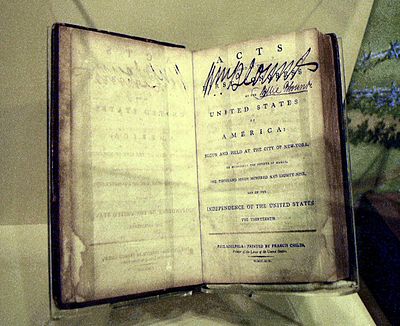
An Act of Congress represents the culmination of the legislative process in the United States, transforming a proposed bill into binding federal law. This journey begins with the introduction of a bill in either the House of Representatives or the Senate. For a bill to advance, it must navigate committee reviews, debates, and amendments within its originating chamber, ultimately securing a majority vote for passage.
Subsequently, the bill is transmitted to the other chamber, where it undergoes a similar, often rigorous, examination. The requirement for identical text passage in both the House and Senate underscores the principle of bicameralism, ensuring broad consensus and preventing hasty legislation. This deliberative phase is critical, allowing for diverse perspectives and thorough vetting of policy implications before a bill can proceed to the executive branch.
Executive Scrutiny and Congressional Recourse
Upon successful passage by both houses, a bill is presented to the President for executive action. The President holds significant power in the legislative process, with three primary options. Signing the bill into law is the most straightforward path.
Alternatively, if the President allows the bill to sit unsigned for ten days while Congress remains in session, it automatically becomes law. This mechanism prevents legislative paralysis due to executive inaction. However, the President can also exercise the veto power, rejecting the bill and returning it to Congress with objections.
This is not the final word, as Congress possesses the power to override a presidential veto. This requires a supermajority of two-thirds in both the House and the Senate, a high bar that signifies a strong legislative conviction to enact the law despite executive opposition, thereby safeguarding the balance of power.
The Pervasive Influence of Acts of Congress on American Society
Acts of Congress are the fundamental building blocks of American governance and societal structure. Their scope is vast, encompassing virtually every aspect of national life, from economic regulation and social welfare programs to foreign policy and civil rights. For example, landmark legislation like the Civil Rights Act of 1964 fundamentally reshaped American society by outlawing discrimination.
Environmental Acts, such as the Clean Air Act, have had profound impacts on public health and industrial practices. The Affordable Care Act dramatically altered the healthcare landscape. These laws not only establish the framework for government operations but also define the rights, responsibilities, and opportunities available to citizens, making them indispensable to the functioning and evolution of the United States.
Distinguishing Public and Private Laws
The legislative output of Congress is broadly categorized into public laws and private laws, differentiated by their intended beneficiaries. Public laws are the most common and are designed to apply universally to the general populace or specific sectors of society, addressing broad national interests. Examples include the Social Security Act or the Americans with Disabilities Act.
Private laws, conversely, are narrowly tailored to address the specific needs or circumstances of an individual, family, or a limited group. Historically, these might have involved granting citizenship, resolving land claims, or providing specific relief. While private laws are less frequent and often address unique situations, their existence highlights Congress's capacity to provide targeted legislative solutions beyond general public policy, though they are subject to scrutiny to ensure fairness and prevent undue favoritism.
The Enduring Legacy and Modern Relevance of Congressional Acts
Acts of Congress are not static historical documents; they are dynamic instruments that continue to shape contemporary America. The interpretation and application of these laws evolve through judicial review and subsequent legislative amendments, reflecting changing societal values and emerging challenges. For instance, debates surrounding privacy in the digital age are often informed by existing statutes and the potential need for new Acts.
Understanding the process by which these laws are made, their historical context, and their ongoing impact is crucial for informed civic engagement. The ability of Congress to enact laws is a cornerstone of American democracy, providing a mechanism for collective decision-making and adaptation to the complexities of the modern world.
See also
Frequently Asked Questions
What is an Act of Congress?+
How does a bill become an Act of Congress?+
Why must the House and Senate agree on the same text?+
What is the difference between a public law and a private law?+
Can the President stop an Act of Congress from becoming law?+
Based on content from Wikipedia · Licensed under CC BY-SA 4.0