

Trickle-down economics: The Money Shower Idea!
Images

'Trickled down economics' (detail) - Graffiti & local newspapers circa 1999, created 2018. 🔸 🔸 🔸 #debtproblems #Ayrshire #glasgow #scottishart #scotland



The Theoretical Framework
Trickle-down economics, often associated with supply-side economics, posits that economic policies favoring the upper strata of society-namely, wealthy individuals and large corporations-will ultimately benefit the entire economy. The core argument is that by reducing taxes on capital gains, corporate profits, and high incomes, and by deregulating businesses, these entities will be incentivized to invest more. This increased investment is expected to lead to business expansion, job creation, and technological innovation.
The theory suggests that the prosperity generated at the top will then 'trickle down' through increased employment opportunities, higher wages, and greater availability of goods and services for the broader population. It's akin to filling a large reservoir at a high elevation, with the expectation that the water will naturally flow down to irrigate the lower fields.
Historical Roots and Evolution of the Concept
While the term 'trickle-down economics' gained prominence as a critical label, the underlying principles have a longer lineage. Ideas about the benefits of wealth accumulation and investment for societal progress have been debated by economists for centuries. However, the term itself became widely popularized in the United States during the 1980s, often used by critics to describe the economic policies of President Ronald Reagan, dubbed 'Reaganomics.' These policies included significant cuts to marginal income tax rates and corporate taxes.
Similarly, in the United Kingdom, Prime Minister Margaret Thatcher's economic reforms in the 1980s, which emphasized privatization and tax reductions, have also been characterized as trickle-down. More recently, Liz Truss's brief tenure as UK Prime Minister saw a 'mini-budget' in 2022 that included substantial tax cuts, which critics again labeled as trickle-down economics.
The Socioeconomic Significance
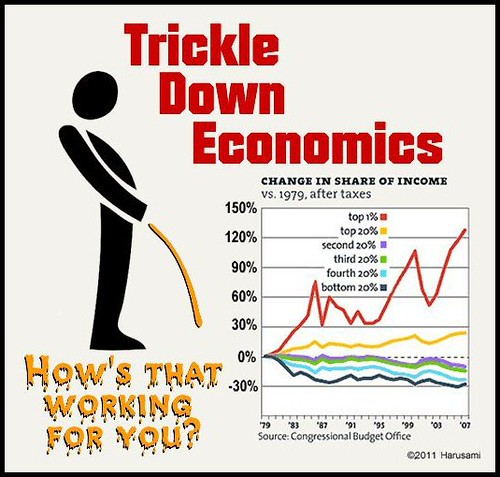
The significance of trickle-down economics lies in its profound impact on income distribution and economic policy decisions. Proponents argue that these policies foster robust economic growth, leading to overall prosperity. However, a substantial body of economic research and historical analysis suggests that such policies often exacerbate income inequality.
Critics contend that the wealth generated at the top may not be reinvested in ways that benefit the majority, but rather saved, invested in financial markets with limited job creation, or used for luxury consumption. This can lead to a widening gap between the wealthiest and the rest of the population, potentially creating social and economic instability. The debate centers on whether the benefits of wealth concentration truly 'trickle down' or if they primarily serve to consolidate wealth at the apex.
Mechanisms of 'Trickle-Down'
The theoretical mechanism of trickle-down economics involves several interconnected pathways. Firstly, reduced taxes on corporations and high earners are expected to increase the capital available for investment in new technologies, infrastructure, and business expansion. This, in turn, is theorized to create more jobs and increase demand for labor.
Secondly, increased profits for businesses are meant to translate into higher wages for employees and greater returns for shareholders, who then have more disposable income to spend, boosting consumer demand. The 'horse-and-sparrow theory' is a critical analogy, suggesting that if enough feed (money) is given to the large horses (wealthy), some will inevitably fall to the sparrows (the less fortunate). However, empirical evidence often shows that the 'crumbs' are insufficient to significantly uplift the economic standing of lower-income groups, and the primary beneficiaries remain those at the top.
Case Studies
Examining historical instances provides crucial context. Reaganomics, implemented in the U.S. from 1981, featured significant tax cuts, particularly for higher income brackets, and deregulation. While the U.S. economy experienced growth during this period, income inequality also widened considerably.
Similarly, Margaret Thatcher's policies in the UK, including privatization and tax reforms, aimed to boost economic efficiency and investment. Critics argue that these policies led to increased social stratification. The 2022 'mini-budget' in the UK under Liz Truss, which proposed unfunded tax cuts for high earners, was met with widespread criticism and market volatility, leading to its rapid reversal.
These examples highlight the contentious nature of trickle-down policies and their varied outcomes, often sparking intense debate among economists and policymakers about their efficacy and fairness.
See also
Frequently Asked Questions
What is trickle-down economics?+
How does trickle-down economics say money will reach everyone?+
Why do some people think trickle-down economics is a bad idea?+
Who used trickle-down economics in the 1980s?+
What could happen if trickle-down economics doesn't work?+
Based on content from Wikipedia · Licensed under CC BY-SA 4.0