

Tino Chrupalla
Images

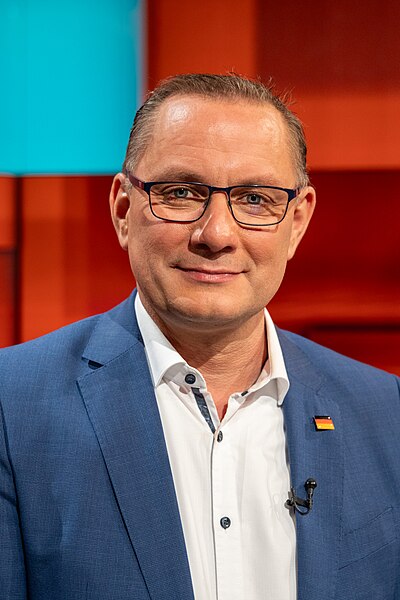
2020-10-30 Tino Chrupalla MdB AfD by OlafKosinsky 4969




Ascension to AfD Co-Leadership
Tino Chrupalla, born on April 14, 1975, has emerged as a significant figure in contemporary German politics, particularly within the Alternative for Germany (AfD) party. His political trajectory has been marked by a steady ascent, culminating in his election as co-chairman of the AfD in 2019. This pivotal moment saw him nominated by Alexander Gauland, a prominent elder statesman of the party, to succeed him in a co-leadership role alongside Alice Weidel.
This move signaled a strategic shift or consolidation within the AfD's leadership structure, emphasizing a shared command. Prior to this, Chrupalla had already established himself as a member of the Bundestag, Germany's federal parliament, since 2017. His entry into the Bundestag represented the AfD's growing presence and influence in national politics.
The role of co-chairman is not merely ceremonial; it entails significant responsibility in shaping the party's ideological direction, policy formulation, and public communication strategies. Chrupalla's leadership is thus central to understanding the AfD's current operational dynamics and its approach to engaging with the broader political landscape of Germany.
The Bundestag and Parliamentary Influence
As a sitting member of the Bundestag since 2017, Tino Chrupalla occupies a crucial position within Germany's legislative framework. The Bundestag is the primary deliberative body where national laws are debated, amended, and passed, and where the government is held accountable. Chrupalla's participation in this arena means he is directly involved in the parliamentary process, contributing to the legislative output of the country.
His role as co-chairman of the AfD amplifies his influence, as he serves as a key spokesperson and strategist for the party within the parliament. This dual capacity allows him to not only vote on legislation but also to champion the AfD's platform and engage in public discourse on critical national issues. The AfD, as a party, often positions itself as an opposition force, challenging established political norms and advocating for policies that resonate with a specific segment of the electorate.
Chrupalla's leadership is therefore instrumental in articulating these positions and attempting to translate them into tangible political outcomes or public debate.
AfD's Ideological Landscape and Chrupalla's Role
The Alternative for Germany (AfD) is characterized by a complex and often debated ideological spectrum. Tino Chrupalla, as co-chairman, plays a vital role in navigating and representing this landscape. The party has historically focused on issues such as Euroscepticism, immigration control, and national identity, often adopting a critical stance towards mainstream political consensus.
Chrupalla's leadership is integral to defining the party's public image and its policy priorities. His involvement in the Bundestag means he is at the forefront of parliamentary debates, articulating the AfD's perspective on a range of socio-economic and political matters. The party's electoral successes have made it a significant player in German politics, and leaders like Chrupalla are key to understanding its appeal and its impact on the national discourse.
His tenure as co-chairman is a period of active engagement with these contentious issues, contributing to the ongoing evolution of the AfD's political strategy and its relationship with other parties and the electorate.
Strategic Significance of Co-Chairmanship
The decision to have a co-chairmanship within the AfD, with Tino Chrupalla and Alice Weidel at the helm, suggests a deliberate strategy to present a united front or to balance different facets of the party's appeal. This leadership model can be seen as an attempt to broaden the party's base or to ensure representation of diverse viewpoints within the AfD's leadership. Chrupalla's specific contributions often involve his parliamentary work and his role in shaping the party's messaging.
His background and political activities are closely scrutinized, as they offer insights into the AfD's strategic objectives and its approach to governance and opposition. The co-chairmanship structure is a defining characteristic of the AfD's current leadership, and understanding the dynamics between Chrupalla and Weidel is crucial for comprehending the party's internal workings and its external political engagement. His position underscores the evolving nature of political leadership in Germany and the challenges of representing distinct political platforms in a multi-party democracy.
See also
Based on content from Wikipedia · Licensed under CC BY-SA 4.0