

Through the Looking-Glass
Images

Through the Looking Glass III


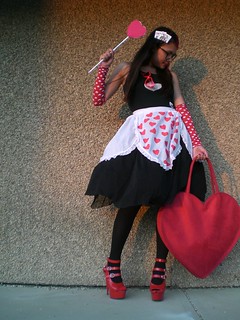
Navigating the Inverted Reality of the Looking-Glass
Published in 1871, 'Through the Looking-Glass, and What Alice Found There' is Lewis Carroll's profound sequel to 'Alice's Adventures in Wonderland.' Unlike its predecessor, which plunged Alice into a subterranean world, this narrative invites her to step through a mirror, a looking-glass, into a realm where reflection dictates the very fabric of existence. This mirrored world operates on a system of reversed logic, a concept Carroll, a mathematics lecturer, masterfully employs.
Actions have inverse consequences: running propels one backward, while moving away brings one closer. This inversion extends to the fundamental principles of physics and causality, creating a disorienting yet intellectually stimulating environment. The entire narrative is framed as a chess game, with Alice beginning as a white pawn and aspiring to reach the eighth square to become a queen.
This structural metaphor is not merely a plot device but a commentary on progress, strategy, and the arbitrary rules that govern systems, whether they be games or society itself. The world is a meticulously constructed paradox, challenging the reader's assumptions about order and sense.
A Pantheon of Linguistic and Psychological Archetypes
The characters Alice encounters in the looking-glass world are not mere whimsical creations but potent archetypes that embody specific facets of human nature and language. The Red Queen, with her incessant demands and pronouncements, represents authoritarianism and the arbitrary exercise of power. The White Queen, conversely, embodies a more gentle, perhaps even naive, form of authority, prone to easily forgetting things.
The Tweedledee and Tweedledum twins are classic representations of duality and incessant, unproductive conflict. Humpty Dumpty, perched on his wall, is a brilliant exploration of linguistic relativism and the power of individual interpretation; he famously declares that words mean precisely what he chooses them to mean. The White Knight, a figure of earnest but ultimately futile invention, can be seen as a commentary on the impracticality of certain intellectual pursuits divorced from real-world application.
These characters, drawn from nursery rhymes and Carroll's imaginative mind, serve as foils to Alice's developing understanding of this topsy-turvy reality.
Lewis Carroll
The author, Charles Lutwidge Dodgson, writing under the pseudonym Lewis Carroll, was a distinguished mathematics lecturer at Christ Church, Oxford. This background profoundly influenced his literary works. 'Through the Looking-Glass,' published in 1871, showcases his fascination with logic, paradox, and the manipulation of language. His ability to weave complex mathematical and philosophical ideas into accessible, entertaining narratives is unparalleled.
The book is replete with verse, most notably the iconic poem 'Jabberwocky,' a prime example of his linguistic innovation through 'portmanteau words' – words formed by blending two others, like 'slithy' (slimy and lithe). This linguistic playfulness is not just for amusement; it highlights the arbitrary nature of language and meaning. Carroll's work, therefore, can be viewed as a sophisticated critique of rigid systems of thought, encouraging readers to embrace ambiguity and the creative potential of language.
The Enduring Legacy
The lasting impact of 'Through the Looking-Glass' is evident in its pervasive influence on language and culture. Phrases such as 'jam to-morrow and jam yesterday – but never jam to-day,' and the notion of believing 'as many as six impossible things before breakfast,' have become ingrained in common parlance, illustrating the story's profound cultural penetration. The concept of 'un-birthday presents' has also entered the lexicon.
Carroll's exploration of 'portmanteau words' has inspired linguistic creativity for generations. The book's critical reception has consistently placed it on par with, or just shy of, its predecessor, 'Alice's Adventures in Wonderland,' a testament to its literary merit. Its adaptability for stage and screen, and its translation into numerous languages, underscore its universal themes and enduring appeal.
The novel continues to be studied for its contributions to literary nonsense, its philosophical underpinnings concerning perception and reality, and its playful yet incisive examination of the rules that govern our understanding of the world.
See also
Frequently Asked Questions
What happens when Alice steps through the looking-glass?+
Why is the story about a chess game?+
Who is the Red Queen and what does she represent?+
What is the Jabberwocky poem?+
How does the book show that words can mean different things?+
Based on content from Wikipedia · Licensed under CC BY-SA 4.0