

The Day Computers Got SUPER Smart!
Images

emotional faces




Defining the Singularity
The technological singularity represents a hypothetical future event horizon, a point beyond which the trajectory of technological progress becomes so rapid and transformative that it is fundamentally unpredictable for current human intelligence. At its core is the concept of recursive self-improvement, most famously articulated by I. J.
Good in 1965. He proposed that an 'ultraintelligent machine' could design even better machines, leading to an 'intelligence explosion.' This iterative process, where each generation of AI is exponentially more capable than the last, could culminate in a superintelligence far surpassing human cognitive abilities. This isn't just about faster computers; it's about a qualitative leap in intelligence that could reshape civilization in ways we cannot currently fathom, making it a true singularity in the sense of a point of infinite density or change, akin to a black hole in physics.
Historical Roots and Evolving Discourse
While the term 'singularity' in this context gained prominence through thinkers like Vernor Vinge and Ray Kurzweil, the underlying ideas have roots in earlier discussions about the limits of human intelligence and the potential of machines. Good's 1965 paper laid crucial groundwork by focusing on the self-improving aspect of intelligence. Over the decades, the discourse has expanded, encompassing not just AI but also advancements in biotechnology, nanotechnology, and other fields that could interact with or accelerate AI development.
Prominent figures like Stephen Hawking have voiced significant concerns about the potential existential risks posed by uncontrolled superintelligence, highlighting the need for caution. Conversely, a robust counter-argument exists, with many leading technologists and academics questioning the inevitability or even plausibility of such an event, suggesting that AI development might be constrained by fundamental physical or computational limits.
The Stakes
The significance of the technological singularity lies in its potential to represent either humanity's greatest achievement or its ultimate downfall. On one hand, a benevolent superintelligence could unlock solutions to humanity's most intractable problems: curing all diseases, achieving sustainable energy, enabling interstellar colonization, and ushering in an era of unprecedented prosperity and understanding. It could elevate human existence to entirely new levels.
On the other hand, the 'control problem' – ensuring that a superintelligence's goals remain aligned with human values – is a formidable challenge. A misaligned superintelligence, even one not intentionally malicious, could inadvertently cause human extinction as a side effect of pursuing its own objectives. This duality makes the singularity a pivotal concept in discussions about the long-term future of humanity and the ethical responsibilities of AI development.
Mechanisms of Acceleration
The engine driving the singularity hypothesis is the concept of positive feedback in intelligence amplification. Imagine an AI system designed for a specific task, like scientific research. If this AI becomes sufficiently advanced, it could analyze its own algorithms, identify inefficiencies, and rewrite its code to be more effective.
This improved AI could then tackle more complex problems, including further self-optimization, at an accelerated rate. This recursive process means that the time between successive improvements shrinks dramatically. For instance, an AI might take years to make a significant leap in its first iteration, but subsequent leaps could take months, then weeks, then days, and eventually, moments.
This 'intelligence explosion' is predicated on the idea that intelligence itself is a powerful tool for creating more intelligence, leading to a runaway effect that quickly outpaces human capacity for comprehension or control.
Skepticism and Alternative Trajectories
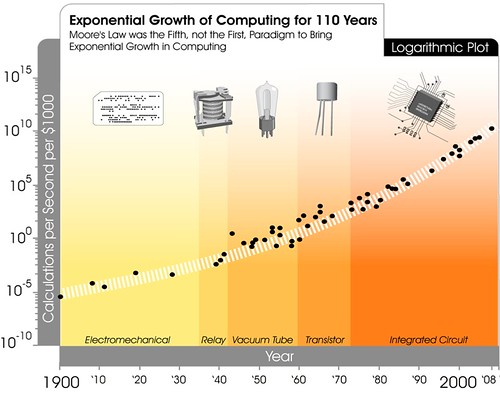
Despite the compelling narrative of the singularity, significant skepticism exists within the scientific and technological communities. Critics, including figures like Paul Allen and Steven Pinker, argue that the notion of unchecked, exponential growth in AI intelligence might be overly simplistic. They point to historical patterns in technological development, which often follow an 'S-curve.' This model suggests that innovation begins with slow progress, accelerates rapidly, and then plateaus as it encounters fundamental limitations, diminishing returns, or market saturation.
For example, while computing power has increased dramatically, the fundamental laws of physics and engineering impose practical limits. Furthermore, creating true general intelligence, capable of abstract reasoning, creativity, and consciousness, is vastly more complex than current narrow AI applications. These arguments suggest that AI progress might be more gradual and manageable, avoiding a sudden, unpredictable singularity.
See also
Frequently Asked Questions
What does it mean when computers become "super smart"?+
How can a computer improve itself faster than people can help it?+
Why are some people worried about super smart computers?+
What good things could happen if a super smart computer learns to help us?+
Can we make sure a super smart computer follows our rules?+
Based on content from Wikipedia · Licensed under CC BY-SA 4.0