

Technetium: The Element That Wasn't There!
Images
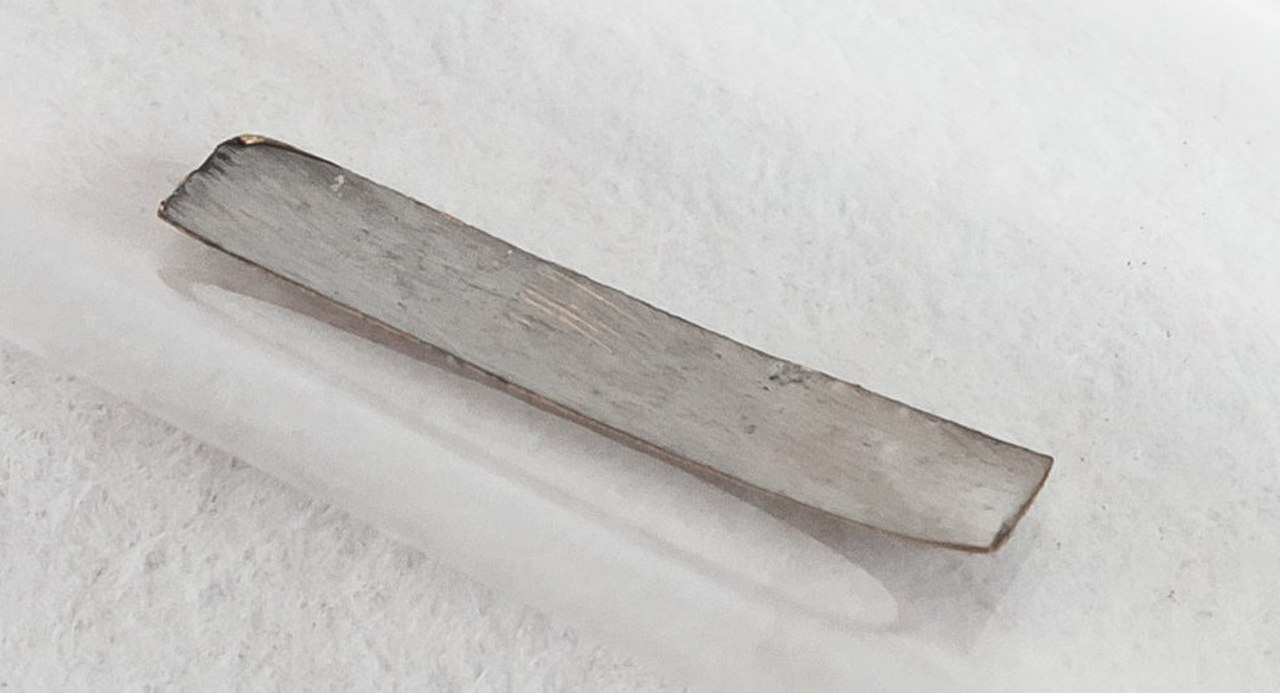
Technetium
The Elusive Element 43
The story of technetium is a testament to scientific prediction and persistent investigation. Its existence was first theorized in the late 19th century, filling a gap in Dmitri Mendeleev's periodic table. For decades, scientists scoured natural sources, from minerals to meteorites, for this missing element, often mistaking other substances for it.
The breakthrough finally came in 1937 when Carlo Perrier and Emilio Segrè, working at the University of Palermo, Italy, bombarded a sample of molybdenum foil with deuterons (nuclei of deuterium, an isotope of hydrogen) accelerated by a cyclotron. Through meticulous chemical analysis, they isolated and identified element 43, which they named technetium, derived from the Greek word 'technetos' meaning 'artificial.' This discovery was monumental, confirming the predictive power of the periodic table and opening the door to the synthesis of new elements.
The Radioactive Nature of Technetium
Technetium stands out in the periodic table as the lightest element for which no stable isotopes exist. All of its isotopes are radioactive, decaying into other elements. This inherent instability is both its challenge and its greatest asset.
The longest-lived isotope, technetium-99 (Tc-99), has a half-life of 211,000 years, but it decays into ruthenium-99, which is stable. However, it is the metastable isotope, technetium-99m (Tc-99m), with its relatively short half-life of approximately 6 hours, that has revolutionized nuclear medicine. This short half-life is ideal for diagnostic imaging because it allows sufficient time for administration and imaging while minimizing patient exposure to radiation.
The rapid decay ensures that the radioactivity quickly diminishes after the scan.
The Workhorse of Nuclear Medicine
The application of Tc-99m in diagnostic imaging is nothing short of transformative. When administered to a patient, typically intravenously, Tc-99m is chelated (bound) to various pharmaceutical compounds that target specific organs or tissues. As Tc-99m decays, it emits gamma rays, which are detected by gamma cameras.
These cameras, coupled with sophisticated computer processing, generate functional images that reveal physiological processes. This allows for the early detection and precise localization of a wide range of conditions, including cardiovascular diseases, neurological disorders, bone metastases, and thyroid abnormalities. Its versatility, combined with its favorable physical and biological properties, makes Tc-99m the most widely used radiopharmaceutical globally, accounting for a vast majority of all nuclear medicine procedures.
Beyond Medicine
While its medical applications are paramount, technetium's presence extends to astrophysics and nuclear technology. The detection of technetium in the spectra of certain stars, particularly S-type stars, provided crucial evidence for nucleosynthesis – the process by which elements are created within stars. Its presence indicates that nuclear fusion reactions are occurring within these stars, offering insights into stellar evolution and the cosmic origins of elements.
Furthermore, technetium is a significant byproduct of nuclear fission in nuclear reactors. While this can be a source for producing Tc-99m, it also presents waste management challenges due to its radioactivity. Research continues into managing and potentially utilizing these radioactive byproducts.
Go deeper
Based on content from Wikipedia · Licensed under CC BY-SA 4.0