

Talc
Images
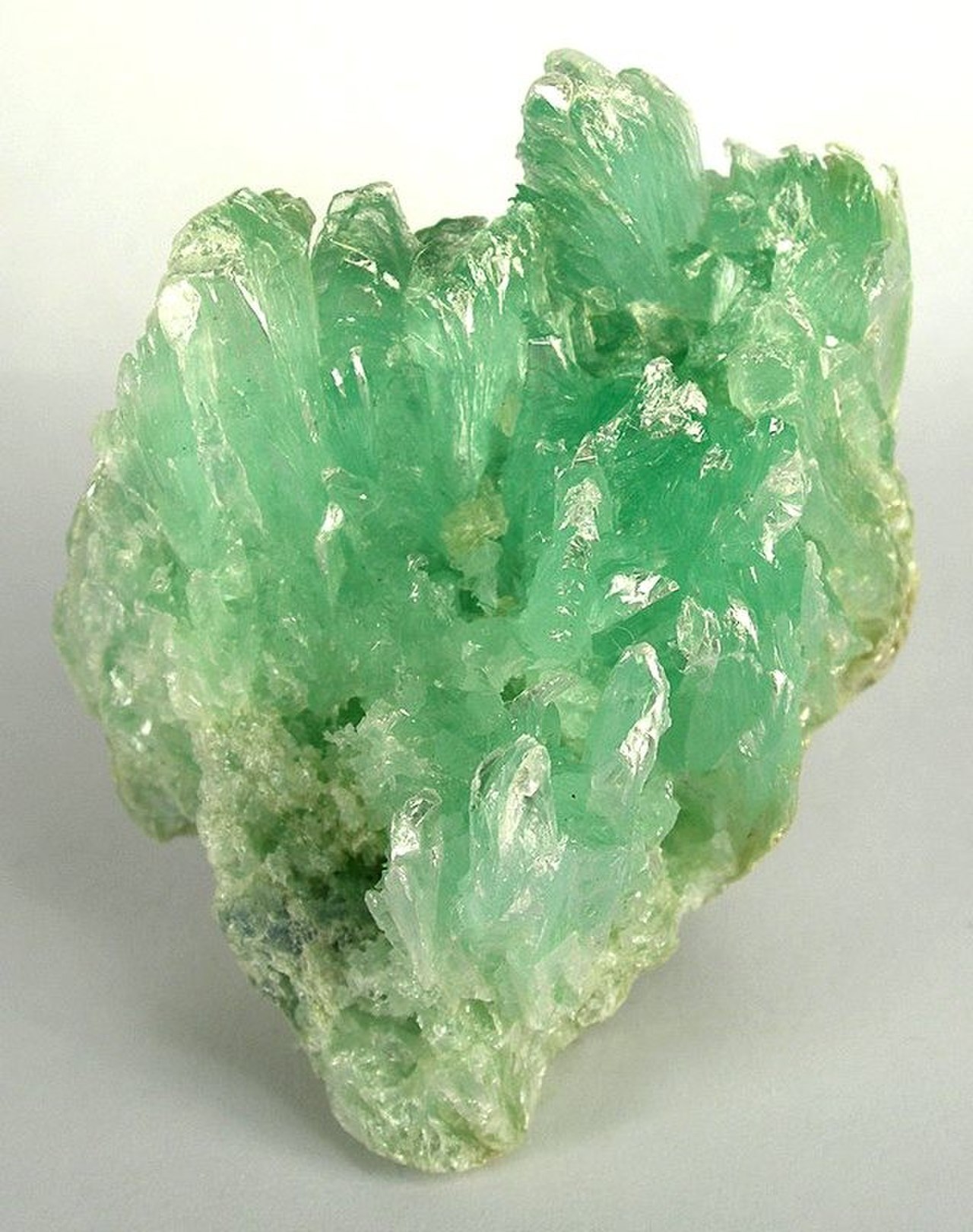
Talc


Geological Genesis and Mineralogical Characteristics of Talc
Talc, scientifically known as hydrated magnesium silicate with the formula Mg₃Si₄O₁₀(OH)₂, is a prime example of a phyllosilicate mineral. Its formation is intrinsically linked to geological processes, primarily the low-grade metamorphism of magnesium-rich ultramafic rocks such as serpentinites and dolomitic marbles. This transformation occurs under specific conditions of heat and pressure, often in the presence of water, which facilitates the chemical reactions necessary for talc's crystallization.
The defining characteristic of talc is its exceptional softness, registering a 1 on the Mohs hardness scale, making it the benchmark for softness. This softness is a direct consequence of its unique layered crystal structure. Sheets of magnesium hydroxide are sandwiched between two silicate tetrahedral layers, forming a 'sandwich' structure.
These layers are weakly bonded by van der Waals forces, allowing them to easily shear and slide past one another. This structural arrangement imparts talc's characteristic greasy or soapy feel, low refractive index, and excellent lubricity. Its chemical inertness and hydrophobicity (repelling water) further contribute to its wide range of applications.
A Historical Tapestry
The utility of talc has been recognized and exploited by humans for millennia, weaving it into the fabric of ancient and modern societies. Archaeological evidence points to its use in prehistoric times for carving small effigies and decorative objects, demonstrating an early appreciation for its workability. Ancient Egyptians utilized ground talc in cosmetics, as a component in pigments, and even within their elaborate mummification rituals, likely for its absorbent and preservative qualities.
Across various cultures, talc found applications in traditional medicine, employed in poultices and powders to soothe skin irritations and treat ailments. The Industrial Revolution marked a significant expansion in talc's industrial relevance. Its incorporation into paints, ceramics, rubber, and paper manufacturing processes dramatically increased demand.
Today, talc remains a critical industrial mineral, with global production driven by its indispensable role in sectors ranging from automotive and construction to consumer goods and pharmaceuticals. Its historical journey reflects humanity's continuous innovation in leveraging natural resources.
The Multifaceted Roles of Talc in Modern Industry and Consumer Products
Talc's unique combination of properties-softness, lubricity, inertness, hydrophobicity, and absorbency-makes it an indispensable component in a vast array of modern products. In the plastics industry, it acts as a reinforcing filler, increasing stiffness, dimensional stability, and heat resistance in automotive parts, appliances, and packaging. The paper industry uses talc as a filler and coating pigment to enhance smoothness, brightness, and printability, while also improving the runnability of paper machines by reducing friction.
In paints and coatings, talc serves as an extender pigment, improving texture, scrub resistance, and matting effects. Its role in cosmetics is perhaps its most well-known application; in powders, foundations, and eyeshadows, it provides a smooth feel, aids application, and imparts a matte finish. Beyond these, talc is crucial in the production of ceramics, rubber, and even certain food products (as an anti-caking agent, E553b) and pharmaceuticals, where it functions as a lubricant in tablet manufacturing and as an excipient.
Its versatility underscores its status as a foundational industrial mineral.
Talc's Impact on Health and Environmental Considerations
While talc offers numerous benefits, its use has also been accompanied by health and environmental considerations. Historically, concerns arose regarding the potential presence of asbestos fibers in some talc deposits, which are known carcinogens. Modern mining and processing techniques, along with stringent regulatory oversight, have significantly reduced this risk in consumer-grade talc, particularly in North America and Europe.
However, ongoing research and public awareness continue to shape perceptions and industry practices. Environmentally, talc mining can have localized impacts, including habitat disruption and dust generation. Responsible mining operations employ measures to mitigate these effects, such as land reclamation and dust suppression systems.
The long-term sustainability of talc extraction involves balancing resource utilization with ecological preservation. Furthermore, the development of alternative materials and the optimization of talc usage in various applications are areas of ongoing research, aiming to enhance product performance while minimizing potential risks and environmental footprints.
Go deeper
Frequently Asked Questions
What is talc and why is it so soft?+
How does talc form in the Earth?+
Why do we use talc in baby powder and crayons?+
What are some old ways people used talc?+
How does talc help make cars and paper?+
Based on content from Wikipedia · Licensed under CC BY-SA 4.0