

Silicates: The Building Blocks of Our World!
Images
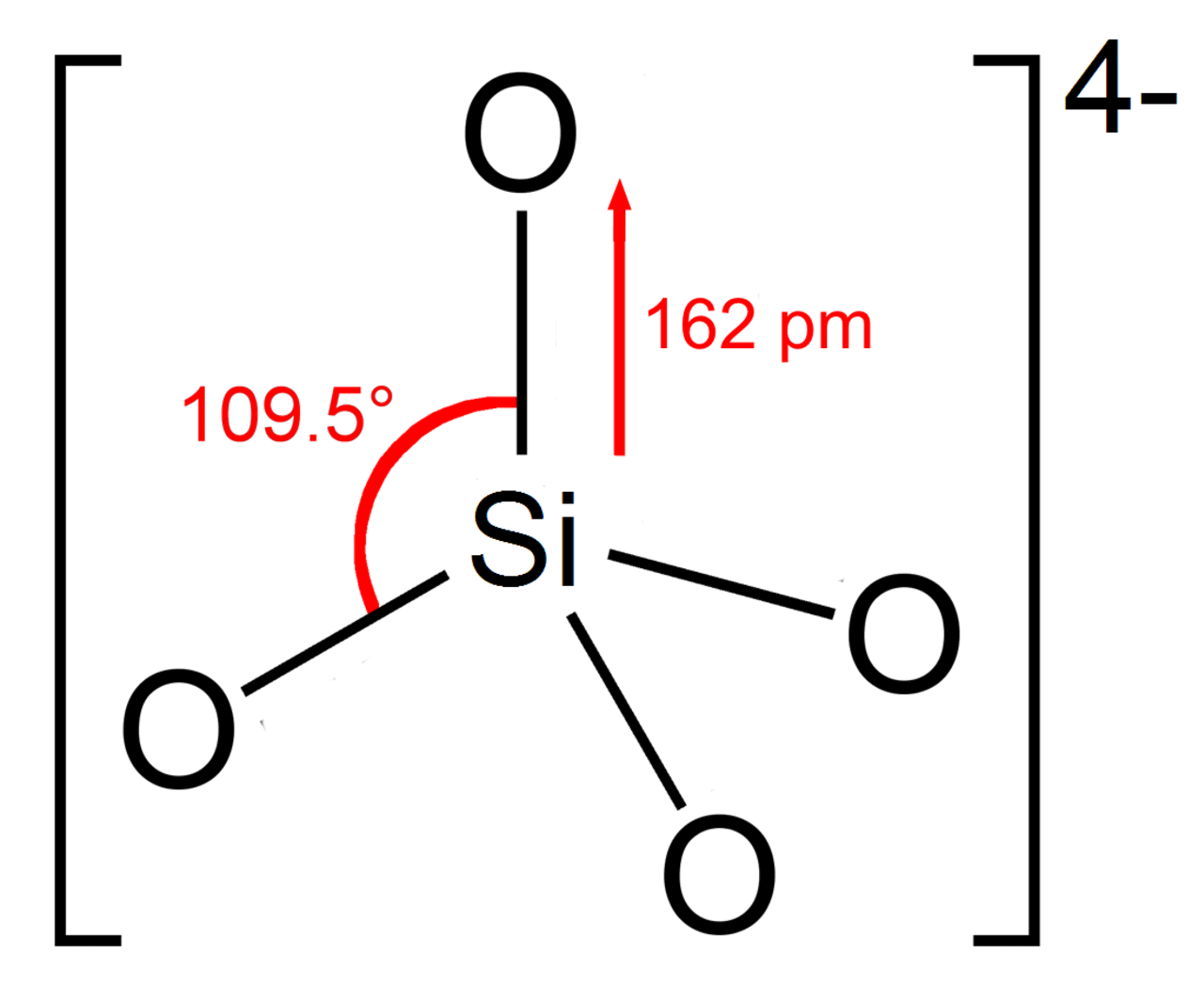
Silicate


The Molecular Architecture of Silicates
Silicates represent a vast and structurally diverse family of compounds, fundamentally defined by the silicon-oxygen tetrahedron (SiO4). This basic unit, where a central silicon atom is covalently bonded to four oxygen atoms in a tetrahedral arrangement, is the cornerstone of all silicate chemistry. The charge on this tetrahedron is typically -4.
However, the true complexity and variety of silicates arise from how these tetrahedra link together. They can share oxygen atoms at their corners, forming isolated tetrahedra (nesosilicates), pairs (sorosilicates), rings (cyclosilicates), single chains (inosilicates), double chains (inosilicates), sheets (phyllosilicates), or three-dimensional frameworks (tectosilicates). This polymerization significantly alters the overall charge and structure of the anion, leading to the immense variety of silicate minerals observed.
The general formula [SiO(4−2x)−4−x]n captures this variability, where 'x' relates to the degree of oxygen sharing and 'n' indicates polymerization. Beyond these common forms, silicates also encompass salts derived from these anions and esters, showcasing their broad chemical scope.
From Primordial Earth to Modern Materials
The genesis of silicates is intrinsically linked to the formation of Earth itself. As the planet cooled, silicon and oxygen, being highly abundant elements, readily combined to form silicate minerals, which constitute approximately 90% of the Earth's crust and upper mantle. Early geological processes, including magmatic differentiation and volcanic outgassing, concentrated specific silicate compositions.
Over eons, tectonic activity, erosion, and sedimentation have continuously recycled and transformed these minerals, creating sedimentary rocks rich in quartz (a pure silicate) and clay minerals. The human discovery and manipulation of silicates mark significant technological leaps. The invention of glassmaking, dating back thousands of years, involved melting silica-rich sands.
The development of Portland cement in the 19th century, a complex mixture of calcium silicates, revolutionized construction. Modern materials science continues to explore and engineer novel silicate structures for advanced applications, from high-performance ceramics to specialized composites.
The Indispensable Role of Silicates in Earth Systems and Technology
The significance of silicates cannot be overstated, permeating both natural Earth systems and human technological endeavors. Geologically, they form the bedrock of continents and ocean floors, influencing landforms, soil composition, and mineral resources. Their stability under various pressures and temperatures makes them crucial components of the lithosphere.
Industrially, silicates are foundational. Glass, derived from amorphous silica, is ubiquitous in architecture, optics, and containers. Ceramics, produced by firing clay minerals (hydrated aluminum silicates), offer exceptional hardness, thermal resistance, and electrical insulation, vital for electronics and cookware. Cement and concrete, reliant on calcium silicates, are the most widely used construction materials globally.
Furthermore, silicates are employed in detergents, fillers, abrasives, and even as catalysts, demonstrating their unparalleled versatility and economic importance.
Mechanisms of Silicate Formation and Transformation
The formation and behavior of silicates are governed by fundamental chemical principles and thermodynamic conditions. The silicon-oxygen bond is strong and polar, leading to stable structures. The polymerization of SiO4 tetrahedra is driven by the tendency to reduce the overall negative charge and achieve more stable packing arrangements.
In natural environments, high temperatures and pressures in the Earth's mantle promote the formation of denser silicate structures like olivine. As magma cools, different silicate minerals crystallize based on their melting points and the availability of other elements, following Bowen's reaction series. Hydrothermal alteration, weathering, and diagenesis further transform silicate minerals.
Industrially, processes like calcination, fusion, and sol-gel synthesis are employed to create specific silicate materials. For instance, glass is formed by rapidly cooling molten silica to prevent the ordered crystallization of silicate networks, resulting in an amorphous solid.
Beyond the Basics
While the common silicate minerals are well-understood, advanced research explores more complex silicate structures and their potential applications. This includes the synthesis of zeolites, which are crystalline aluminosilicates with well-defined pore structures used as catalysts and molecular sieves in the petrochemical industry. Nanostructured silicates, such as mesoporous silica, offer high surface areas and tunable pore sizes, making them promising for drug delivery, catalysis, and advanced separation technologies.
Furthermore, the study of silicate glasses extends to specialized applications like optical fibers for telecommunications and bioactive glasses for medical implants. Even the seemingly simple silicate anion formula hides a universe of structural possibilities, including complex polyanions and even silicon-oxygen compounds with other elements, such as hexafluorosilicate ([SiF6]2−), which finds use in industrial processes. The ongoing exploration of silicate chemistry continues to yield innovative materials and solutions.
Go deeper
Frequently Asked Questions
What are silicates and why are they important?+
How do silicates form in nature?+
Why do silicates have so many different shapes?+
How do we use silicates in everyday products?+
What does the formula [SiO(4−2x)−4−x]n mean?+
Based on content from Wikipedia · Licensed under CC BY-SA 4.0