

Space Settlement: Your Future Home in the Stars!
Images

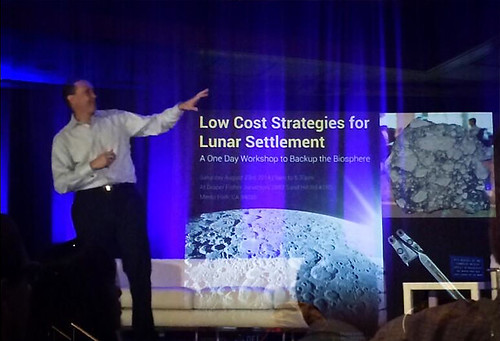
Escheresque Forest on the Moon during our lunar settlement conference.
![The Meadowlands, Site of Super Bowl XLVIII [close up]](https://live.staticflickr.com/5522/12270840736_093074158d.jpg)




Defining the Frontier
A space settlement represents a paradigm shift from temporary space missions to enduring human presence beyond Earth. Unlike space stations, which are typically research outposts or transit hubs with limited habitation, settlements are envisioned as self-sustaining communities designed for permanent residency. These 'spacesteads' or 'space cities' could range from orbital habitats encircling celestial bodies to vast interstellar 'world ships' undertaking multi-generational journeys.
The core objective is to establish robust, long-term habitation facilities that can support human life independently of Earth, fundamentally altering our species' relationship with the cosmos and offering a potential solution for long-term survival.
The Pillars of Off-World Habitation
The feasibility of space settlements hinges on overcoming two primary environmental challenges: the absence of gravity and the need for life support. To counteract the detrimental physiological effects of microgravity, such as bone density loss and muscle atrophy, many designs incorporate artificial gravity. The most common method involves rotating structures, like O'Neill cylinders or Stanford tori, which generate centrifugal force to simulate Earth-like gravity.
Equally critical is the establishment of closed ecological systems. These intricate biospheres must meticulously recycle air, water, and waste, while also providing a sustainable food source through advanced agriculture, mimicking Earth's natural cycles on a contained scale to ensure the long-term viability of the inhabitants.
Strategic Imperatives
The impetus for developing space settlements is multifaceted, extending beyond mere exploration. A primary driver is planetary redundancy; establishing off-world colonies serves as a crucial safeguard against existential threats to Earth, such as asteroid impacts, pandemics, or environmental collapse. Furthermore, space settlements would serve as unparalleled platforms for scientific research, offering unique vantage points for astronomical observation and enabling experiments in physics, biology, and materials science under novel conditions.
They also represent the next logical step in human expansion, potentially unlocking vast extraterrestrial resources and opening new economic and societal frontiers, thereby ensuring the continued evolution and propagation of the human species.
Historical Trajectory
While the concept of living in space has long been a staple of science fiction, serious scientific and engineering consideration began to gain traction in the latter half of the 20th century. Physicist Gerard K. O'Neill's seminal work in the 1970s, particularly his proposals for large, rotating cylindrical habitats (O'Neill cylinders) located at Earth's Lagrange points, provided a detailed and influential blueprint.
These concepts spurred further research into orbital mechanics, materials science, and closed-loop life support systems. Although no full-scale space settlement has been constructed to date, the foundational research and conceptual designs continue to evolve, driven by advancements in technology and a persistent human drive to explore and inhabit new frontiers.
Architectural Diversity
The spectrum of space settlement designs is broad, reflecting diverse approaches to extraterrestrial habitation. 'Orbital settlements' are envisioned as large structures in Earth's orbit, potentially housing millions. 'Cyclers' are spacecraft designed for continuous, efficient transit between celestial bodies, functioning as mobile habitats or transport systems. A more ambitious category includes 'interstellar arks' or 'generation ships,' colossal vessels engineered for voyages spanning centuries to reach distant star systems.
These concepts also encompass habitats built on or within other celestial bodies, such as lunar bases or Martian colonies, representing a broader class of extraterrestrial settlements.
See also
Frequently Asked Questions
What is a space settlement?+
How do space settlements keep people healthy?+
Why do we want to build space settlements?+
How do space settlements create gravity?+
Are there any space settlements built yet?+
Based on content from Wikipedia · Licensed under CC BY-SA 4.0