

Sokollu Mehmed Pasha
Images
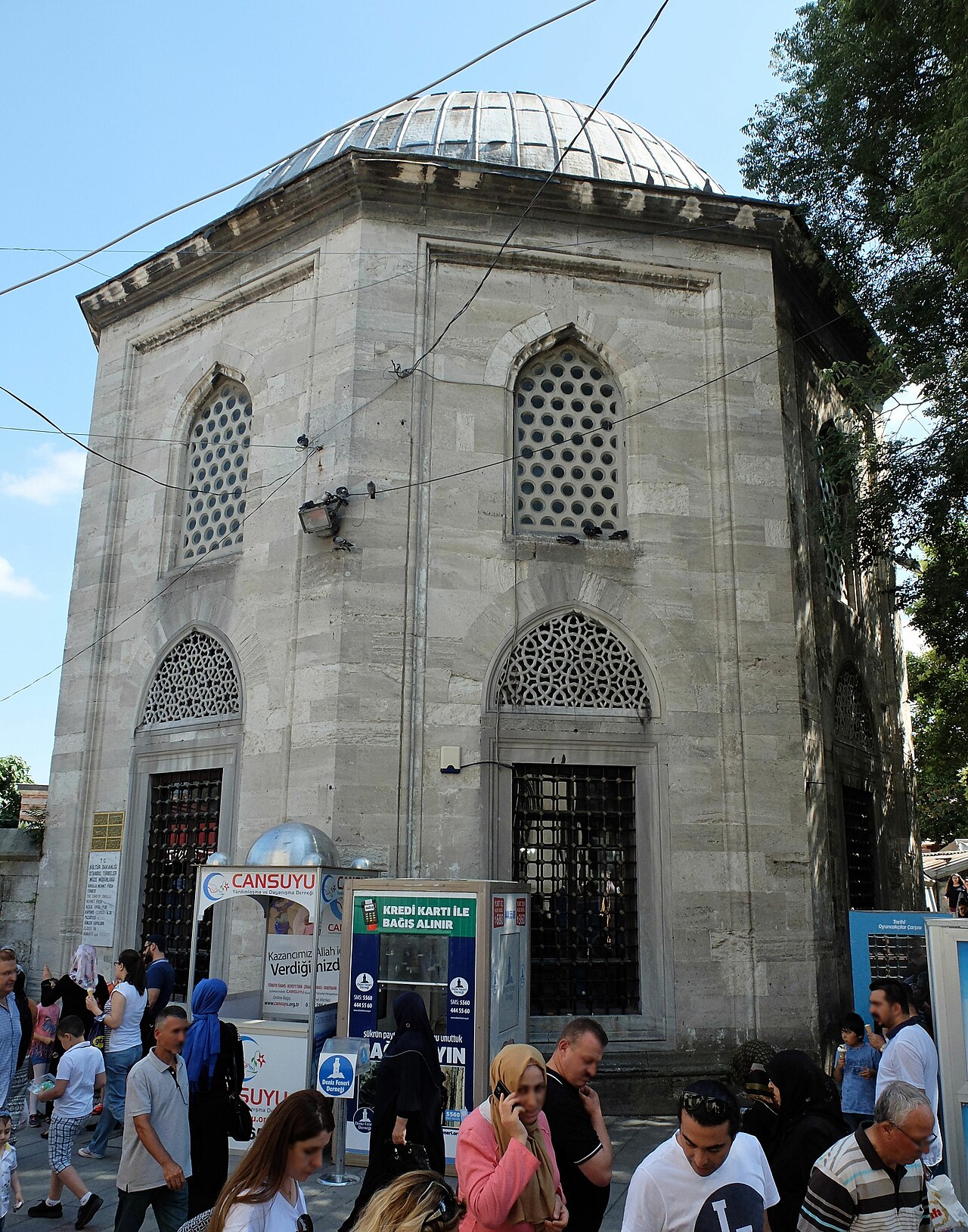
Tomb of Sokollu Mehmed Pasha DSCF7659


The Devşirme System
Sokollu Mehmed Pasha's ascent began through the devşirme system, a unique and often controversial method of state recruitment in the Ottoman Empire. Born into an Orthodox Christian family in Herzegovina around 1505, he was taken as a boy and indoctrinated into the Janissary corps, the elite infantry of the Ottoman army. This system, while forceful, was designed to cultivate loyalty and exceptional talent, transforming captured or levied boys into highly educated and disciplined servants of the Sultan.
Mehmed's remarkable aptitude for administration and military strategy propelled him through the ranks, demonstrating the system's potential for fostering capable leaders. His journey from a levied boy to the empire's chief administrator underscores the meritocratic elements within the Ottoman state apparatus, despite its coercive origins. This early training instilled in him a deep understanding of statecraft and military operations, laying the foundation for his future successes.
A Steadfast Hand at the Helm
Mehmed Pasha's tenure as Grand Vizier (1565-1579) was a period of significant stability and influence for the Ottoman Empire. Serving under three successive Sultans-Suleiman the Magnificent, Selim II, and Murad III-he provided continuity and experienced leadership during a dynamic era. His role as Grand Vizier was far more than ceremonial; he was the chief executive, overseeing the vast bureaucracy, directing military campaigns, and managing foreign policy.
His nearly 15-year term as the sole legal representative in state administration is a testament to his competence and the immense trust placed in him. During his time, the empire continued its expansionist policies and maintained its status as a dominant world power. His ability to adapt to the reigns of different Sultans, each with their own personalities and priorities, highlights his exceptional diplomatic skills and political acumen.
Reconciliation and Family Ties
A particularly poignant aspect of Sokollu Mehmed Pasha's legacy is his conscious effort to bridge his past and present identities. Despite his conversion to Islam and his rise within the Ottoman elite, he maintained a connection to his Serbian heritage. His most notable act of reconciliation was the re-establishment of the Serbian Patriarchate of Peć.
This move was a significant gesture towards the Orthodox Christian population, fostering a sense of inclusion and acknowledging the empire's diverse religious fabric. Furthermore, he strategically appointed members of his extended family, both Muslim and Christian, to key positions. This patronage network, while common in Ottoman politics, also reflects a personal commitment to his kin and perhaps a desire to ensure stability and loyalty through familial connections.
This dual focus on imperial duty and familial loyalty made him a complex and influential figure.
The Grand Vizier's Reach
Sokollu Mehmed Pasha's influence extended across the spectrum of Ottoman governance. As High Admiral, he commanded the formidable Ottoman navy, a crucial instrument of imperial power projection. As Governor-General of Rumelia, he managed a vast and diverse territory, honing his administrative skills.
His ultimate position as Grand Vizier placed him at the apex of the empire's political structure. He was instrumental in shaping the empire's policies, from military expeditions to economic reforms. His assassination in 1579 marked the end of an era, leaving a void in Ottoman leadership.
His long and impactful career solidified his place as one of the most significant statesmen in Ottoman history, a testament to the transformative power of the devşirme system and his own exceptional capabilities.
Enduring Impact and Historical Context
The life of Sokollu Mehmed Pasha offers a compelling case study in Ottoman statecraft and the integration of diverse populations within a vast empire. His ability to rise from a levied boy to the highest echelons of power, while simultaneously acting as a bridge between his Christian origins and his Muslim state service, is remarkable. His restoration of the Serbian Patriarchate is a significant historical event, demonstrating a pragmatic approach to managing religious minorities.
His career highlights the intricate balance of power, loyalty, and identity that characterized the Ottoman Empire at its zenith. His legacy is not just that of a powerful administrator, but also of a figure who, through his actions, contributed to the complex tapestry of cultural and religious coexistence within the empire, influencing its trajectory for decades to come.
See also
Frequently Asked Questions
What was Sokollu Mehmed Pasha's job in the Ottoman Empire?+
How did Sokollu Mehmed Pasha become a leader?+
Why did Sokollu Mehmed Pasha help the Serbian people?+
What roles did Sokollu Mehmed Pasha have besides being Grand Vizier?+
When did Sokollu Mehmed Pasha serve as Grand Vizier?+
Based on content from Wikipedia · Licensed under CC BY-SA 4.0