

Skid Row, Los Angeles
Images

If I wanted politics in my vagina, I'd fuck a senator, sign, Roe v Wade abortion rights rally, City Hall, Skid Row, Los Angeles, California, USA


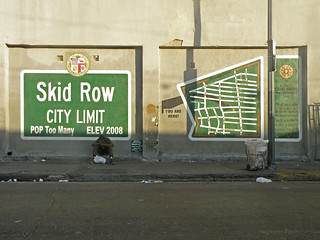


Geographic and Demographic Realities of Central City East
Skid Row, officially known as Central City East, is an unofficial designation for a distinct neighborhood within Downtown Los Angeles. Geographically, it encompasses approximately 50 city blocks, forming a substantial urban area situated immediately east of the central business district. Its boundaries are clearly defined by Third Street to the north, Seventh Street to the south, Alameda Street to the east, and Main Street to the west.
This location places it at the heart of a major metropolitan center, yet it is set apart by its unique demographic characteristics. The climate is characteristic of Southern California, with mild winters and warm, dry summers, a factor that, while seemingly beneficial, can still present significant challenges for individuals living without adequate shelter.
A Century of Transformation
The history of Skid Row is intrinsically linked to the evolution of Los Angeles itself, but it has developed a distinct identity over the past century. By at least the 1930s, the area had begun to be recognized for its concentrated population of transient workers and, increasingly, individuals experiencing homelessness. This period marked the beginning of its long association with social challenges.
Over the decades, Skid Row has been the site of numerous policy interventions, including targeted city initiatives and frequent police actions, often referred to as 'sweeps.' These efforts, alongside the persistent work of homelessness advocacy groups, have shaped its narrative and physical landscape. The area's history is a complex tapestry of urban development, social change, and ongoing attempts to address profound societal issues.
The Human Landscape
Skid Row is most widely recognized for hosting one of the largest and most stable populations of homeless individuals in the United States. Current estimates suggest over 4,400 people live in this area without permanent housing. This concentration is not merely a statistic; it represents a complex community facing multifaceted challenges, including poverty, mental health issues, substance abuse, and lack of access to healthcare and employment.
The area has become a critical hub for social services, non-profit organizations, and advocacy groups dedicated to supporting this population. Understanding Skid Row requires acknowledging the dignity and resilience of its residents while confronting the systemic issues that contribute to their circumstances.
Economic Realities and Governance in a Unique Urban Zone
While Skid Row is situated within the economically vibrant core of Los Angeles, its internal economy is largely shaped by the needs of its homeless population and the services provided to them. The surrounding downtown area boasts a thriving commercial and financial sector, but Skid Row itself is characterized by a different set of economic activities, often centered on survival and the provision of essential aid. The governance of Skid Row is a complex interplay between city and county authorities, social service agencies, and community advocacy groups.
Debates over policy, resource allocation, and the best approaches to addressing homelessness are constant, reflecting the area's status as a focal point for critical urban and social policy discussions.
Education and Outreach
Formal educational institutions are not a primary feature within the immediate boundaries of Skid Row, given its demographic profile. However, the concept of education and outreach is critically important in this context. Non-profit organizations and outreach workers play a vital role in providing information, resources, and connections to educational opportunities for individuals experiencing homelessness.
This can include literacy programs, job training, and assistance with enrolling in adult education or vocational schools. The focus is often on practical skills and pathways to self-sufficiency. Furthermore, educational initiatives aimed at the broader public are crucial for fostering understanding and empathy regarding the complexities of homelessness, challenging stereotypes, and promoting informed civic engagement on this pressing issue.
See also
Frequently Asked Questions
What is Skid Row in Los Angeles?+
Where is Skid Row located in Los Angeles?+
How many people live in Skid Row?+
Why are there so many homeless people in Skid Row?+
What helps people in Skid Row?+
Based on content from Wikipedia · Licensed under CC BY-SA 4.0