

SKA Saint Petersburg
Images

Vladimir Yurzinov
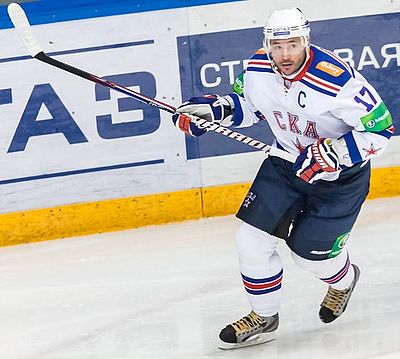


The Genesis and Ascendancy of SKA Saint Petersburg
SKA Saint Petersburg, officially the Sports Club of the Army, stands as a formidable entity within the Kontinental Hockey League (KHL). Based in the historic city of Saint Petersburg, the club has evolved from a competitive team into a dominant force, particularly in the 21st century. Its presence in the Bobrov Division signifies its consistent standing among the league's top contenders.
The club's trajectory towards elite status was marked by a significant breakthrough in the 2014-15 KHL season, when they reached their first-ever league final. This pivotal moment culminated in their maiden Gagarin Cup victory, defeating Ak Bars Kazan. Their championship pedigree was further solidified in 2017 with a second Gagarin Cup triumph against Metallurg Magnitogorsk.
Beyond on-ice success, SKA has redefined fan engagement in Russian hockey. In 2012, they achieved a landmark by becoming the first Russian club to consistently draw an average attendance exceeding 10,000 spectators, a testament to their broad appeal and the electrifying atmosphere they cultivate at their home games. This sustained popularity underscores their deep integration into the sporting culture of Saint Petersburg and Russia.
Strategic Ownership and Talent Cultivation
The remarkable success and sustained dominance of SKA Saint Petersburg are intrinsically linked to its ownership structure and the strategic utilization of its resources. The club is under the umbrella of Gazprom, a colossal Russian state-controlled energy giant. This affiliation provides SKA with unparalleled financial backing, enabling them to pursue and secure top-tier talent, predominantly from within Russia.
This strategy has been overtly geared towards assembling a roster of elite Russian players, often with the explicit objective of preparing them for international competitions, most notably the Winter Olympics. The efficacy of this approach is undeniable; the core of the Russian national team that secured Olympic gold in 2018, a victory particularly significant as it did not feature NHL players, was largely comprised of athletes who had developed their chemistry and skills within the SKA system. This symbiotic relationship highlights how club-level success can directly translate into national sporting triumphs, fostering a sense of pride and achievement on a global stage.
The club's role extends beyond mere player acquisition; it functions as a crucial incubator for national team readiness.
Socio-Political Implications and National Identity
SKA Saint Petersburg transcends the boundaries of a mere sports franchise; it has become a symbol of Russian sporting prowess and, by extension, national identity. The club's strategic alignment with state-controlled entities like Gazprom and its pivotal role in national team preparation imbue it with significant socio-political resonance. The explicit acknowledgment from figures such as Roman Rotenberg, General Manager of the Russian national team, thanking Gazprom for its contribution to the 2018 Olympic victory, underscores this connection.
It positions SKA not just as a club, but as an instrument in achieving national sporting objectives. This integration of sports with national aspirations is a recurring theme in many countries, but SKA's model, characterized by immense financial backing and a focus on international success, is particularly pronounced. The club's ability to attract and develop elite talent, thereby bolstering Russia's performance in prestigious global events, contributes to a narrative of national strength and resilience.
This makes SKA a focal point for national pride and a tangible representation of Russia's capabilities on the international sporting arena.
The Evolution of a Hockey Powerhouse
The current stature of SKA Saint Petersburg as a dominant force in the KHL is the result of a deliberate and sustained developmental arc. While their recent championship successes are prominent, the club's journey reflects a long-term commitment to building a winning culture. The team's emergence into the league finals in the 2014-15 season marked a significant departure from previous eras, signifying a maturation of their competitive strategy and player development.
This breakthrough was not an isolated event but rather a precursor to sustained excellence. The subsequent Gagarin Cup victory in 2017 further cemented their status, demonstrating an ability to maintain peak performance and adapt to the evolving landscape of the KHL. The club's consistent presence at the upper echelons of the league, coupled with its record-breaking attendance figures, illustrates a comprehensive growth strategy.
This evolution highlights how consistent investment, strategic player management, and a dedicated fan base can transform a team into a lasting legacy within professional sports, influencing not only the league but also the broader sporting narrative of its nation.
SKA's Influence on the KHL and Beyond
SKA Saint Petersburg's impact extends beyond its own trophy cabinet, significantly shaping the competitive dynamics and financial landscape of the Kontinental Hockey League (KHL). The club's substantial financial resources, derived from its ownership by Gazprom, have allowed it to operate with a payroll and player acquisition strategy that often sets it apart from other KHL franchises. This has led to debates about competitive balance within the league, as SKA's ability to attract top talent can present a formidable challenge for opposing teams.
However, this concentration of talent also elevates the overall quality of play and spectator interest in the KHL. Furthermore, SKA's success in cultivating players for international competition, as evidenced by their contribution to the 2018 Olympic gold medal-winning team, highlights its role as a vital feeder system for the Russian national team. This dual focus on domestic league dominance and international success positions SKA as a model for how professional sports clubs can contribute to national sporting objectives, influencing player development pathways and strategic planning across the league and potentially in other sporting contexts.
See also
Frequently Asked Questions
What is SKA Saint Petersburg?+
Why do so many fans go to SKA games?+
How did SKA help the Russian national team win the 2018 Olympics?+
Who owns SKA Saint Petersburg?+
When did SKA win its first Gagarin Cup?+
Based on content from Wikipedia · Licensed under CC BY-SA 4.0