

Sierra Leone
Images
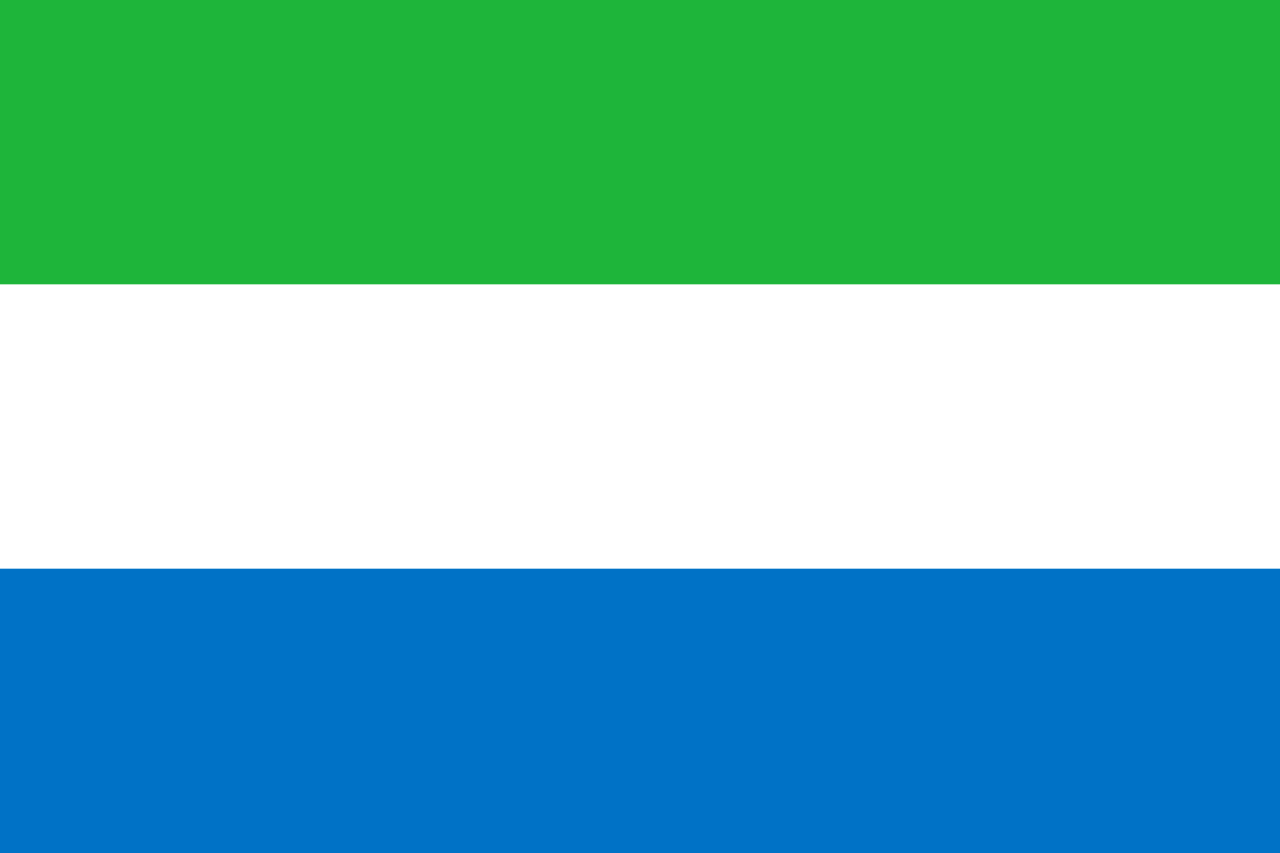
Sierra Leone
Opens Google Maps in new tab
Geographic Foundations and Governance Structures
Sierra Leone, officially the Republic of Sierra Leone, occupies a strategic position on the southwest coast of West Africa, sharing borders with Guinea to the north and Liberia to the southeast. Its territory spans 73,252 square kilometers, encompassing a diverse range of environments from tropical rainforests to savannas, all influenced by a tropical climate. The nation is home to over 8 million people, with its capital and largest city, Freetown, serving as the primary economic and administrative center.
Politically, Sierra Leone operates as a presidential republic, characterized by a unicameral parliament and a directly elected president. The constitution enshrines the principles of a secular state, mandating the separation of state and religion and guaranteeing freedom of conscience. This framework underpins a society where religious tolerance is notably high, with Islam being the predominant faith and Christianity represented by a significant minority.
Historical Trajectories
The contemporary territorial configuration of Sierra Leone is a product of distinct historical phases. The Sierra Leone Colony was established in 1808, primarily as a resettlement area for Africans liberated from the slave trade, a humanitarian endeavor following abolition. Subsequently, in 1896, the inland Protectorate was formalized, largely influenced by the geopolitical landscape shaped by the Berlin Conference.
This dual structure eventually coalesced into the Sierra Leone Colony and Protectorate. Independence from the United Kingdom was achieved in 1961 under Prime Minister Sir Milton Margai. The nation's political evolution saw significant shifts, including a constitutional transformation in 1971 under Siaka Stevens, which established a presidential republic with Stevens as the inaugural president.
A period of single-party rule under the All People's Congress (APC) followed, until a new constitution in 1991 reintroduced a multi-party system. Tragically, this year also marked the beginning of a protracted and devastating civil war, lasting 11 years and characterized by numerous coups. The conflict concluded in 2002 with the intervention of ECOMOG forces and British troops, ushering in a period of hard-won stability and reconstruction.
Cultural Mosaic and Linguistic Landscape
Sierra Leone is a vibrant tapestry woven from the threads of approximately 18 distinct ethnic groups, with the Temne and Mende peoples forming the largest demographic segments. A unique cultural element is the Creole population, comprising descendants of freed African-Americans, Afro-Caribbeans, and other liberated Africans who settled in the region, constituting about 1.2% of the populace. While English holds the status of the official language, essential for formal domains like government and education, Krio emerges as the indispensable lingua franca.
Spoken by an overwhelming 97% of the population, Krio facilitates seamless communication across diverse ethnic and linguistic backgrounds, acting as a powerful unifying force. This rich cultural and linguistic diversity is a defining characteristic of Sierra Leonean identity, fostering a unique social cohesion despite historical and economic challenges.
Economic Realities and Global Engagement
The nation is endowed with significant natural resources, most notably diamonds, which have historically been a major export, alongside gold and bauxite. However, the exploitation of these resources has been complex, often linked to conflict and economic disparities. As of recent surveys, Sierra Leone faces substantial socioeconomic challenges, with a significant portion of its population affected by multidimensional poverty.
Despite these hurdles, the country is actively engaged in the international community, maintaining membership in key global and regional organizations such as the United Nations, the African Union, the Economic Community of West African States (ECOWAS), and the Commonwealth of Nations. This participation underscores Sierra Leone's commitment to global cooperation and its ongoing efforts to foster development, peace, and prosperity.
Go deeper
Frequently Asked Questions
What is Sierra Leone and where is it located?+
What is the capital city of Sierra Leone?+
What languages do people speak in Sierra Leone?+
Why is Sierra Leone known for diamonds?+
What happened in Sierra Leone during the 1990s?+
Based on content from Wikipedia · Licensed under CC BY-SA 4.0