

Seat belt
Images

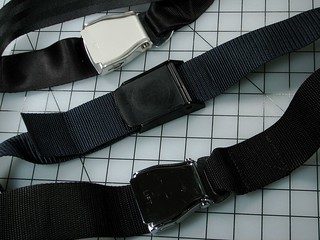
Yay! Seat Belt Buckle!




The Physics of Occupant Protection
The fundamental principle behind a seat belt's effectiveness is Newton's First Law of Motion, also known as inertia. When a vehicle is in motion, its occupants share that momentum. Upon sudden deceleration, such as during a collision or emergency braking, the vehicle stops, but the occupants' bodies continue to move forward at the pre-impact velocity.
The seat belt acts as a crucial counteracting force, arresting this forward motion. It's engineered to apply this force across the stronger parts of the body, primarily the pelvis and chest, thereby distributing the impact energy over a larger surface area and a longer duration. This controlled deceleration significantly reduces the peak forces experienced by the occupant, minimizing the risk of severe injuries like internal organ damage, spinal trauma, or head impacts with the vehicle's interior structures.
The slight stretch in the webbing material further aids in absorbing kinetic energy, acting as a rudimentary shock absorber.
Evolution of Restraint
The journey of the seat belt from a novel concept to a mandatory safety feature is a testament to evolving automotive safety consciousness. Early automotive safety efforts focused on vehicle structural integrity, but the realization that occupant protection was paramount led to the development of restraint systems. Initially, lap belts were introduced, offering some protection against ejection but limited effectiveness in frontal impacts.
The true revolution came with Nils Bohlin's invention of the three-point seat belt in 1959 for Volvo. This design, combining a lap belt and a diagonal shoulder belt, proved vastly superior in preventing fatalities and serious injuries. Volvo's courageous decision to make the patent open for other manufacturers to use democratized this life-saving technology, setting a global standard.
Subsequent innovations include pretensioners, which rapidly tighten the belt at the moment of impact, and load limiters, which allow a controlled release of webbing to reduce chest compression.
Seat Belts as Primary Restraint Systems
Seat belts are classified as primary restraint systems (PRSs) because they are the first and most critical line of defense in preventing occupant injury. Their role extends beyond simply preventing ejection; they are integral to the entire safety system of a vehicle. By keeping occupants properly positioned, seat belts ensure that secondary safety systems, such as airbags, can function optimally.
Airbags are designed to deploy with significant force and are calibrated for occupants who are correctly seated and restrained. Without a seat belt, an occupant might be too close to the airbag upon deployment, leading to severe injury, or too far away for the airbag to offer effective protection. However, seat belts are not infallible.
Their effectiveness can be compromised by improper use, such as wearing the shoulder belt under the arm or the lap belt too high on the abdomen. Furthermore, in extreme rollover events or severe side impacts, their protective capacity can be exceeded, highlighting the ongoing need for advancements in vehicle safety design.
The Socioeconomic and Legal Impact of Seat Belt Mandates
The widespread adoption of seat belt laws has had a profound impact on public health and the economy. Mandating seat belt use has demonstrably reduced traffic fatalities and serious injuries, leading to significant savings in healthcare costs, lost productivity, and insurance payouts. These laws, often met with initial resistance, have become widely accepted as a cornerstone of responsible driving.
The enforcement of these mandates, typically through primary or secondary enforcement laws, reinforces their importance. From an engineering perspective, the data gathered from seat belt usage in real-world crashes has been invaluable for refining vehicle safety designs and developing more sophisticated restraint technologies. The continuous improvement in seat belt design and the integration with other safety systems underscore their enduring importance in the quest for zero-fatality road transport.
See also
Based on content from Wikipedia · Licensed under CC BY-SA 4.0