

Scott Joplin
Images
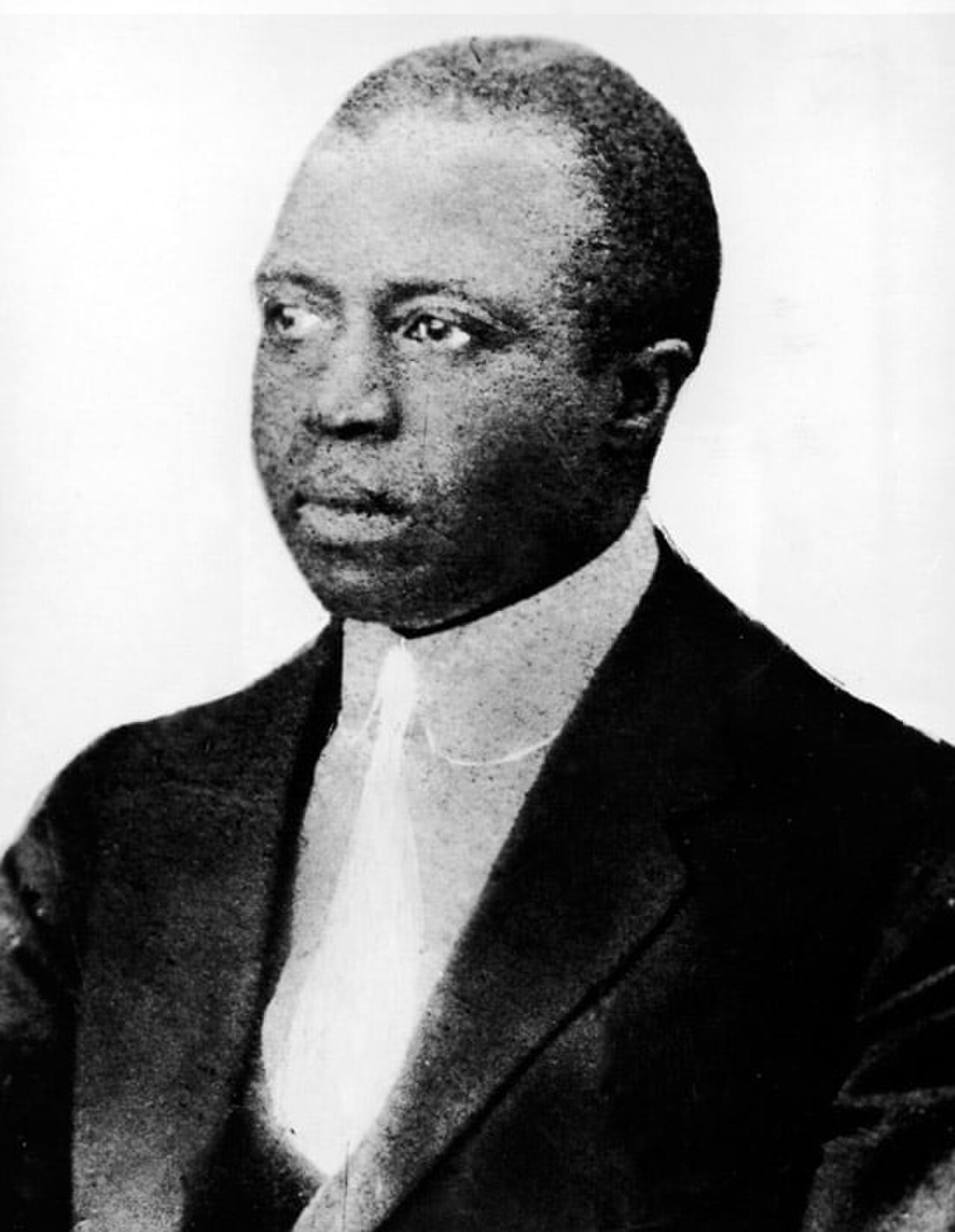
Scott Joplin
The Genesis of Ragtime
Scott Joplin, born November 24, 1868, in Texarkana, Texas, emerged from humble beginnings to become the preeminent figure of the ragtime era. His upbringing in a musically inclined family, despite his parents' labor-intensive work on railways, provided an early exposure to music. Joplin's prodigious talent on the piano became evident early on, leading him to travel extensively throughout the American South in the late 1880s as a performing musician.
This period of itinerant performance was crucial for his artistic development, allowing him to refine his compositional style and gain a deep understanding of audience reception. His journey culminated in a significant appearance at the 1893 World's Columbian Exposition in Chicago. While the fair itself didn't immediately catapult him to fame, it served as a vital platform, exposing his music to a national audience and contributing to the burgeoning popularity of ragtime, which would reach its zenith by 1897.
Joplin's ambition extended beyond mere performance; he envisioned ragtime as a sophisticated genre suitable for formal concert settings, a perspective that distinguished him and informed his meticulous compositional approach.
Establishing Ragtime's Canonical Sound
Following his exposure at the World's Fair, Joplin settled in Sedalia, Missouri, in 1894. Here, he established himself as a piano teacher and began the process of publishing his compositions, a critical step in disseminating his music widely. His breakthrough arrived in 1899 with the publication of 'Maple Leaf Rag.' This composition was revolutionary; it became the genre's first major hit and remains its most influential piece, widely regarded as the quintessential ragtime work.
Its intricate structure, syncopated rhythms, and melodic inventiveness set a new standard for the genre. 'Maple Leaf Rag' not only brought Joplin widespread fame but also provided him with a stable financial foundation, allowing him to move to St. Louis in 1901 and later to New York City. This period of success enabled him to dedicate more time to composition and explore more complex musical forms, solidifying his reputation as the 'King of Ragtime'.
The Grand Ambitions
Joplin's artistic vision extended far beyond the popular piano rags that defined his fame. He aspired to create larger-scale musical works, particularly operas, aiming to elevate ragtime and African American musical contributions to the highest echelons of classical music. In 1903, he composed his first opera, 'A Guest of Honor.' Unfortunately, this groundbreaking work met a tragic fate.
Due to Joplin's inability to pay bills, the opera and all his belongings were confiscated, and the score is now considered lost. This setback did not deter him. He relocated to New York City in 1907 with the explicit goal of finding a producer for a new opera.
His second opera, 'Treemonisha,' completed around 1911, represented his mature operatic style and carried a significant social message, aiming to educate African Americans about hygiene and literacy. Despite its artistic merit, Joplin struggled to find a producer for 'Treemonisha' during his lifetime, a testament to the challenges faced by Black composers in the era.
A Posthumous Renaissance and Enduring Legacy
Scott Joplin died on April 1, 1917, his passing coinciding with the decline of the ragtime era's peak popularity. However, his musical genius was not forgotten. A significant revival of interest in his work began in the early 1970s, spearheaded by Joshua Rifkin's million-selling album of Joplin's piano rags.
This resurgence reached a global audience with the release of the 1973 film 'The Sting,' whose soundtrack heavily featured Joplin's compositions, including 'The Entertainer,' bringing his music to millions who had never heard it before. The opera 'Treemonisha' finally received its premiere production in 1972, showcasing Joplin's full operatic scope. In recognition of his monumental contributions to American music, Scott Joplin was posthumously awarded a Pulitzer Prize in 1976.
His work not only defined ragtime but also laid crucial groundwork for subsequent genres like jazz, securing his place as a foundational figure in American musical history.
Go deeper
Frequently Asked Questions
Who was Scott Joplin?+
What is the Maple Leaf Rag?+
Where did Joplin teach piano?+
Did Joplin write operas?+
When did Scott Joplin die?+
Based on content from Wikipedia · Licensed under CC BY-SA 4.0