

Scandium
Images
Scandium
Scandium's Place in the Periodic Table and Discovery
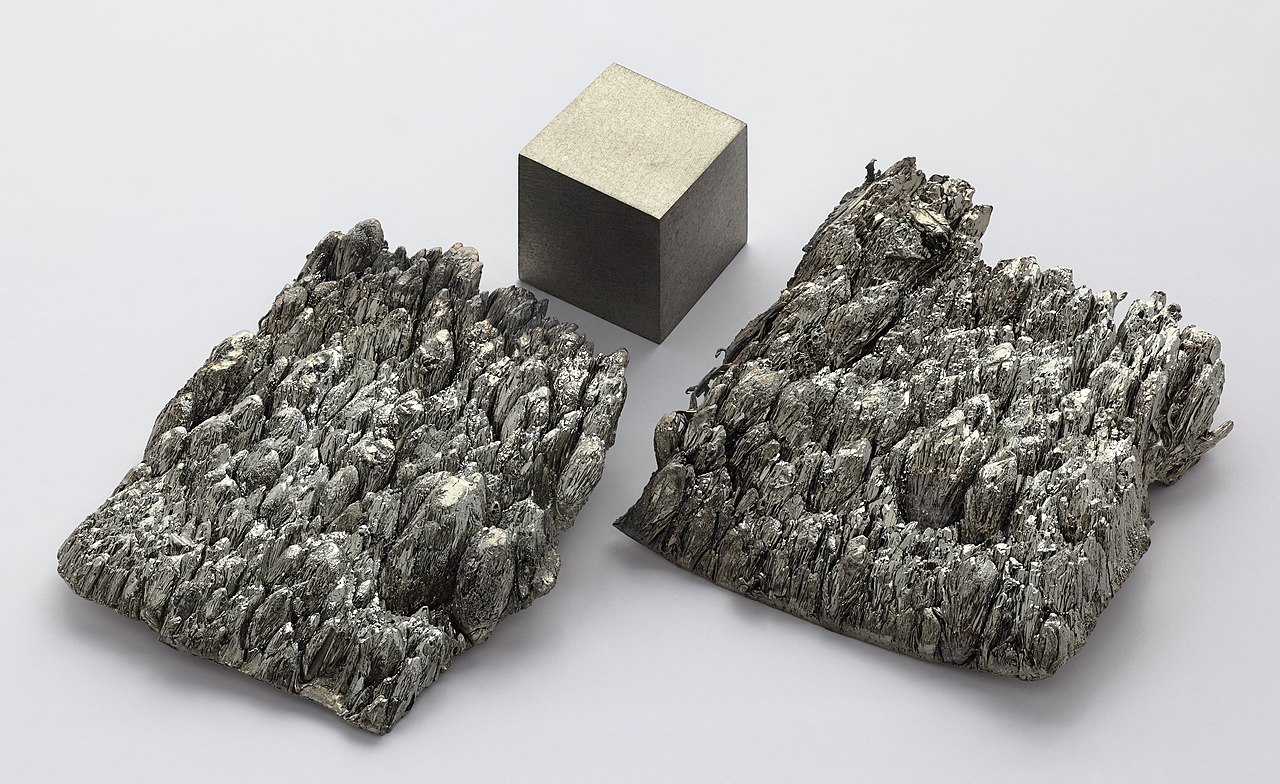
Scandium (Sc, atomic number 21) is a d-block element distinguished by its silvery-white metallic luster. Historically classified with yttrium and the lanthanides as a rare-earth element, its unique chemical properties set it apart. The discovery of scandium in 1879 by Lars Fredrik Nilson was a triumph of early spectroscopic analysis.
By examining the emission spectra of the minerals gadolinite and euxenite, Nilson identified spectral lines that did not correspond to any known element. This method, relying on the unique light signatures elements emit when energized, was revolutionary. The element's name itself is a tribute to its origin, derived from 'Scandinavia,' the region where its parent minerals were found.
This discovery underscored the power of analytical chemistry in uncovering the fundamental building blocks of matter.
Extraction Challenges and the Dawn of Application
Despite its presence in numerous uranium and rare-earth ore deposits, scandium's commercial extraction is remarkably limited due to its low concentration and the complexity of separation processes. Metallic scandium was first isolated in 1937, a significant feat, but its practical applications remained elusive for decades. The true potential of scandium was only realized in the 1970s with the groundbreaking discovery of its profound impact on aluminum alloys.
This revelation marked a paradigm shift, transforming scandium from a scientific curiosity into a strategically important material. The difficulties in its preparation and the limited number of global extraction sites contribute to its high cost and specialized use.
The Transformative Power of Scandium in Alloys
The primary and most significant application of scandium today is its use as an alloying element in aluminum. Adding even small percentages of scandium (typically 0.5% to 2.5%) to aluminum dramatically enhances its properties. Scandium-aluminum alloys exhibit superior strength-to-weight ratios, increased tensile strength, improved creep resistance, and enhanced recrystallization resistance, particularly at elevated temperatures.
This makes them ideal for demanding applications in the aerospace industry, such as aircraft frames, missile components, and spacecraft structures, where weight reduction is paramount for fuel efficiency and performance. The diagonal relationship observed between magnesium and scandium, mirroring that of beryllium and aluminum, hints at its unique chemical behavior and its ability to form stable intermetallic compounds that impart these remarkable properties.
Beyond Aerospace
While aerospace remains the dominant market, scandium's unique properties are finding traction in other high-tech sectors. Its high melting point and stability make it a candidate for solid oxide fuel cells (SOFCs), where it's used as a dopant in the electrolyte to improve conductivity. It also finds use in high-intensity lighting, such as mercury vapor lamps, where scandium iodide is added to produce a light spectrum closely resembling sunlight.
The global trade volume of scandium oxide, estimated at 15–20 tonnes annually, highlights its niche but critical role. The limited supply and high demand from strategic industries mean scandium is often considered a critical mineral, with geopolitical implications for its supply chain and accessibility.
Go deeper
Frequently Asked Questions
What is scandium?+
How was scandium discovered?+
Why is scandium hard to get?+
What does scandium do when added to aluminum?+
Where else can scandium be used?+
Based on content from Wikipedia · Licensed under CC BY-SA 4.0