

Santiago de Cuba Province
Images

File:Palma Soriano (Cuban municipal map).png




Geographic Context and Demographic Significance
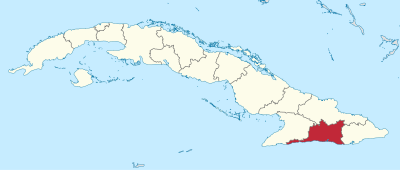
Santiago de Cuba Province occupies a crucial position in the eastern geography of Cuba. As the second most populated province on the island, it represents a significant demographic concentration, indicating a region with substantial human capital and a vibrant social landscape. This high population density suggests a history of settlement, economic opportunity, or strategic importance that has drawn and sustained a large populace.
The province's geography is likely diverse, potentially encompassing coastal plains, fertile agricultural valleys, and mountainous interiors, each contributing to its unique environmental character and resource base. The capital city, Santiago de Cuba, is not merely an administrative hub but also the largest urban center, serving as the primary engine for economic, social, and cultural activities within the province. Its prominence is further amplified by the presence of other sizable cities, including Palma Soriano, Contramaestre, San Luis, and Songo-La Maya, which collectively form a network of urban centers contributing to the province's overall dynamism and regional influence.
The interplay of these geographical features and demographic weight underscores Santiago de Cuba's importance within the Cuban archipelago.
Historical Trajectory and Urban Development
While the provided source material focuses on contemporary demographics, the substantial population and the existence of a major urban center like Santiago de Cuba strongly imply a rich historical trajectory. The province's development has undoubtedly been shaped by centuries of settlement, economic activity, and historical events. The city of Santiago de Cuba, in particular, has historically been a significant port and a center of political and cultural life in Cuba, likely playing a pivotal role in various national narratives and transformations.
The growth of other cities such as Palma Soriano and Contramaestre reflects a broader pattern of regional development, possibly linked to agricultural expansion, resource extraction, or strategic positioning. Understanding the historical evolution of these urban centers and the province as a whole is essential to appreciating its current status. The legacy of past events, migrations, and economic shifts would have contributed to the unique cultural and social fabric that defines Santiago de Cuba Province today, making it a region deeply rooted in Cuban history.
Cultural Fabric and Societal Dynamics
The high population density of Santiago de Cuba Province translates into a rich and multifaceted cultural landscape. As the primary language is Spanish, it forms the linguistic bedrock of communication and cultural expression. However, within this framework, diverse traditions, musical styles, and social customs likely flourish, influenced by the province's history and its people.
The capital city, Santiago de Cuba, often recognized as a cultural heartland within Cuba, is likely a focal point for artistic endeavors, festivals, and the preservation of heritage. The presence of multiple significant urban centers, including Palma Soriano and Contramaestre, suggests a diffusion of cultural practices across the province, creating a dynamic interplay between urban and potentially rural influences. The collective identity of Santiago de Cuba Province is forged through the daily lives, interactions, and shared experiences of its inhabitants, making it a vibrant microcosm of Cuban society with its own distinct character and contributions to the national culture.
Economic Drivers and Provincial Contribution
Santiago de Cuba Province functions as a significant economic contributor to Cuba, largely driven by its substantial population and the activities centered in its urban areas. While specific economic sectors are not detailed in the provided text, the province's demographic weight suggests a robust economy. The capital city, Santiago de Cuba, would naturally serve as a major hub for commerce, services, industry, and administration, generating employment and economic activity.
The presence of other key cities like Palma Soriano and Contramaestre indicates a decentralized economic structure, with these centers likely specializing in particular industries or contributing to regional trade. Given Cuba's geography, it is plausible that agriculture plays a role in the province's economy, utilizing potentially fertile lands. Furthermore, the province's status as a major population center implies a significant labor force available for various economic pursuits, from manufacturing and services to tourism and potentially resource-based industries.
The collective economic output of these diverse activities solidifies Santiago de Cuba's position as a vital component of Cuba's national economy.
Governance and Administrative Structure
Santiago de Cuba Province operates under Cuba's established governmental framework. As a major administrative division, it is overseen by a provincial government structure responsible for managing its affairs and implementing national policies. The capital city, Santiago de Cuba, serves as the seat of this provincial government, housing key administrative offices and decision-making bodies.
This central location allows for efficient governance and coordination across the province. The existence of other significant cities like Palma Soriano and Contramaestre suggests that administrative functions may be distributed or that these cities have their own local governance structures that fall under the broader provincial authority. The political system in Cuba is characterized by a socialist republic structure, and the governance of Santiago de Cuba Province would align with these principles, focusing on public services, economic development, and social welfare for its large population.
See also
Based on content from Wikipedia · Licensed under CC BY-SA 4.0