

Samuel Johnson: The Word Wizard!
Images
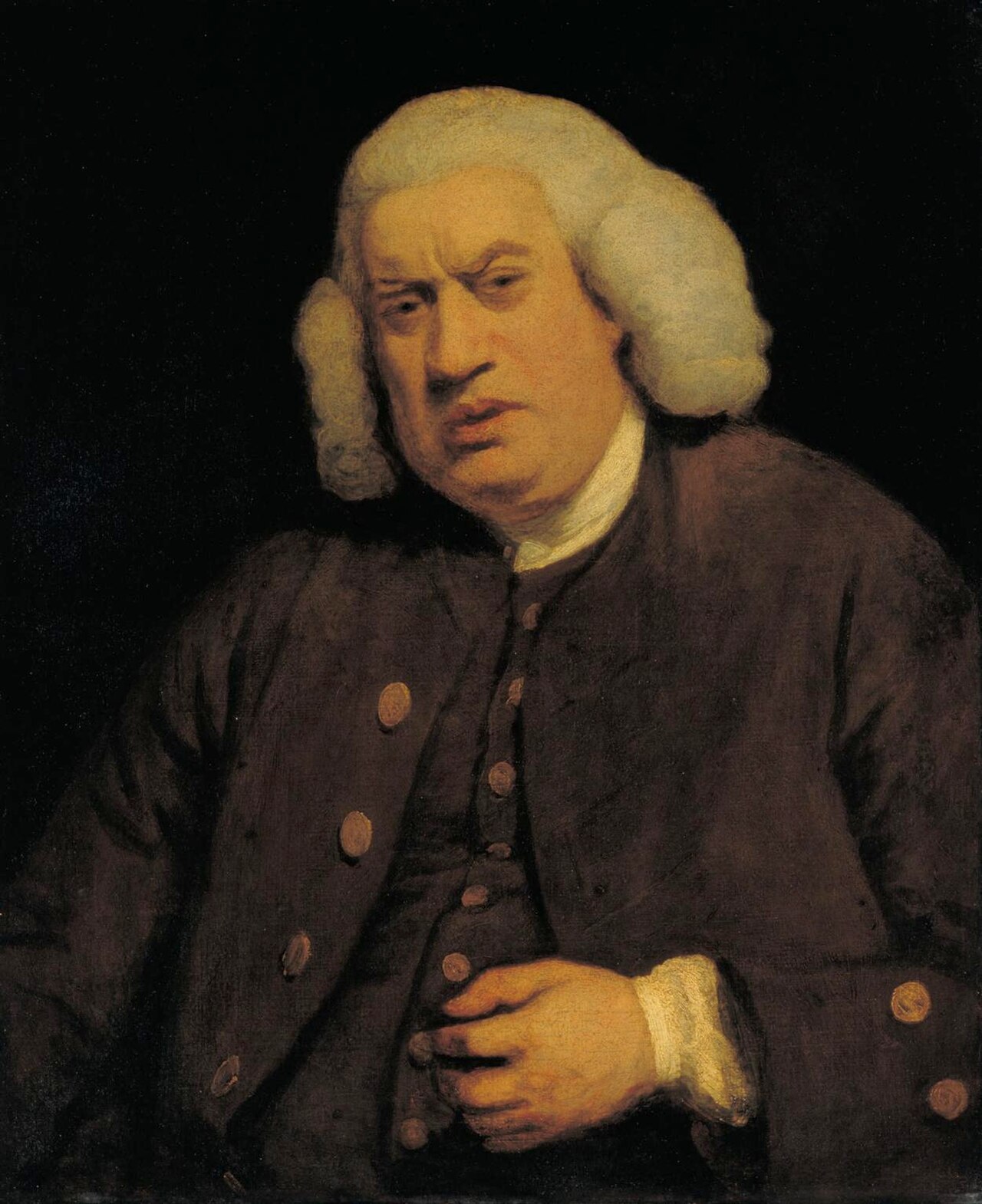
Samuel Johnson
The Making of a Literary Colossus
Samuel Johnson (1709-1784) emerged from Lichfield, Staffordshire, to become arguably the most distinguished man of letters in English history. His early life was marked by intellectual promise and significant hardship, including leaving Pembroke College, Oxford, due to financial constraints. Despite these challenges, Johnson pursued a career in writing, initially contributing to The Gentleman's Magazine.
This period was crucial for honing his skills as an essayist, critic, and observer of society. His early works, such as 'Life of Mr Richard Savage' and the poems 'London' and 'The Vanity of Human Wishes,' showcased his sharp intellect and moral seriousness, setting the stage for his later monumental achievements and establishing his reputation as a formidable literary voice.
A Dictionary to Define a Nation's Tongue
Johnson's magnum opus, 'A Dictionary of the English Language' (1755), was an undertaking of immense scale and ambition. For nine arduous years, he meticulously compiled definitions, etymologies, and illustrative quotations, aiming to standardize English. This was not merely a catalog of words but a scholarly endeavor that captured the richness and complexity of the language.
Its publication was hailed as 'one of the greatest single achievements of scholarship,' and it served as the preeminent English dictionary for over 150 years, profoundly shaping modern English usage, spelling, and understanding. The dictionary's scholarly rigor and comprehensive scope cemented Johnson's status as a lexicographical giant.
Beyond the Dictionary
Johnson's literary output extended far beyond his dictionary. He was a prolific poet, playwright, essayist, moralist, and critic. His annotated edition of 'The Plays of William Shakespeare' (1765) offered crucial insights into the Bard's work, and his philosophical tale 'The History of Rasselas, Prince of Abissinia' (1759) explored themes of happiness and the human condition.
His later work, 'Lives of the Most Eminent English Poets' (1779-1781), remains a cornerstone of literary biography, offering astute analyses of poets from the 17th and 18th centuries. His intellectual engagement with his contemporaries, particularly his friendship with James Boswell, who meticulously documented his life in 'The Life of Samuel Johnson,' further solidified his cultural significance.
Enduring Influence and Complex Character
Samuel Johnson's impact reverberates through literary criticism and the English language itself. His views on literary theory influenced 20th-century scholarship, and his biographical methods set a high standard for the genre. Beyond his intellectual contributions, Johnson was a complex figure.
Though physically imposing, he displayed tics and gestures that were noted by contemporaries, leading to posthumous speculation about Tourette syndrome. His devout Anglican faith and Tory political leanings were central to his identity. Buried in Westminster Abbey, Johnson's legacy is that of a foundational figure whose work continues to inform our understanding of language, literature, and the human experience.
Go deeper
Based on content from Wikipedia · Licensed under CC BY-SA 4.0