

Salt Lake Tabernacle
Images

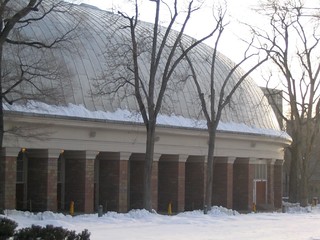
Salt Lake Tabernacle, Salt Lake City, Utah




Geographic and Cultural Nexus
The Salt Lake Tabernacle is strategically situated on Temple Square in Salt Lake City, Utah, the global headquarters of The Church of Jesus Christ of Latter-day Saints. This location places it at the heart of a significant religious and cultural landscape within the Intermountain West region of the United States. Utah's geography is characterized by its diverse topography, including the Great Salt Lake, the Wasatch Mountains, and arid desert basins, which shape its climate and natural resources.
Salt Lake City, as the state capital, serves as a major economic and transportation hub. The Tabernacle's presence on Temple Square, a meticulously maintained and historically rich site, underscores its importance not just as a building, but as a symbol of the faith and pioneering spirit that established the region. Its architecture is a testament to the community's dedication and vision in creating a space for communal gathering and spiritual expression.
A Monumental Construction
The construction of the Salt Lake Tabernacle spanned thirteen years, from 1863 to 1875, a remarkable feat given the era's technological limitations and the remote location. This period of construction reflects a deep commitment from the early Latter-day Saint settlers to create a lasting edifice for worship and assembly. Initially conceived to house the growing congregations and significant church events, it became the primary venue for the Church's semi-annual General Conference.
This conference, a cornerstone of the faith's calendar, would draw tens of thousands of attendees, necessitating a structure capable of accommodating such large numbers. The building's longevity and continued use, even after the construction of the adjacent, larger Conference Center in 2000, highlight its enduring architectural and historical value. It stands as a physical embodiment of the community's perseverance and faith.
The Science of Sound
The Salt Lake Tabernacle is globally celebrated for its exceptional acoustics, a feature that has captivated architects, musicians, and visitors for generations. The design masterfully employs principles of sound reflection and diffusion, creating an environment where even the softest sounds are amplified and carried with clarity throughout the vast space. This acoustic phenomenon is attributed to the building's elliptical shape, the specific curvature of its ceiling, and the materials used in its construction, including adobe and timber.
These elements work in concert to minimize sound distortion and echo, ensuring that speakers and performers can be heard with remarkable fidelity. This makes it an ideal venue for the Tabernacle Choir, whose performances have been broadcast worldwide, making the Tabernacle's sound a familiar auditory experience for millions.
Enduring Cultural and Musical Hub
Even with the advent of the modern LDS Conference Center, the Salt Lake Tabernacle retains its vital role. It continues to serve as a venue for overflow crowds during General Conference, ensuring that its historic walls are still filled with the voices of thousands. Furthermore, it remains the primary performance space for the Tabernacle Choir, whose musical legacy is deeply intertwined with the building itself.
The choir's consistent presence and the building's unique acoustic properties have cemented its status as a world-class performance hall. Beyond its religious functions, the Tabernacle is a significant historical landmark, attracting tourists and scholars interested in its architecture, history, and the cultural impact of the music performed within its walls. It represents a powerful intersection of faith, architecture, and the performing arts.
A Living Monument
The Salt Lake Tabernacle is more than just an old building; it is a living monument that continues to serve its original purpose while adapting to modern needs. Its preservation is a testament to the value placed on historical integrity and architectural excellence. The building's ability to host large gatherings, its world-renowned acoustics, and its association with the Tabernacle Choir ensure its ongoing cultural relevance.
It stands as a symbol of the enduring spirit of its builders and a cherished landmark in Salt Lake City. The Tabernacle's continued use for religious services, concerts, and as a tourist destination demonstrates its multifaceted importance, bridging the past with the present and continuing to inspire awe and appreciation.
See also
Based on content from Wikipedia · Licensed under CC BY-SA 4.0