

Russian Language
Images
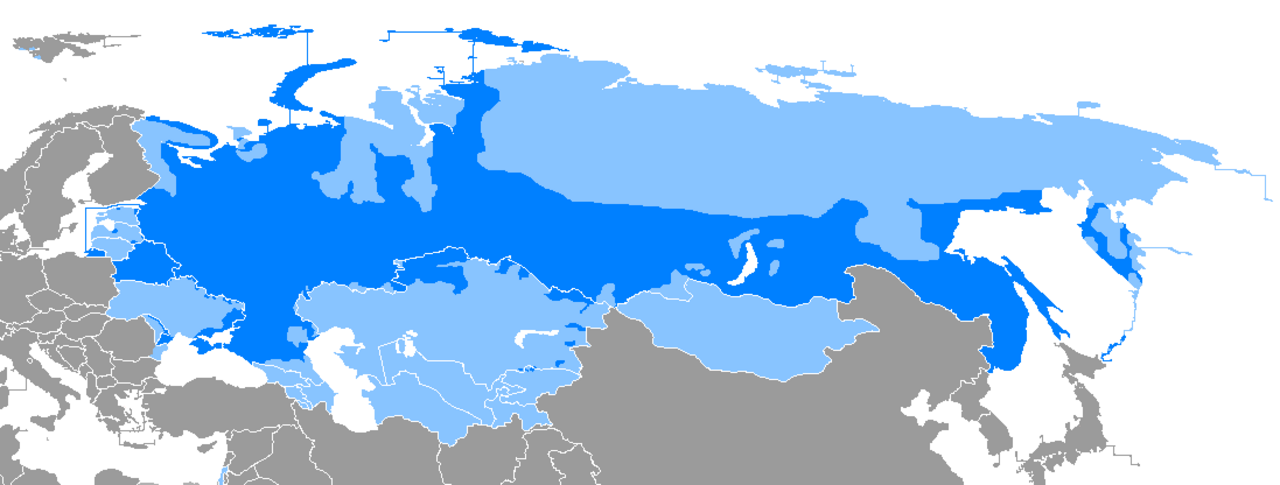
Russian language
The Genesis and Evolution of Russian
Russian, an East Slavic language, boasts a lineage tracing back to Old East Slavic, the common ancestor of Russian, Ukrainian, and Belarusian. This proto-language flourished in Kievan Rus' from the 10th to the 13th centuries. The subsequent fragmentation of Kievan Rus' and external influences led to the divergence of these languages.
Russian itself underwent significant changes, particularly during the Muscovite period, absorbing vocabulary and grammatical structures. The standardization of the language was heavily influenced by figures like Mikhail Lomonosov in the 18th century and the literary output of the Golden Age of Russian literature in the 19th century, solidifying its modern form and extensive vocabulary.
The Cyrillic Script
The adoption of the Cyrillic alphabet, developed in the 9th century by disciples of Saints Cyril and Methodius, was a pivotal moment in the history of Slavic languages. Based on the Greek uncial script with additions for Slavic sounds, it provided a written standard for religious and secular texts. The modern Russian alphabet consists of 33 letters, including vowels, consonants, and two signs (the hard and soft signs) that modify pronunciation without representing sounds themselves.
The script's unique appearance and phonetic system present both a challenge and a distinct characteristic for learners and speakers alike, contributing to Russian's unique linguistic identity.
Linguistic Architecture
Russian grammar is characterized by its complex system of inflection, particularly its six grammatical cases: nominative, genitive, dative, accusative, instrumental, and prepositional. These cases affect nouns, pronouns, and adjectives, indicating their function within a sentence and allowing for considerable flexibility in word order. The language also features a rich verbal aspect system, distinguishing between perfective (completed) and imperfective (ongoing or habitual) actions.
Phonologically, Russian is known for its palatalization (softening) of consonants, its distinct vowel reduction in unstressed syllables, and the prominent trilled 'r' sound, all contributing to its recognizable soundscape.
Global Reach and Cultural Significance
With approximately 258 million speakers, Russian is a major world language and the most geographically widespread language of Eurasia. It serves as the official language of the Russian Federation and is a lingua franca in many post-Soviet states. Its status as one of the six official languages of the United Nations underscores its importance in international diplomacy, science, and culture.
Russian literature, from Pushkin and Tolstoy to Dostoevsky and Chekhov, has had a profound and lasting impact on global literary traditions. Furthermore, Russia's contributions to science, mathematics, and the arts have cemented the language's significance in academic and intellectual spheres worldwide.
Russian in the Modern World
In the 21st century, Russian continues to be a vital language in various fields. It remains a significant language in scientific research, particularly in physics, mathematics, and space exploration, fields where Russia has historically excelled. The internet and digital media have also seen a surge in Russian-language content, making it a key language in online communities and cybersecurity discussions.
Understanding Russian provides access to a vast body of knowledge, a rich cultural heritage, and critical insights into geopolitical dynamics, making it a valuable language for study in today's interconnected world.
Go deeper
Frequently Asked Questions
What is the Russian language?+
How many letters are in the Russian alphabet?+
Why is Russian important around the world?+
How does Russian grammar work?+
Who are some famous Russian writers?+
Based on content from Wikipedia · Licensed under CC BY-SA 4.0